Why Your Brand's Data Integration Can No Longer Be Put Off
Today, it's hard to imagine driving without navigation.
Navigation isn't just a tool that tells you the way — it's a 'decision engine' that suggests the optimal route based on real-time data.
It senses ever-changing traffic conditions to guide you around accident zones, offers alternatives when congestion arises, and helps you slow down ahead of enforcement zones.
Thanks to it, we can reach our destination saving money and time.
Now corporate management is no different.
The era of relying on gut feeling is over, and only companies that judge and act based on data can run a 'never-lost' kind of management.
In our last post, as we covered, the ability to interpret data and connect it to action is an essential capability for every consumer brand today.
[1] Data is now a brand's most important asset
Only a few years ago, a brand's success or failure was thought to be decided by product strength and marketing capability.
But now it's different.
Products are quickly copied, and we've entered an era where everyone knows the standard marketing playbook.
Now the real difference is decided by who collects, understands, and uses data better.
Purchase history, reviews, search trends, visit paths, repurchase patterns, even CS inquiries — the real-world data your brand has built up through touchpoints with customers is not a mere collection of numbers.
It's our own unique asset, with customers' thoughts, emotions, and behavior, and the market's rhythm, all dissolved into it.
If we can properly integrate and read this data, we can predict not only the brand's current state but also what will happen next.
[2] The 'reality distortion' that fragmented data creates
But the reality for many brands is different.
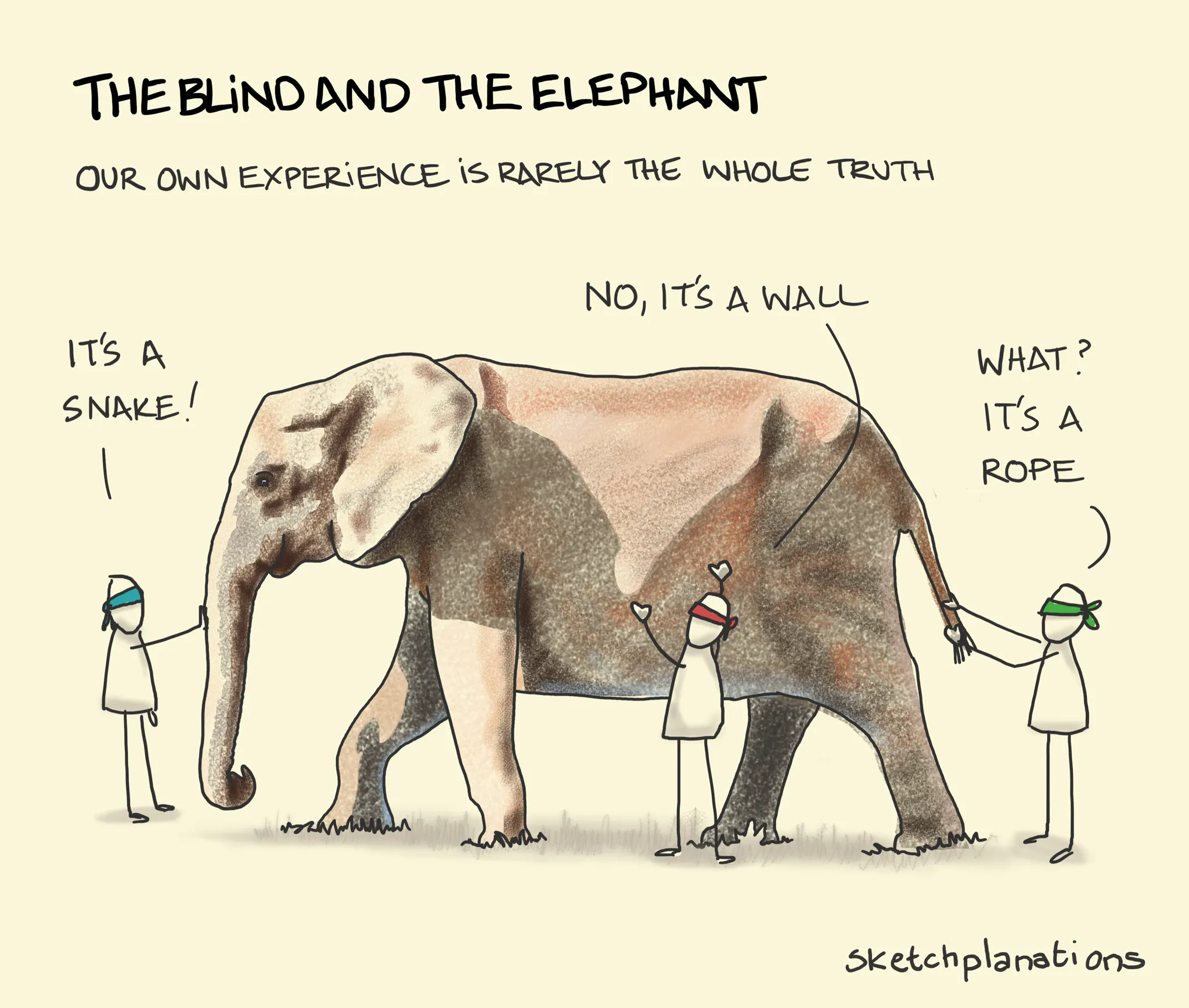
As each department uses its own tools and systems, data piles up in many places but isn't connected to each other.
In most cases, the marketing team tracks only ad data, the sales team only revenue data, and the SCM team only inventory data.
As a result, each department sees a different 'reality,' and members' hard-won results stay at partial optimization without leading to optimization of the whole brand.
Shall we take an example?
It's a case of one consumer brand.
To raise ad efficiency, the marketing team sharply increased the promotion budget for a certain product. After precisely tuning the target segment, click and reach rates rose greatly in the ad data.
But at that point, that SKU's inventory was nearly depleted.
Because the marketing team couldn't see real-time inventory data, they kept the campaign running on the grounds that 'performance is good.'
What was the result?
The ad succeeded, but the customers it brought in couldn't buy the product because it was sold out. The marketing team's 'performance' didn't translate into performance for the whole brand.
The root cause of this problem was that each team moved based on different data.
The marketing team looked at ad-platform data,
the sales team at ERP revenue data,
and the SCM team at WMS inventory data.
Had this data been connected into one,
the system would have automatically sent a signal: 'inventory is depleting fast, so lower the ad budget.'
This case shows that without data integration, the inefficiency of 'winning the battle but losing the war' can occur.
[3] The new era of decision-making that data integration opens
The real value of data integration doesn't stop at simply seeing the present.
When data is connected, we gain the power to predict and prepare for 'what will happen' based on concrete evidence.
For example, if you can predict in advance the sales volume per SKU during a certain season or promotion period,
the production team can adjust equipment-operation schedules ahead of time, the purchasing team can move up raw-material orders, and the logistics team can secure storage space at key warehouses preemptively.
In other words, data integration is the starting point that turns 'response' after a problem into 'preparation' before a problem.
'If we extend the promotion by a week, how much will inventory drop?'
'If costs rise 5%, how does the operating-profit margin change?'
'If lead time grows by 3 days, how much does the on-time-delivery rate fall?'
Data integration becomes the foundation for answering, in real time, these realistic concerns a brand faces every day.
Only brands that predict and verify with data, not rely on gut, can move forward quickly amid uncertainty.
[4] Three obstacles to data integration
Of course, data integration is by no means easy. Most brands hit the following walls.
Data scattered across multiple systems: data is dispersed across ERP, CRM, WMS, ad platforms, POS, and more.
Inconsistent data definitions: for example, the standard for 'revenue' differs by team. Some define revenue by shipment, others by payment received.
A closed data culture: members are reluctant to share data across departments, or focus on individual performance rather than data integration.
[5] The key is data culture

Fortunately, technology has already begun to clear this wall.
As cloud-based integrated data platforms and ETL automation have advanced rapidly, data-integration work that once took months is now possible in a few weeks.
But more important than technology is the organization's culture.
Data-driven decision-making must become a company-wide common language.
We need a culture that sees data not merely as a means of reporting, but as the starting point of judgment and execution.
Putting data at the center is a declaration that you will
judge by evidence, not gut,
treat problems with foresight rather than after-the-fact response,
and pursue optimization of the whole brand rather than department-level goals.
Only when this mindset permeates the organization — and every department discusses, forms hypotheses, and verifies execution while looking at the same data — is true integration achieved.
The heart of this data-centric culture is 'trust'.
Trust in the numbers, trust in the system, and trust in one another.
Only when data is accurate can people trust it and make decisions on it.
But if data is incomplete, or interpretations differ between teams, people end up going back to 'gut.'
So true data integration must come together with data-quality management, standardization, and governance — not just technical connection.
When this foundation exists, an organization can carry out data-based discussion and execution as routine.
Data integration is not a matter of technology, but a matter of trust and culture.
[6] Decision-making made agile by data integration
When data is integrated, the first thing that changes is the speed and accuracy of decisions.
Before, it took days to gather revenue data, check inventory, and receive marketing reports.
Now, with a single real-time dashboard, you can see the whole company's situation at a glance.
The marketing team sees campaign performance in real time and adjusts budget immediately,
the SCM team automatically adjusts orders when it senses a sales surge,
and executives can simulate multiple scenarios and decide on the spot.
A brand where data flows no longer moves out of sync, with each department acting separately.
Every department looks at the same data and moves quickly in one direction.
[7] Why data integration can no longer be put off

Putting off data integration is like driving through a complex city without navigation.
You'll arrive eventually, but you'll detour, get stuck, and waste unnecessary fuel. The reason brands are now rushing to integrate data is simple.
Because the market's pace keeps accelerating and customers' expectations keep rising.
When data is connected, a brand can move more efficiently, more wisely, and more quickly.
Now data integration is not a matter of choice but of survival.
If, while reading this, you found yourself wondering 'how well is our brand's data integrated?' — that is exactly the start of change.
Dalpha aims to create, together with many brands, the moment that question turns into action.

Junbok Lee