
Product Categories You Used to Sort One by One — How to Set Them Automatically
Recommended for
- Those worn out from sorting products one by one by hand
- Those who want to improve the experience so customers can register products conveniently
- Those who want to try Dalpha's product-classification automation AI
Estimated reading time: about 3–5 minutes
If you're busy, at least read this!
- The e-commerce trend of automating product classification with AI — so customers can browse products conveniently — is on the rise.
- When you upload product information to Dalpha's product-classification automation AI, tagging happens automatically not only by category but also by detailed attributes like color and shape. It can be adopted quickly and easily without training on your company's data, and if you do train it, it can provide an accurate, customized AI.
- Companies can dramatically cut product-classification time and cost, and customers experience high utility in browsing and convenience in purchasing. Try Dalpha's product-classification automation AI right now!
How does e-commerce classify products?
Categories that help customers browse products easily
Product browsing, the heart of the e-commerce customer experience — how does it work? First, there's searching. This is the most intuitive way to browse, used mainly when the product you want to buy is clear. But more often, customers don't clearly know what they want themselves.
What do they do then? Category browsing. It's the method often used when there's intent to buy but no decision on which specific product to buy. So many e-commerce companies subdivide product categories to help concretize customers' vague needs.
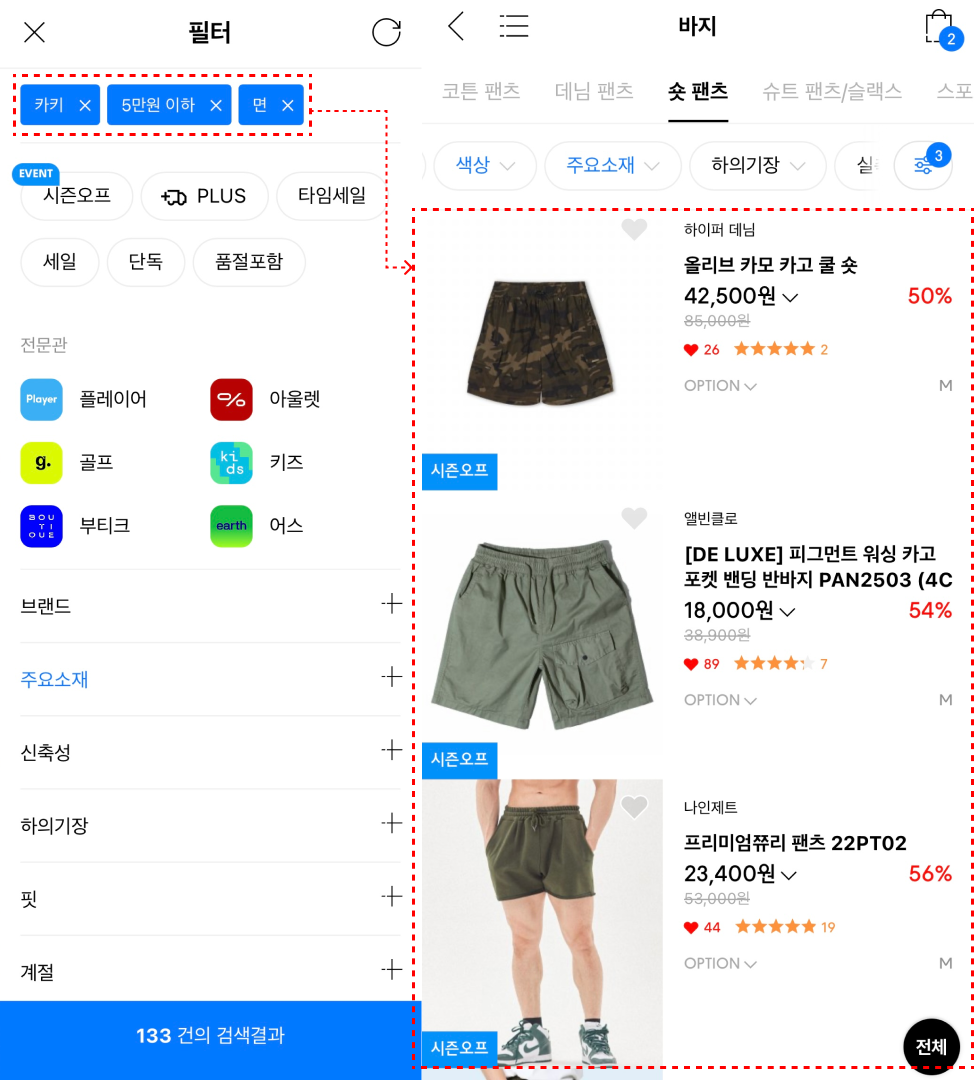
For example, suppose a customer wants to buy shorts for the summer, but hasn't decided on the brand, color, length, and so on. If various filters are available, they can browse easily. Looking at the classification criteria, they can concretize what they want — 'cotton khaki shorts under 50,000 won would be nice' — and this leads to high purchase conversion.
How can you classify products easily?
But classifying products is harder than you'd think. It's inefficient in cost and time, and requires a human touch every time. Do you happen to hire separate staff just for product labeling? Or are you so busy classifying every time that you can't invest in the work that really matters? If your company fits these questions, it's time to consider automation.
So large e-commerce players have gradually begun using AI to automate product classification. Naver Shopping adopted AI because it couldn't classify the average 20 million products registered daily one by one. After setting up about 5,000 categories as 'major > middle > minor > sub,' it built a system so that products registered on different malls are all automatically sorted into Naver Shopping's own categories.
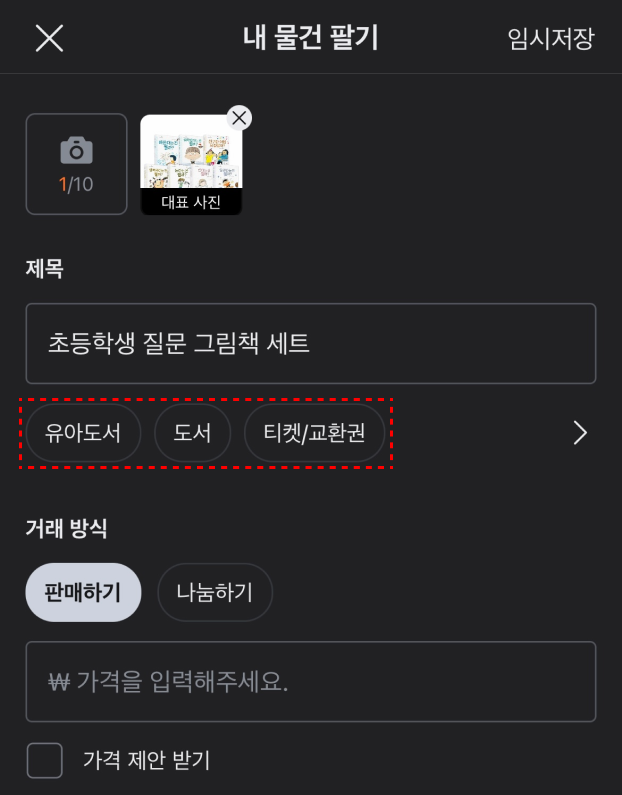
As another case, Danggeun Market (Karrot) adopted category-automation AI to improve sellers' experience. When a seller uploads a product photo and name to Karrot, the AI automatically recommends a category. Sellers can start selling quickly without the hassle of choosing categories one by one.
How is Dalpha's product-classification automation AI adopted?
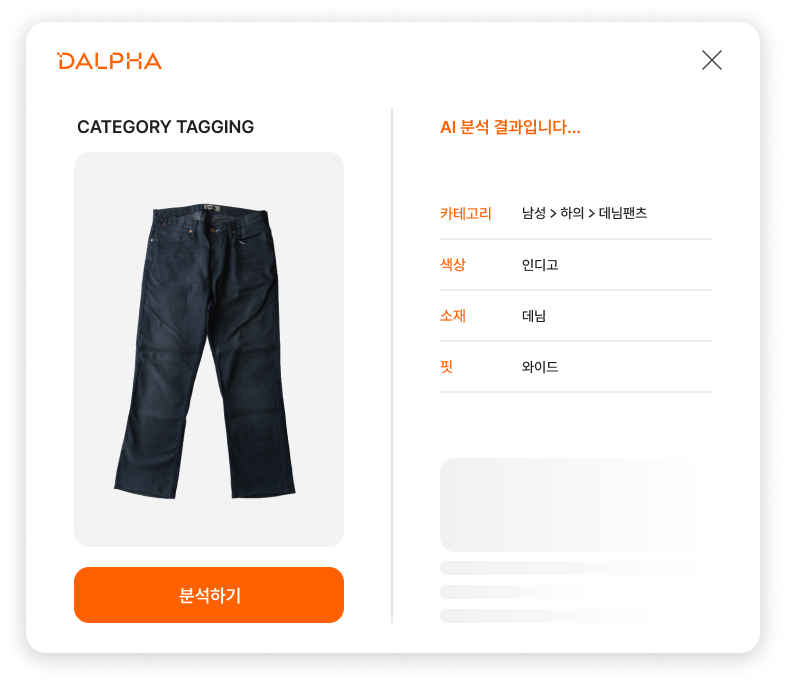
Dalpha's product-classification automation AI automatically classifies products based on the product name, image, detailed description, and more. Dalpha's AI can set up a detailed classification scheme exactly as a company wants, and has the technology to automatically classify products accordingly. For example, if a company wants a scheme of 'Women > Pants > Denim Pants > Wide Fit,' it can create that and train the AI to automatically sort products into the right category. Beyond simple categories, tagging based on detailed product attributes like color and shape is also possible.
You understand how AI automatically classifies products, but still not sure how to adopt it? Dalpha provides AI in a zero-shot way that makes adoption easy even if you don't know how to adopt AI. Even if a company has no existing data, it can be adopted right away through Dalpha's in-house technology, and even without a dev team in-house, it's easy to try. You can also apply the category schemes of large e-commerce players like Naver or Coupang as-is.
Conversely, companies that have development staff and AI knowledge and want to adopt a more accurate, customized AI through data training can also be provided a high-performance AI. Because this type of AI trains on the company's data, accuracy improves dramatically, and it can automatically tag based on product attributes you set yourself, so you can use a customized service.
What benefits can you gain from Dalpha's product-classification automation AI?
Both companies and customers can gain great benefits from Dalpha's product-classification automation AI.
First, companies can dramatically cut the time and cost of classifying product attributes. Without people inspecting every item, you can automate product classification through AI and solve the company's cost-minimization problem. For customers, the experience improves because they can use a systematic classification scheme when looking for products. They can select the attributes of the product they want in detail through filters, experiencing high utility at product browsing — the first step of the consumer journey. It can also improve the experience of sellers who upload products to open markets or general malls.
Try Dalpha's product-classification automation AI now!

Yongchan Park