What Is a Social World Model? Why AI’s Next Frontier Isn’t a Bigger LLM
Key Takeaways
A social world model is an AI that represents the current state of a society (its people, organizations, relationships, and environment) and simulates how individual behavior and collective states will change after a specific event or intervention.
Goldman Sachs Global Institute diagnoses that AI's next leap will come not from bigger models but from world models: models that understand how the world works.
EY used AI simulation to reproduce, in a single day, a global wealth research study that normally takes six months, matching the real survey with a median correlation of 90% and showing the idea works in industry.
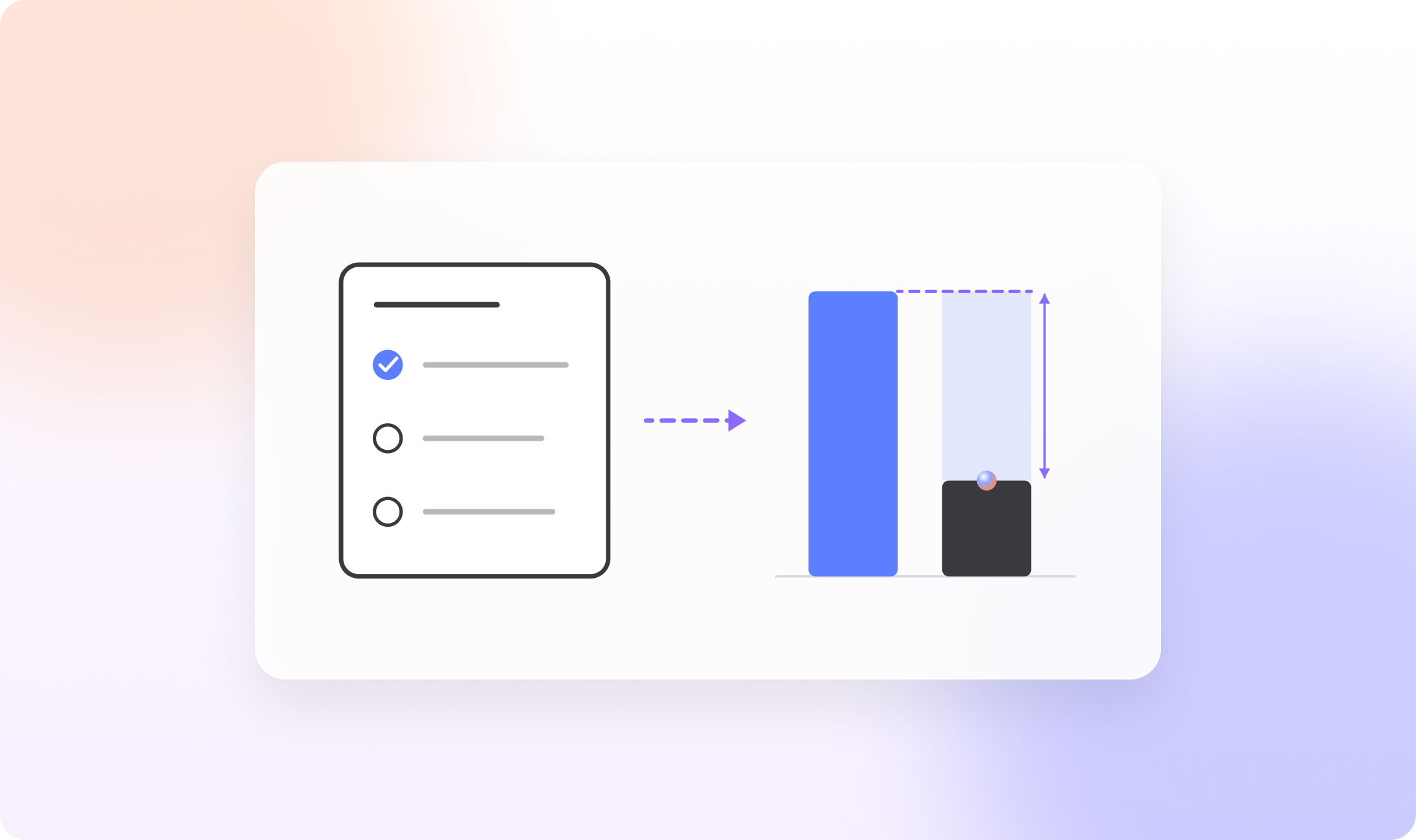
The complete form of a social world model goes beyond aggregating individual responses to modeling the very process by which human behavior and social systems change. That is exactly where Dalpha's Cobra World Model is headed.
Over the past decade, AI has become remarkably good at recognizing patterns and predicting the next word. The result is today's large language models (LLMs). Recently, however, more and more voices have pointed to the limits of LLMs and argued that the next leap requires something new. Among the many attempts, the field drawing the most attention is the world model. According to Goldman Sachs Global Institute, scaling models up is not enough: what is needed is a model that understands how the world works. AI's next leap, in their diagnosis, will come from world models. And EY has shown in numbers that the idea works in real industry.
Drawing on material from both institutions, this article lays out what a social world model is and why it matters now.
Why LLMs Aren't Enough
LLMs write, translate, code, and converse. They have moved past "capable" and now outperform humans at many tasks. But there is one thing these models cannot do: understand cause and effect and reason from it.
The "car wash problem," which went viral in online communities earlier this year, shows this limit well. The question goes: "I want to wash my car, and the car wash is 50 meters away. Should I walk or drive?" A person doesn't have to think. You need the car to wash the car, so you drive. Yet some models answered, "It's only 50 meters, so just walk." They followed a pattern that appears countless times in training data: recommend walking for short distances. As the answer spread, so did the criticism that we are entrusting far more complex judgments to AI that gets a question any schoolchild can answer wrong.
What this problem reveals is not a lack of knowledge. The model failed to check, within the situation, the precondition that washing a car requires the car to be at the car wash. Picture the scene once in your head and the error is immediately obvious; the process of completing text patterns has no such step. In front of a car wash it is a mistake to laugh off, but not in robot control, supply chain operations, or decisions entangled with many stakeholders, where mistakes come straight back as costs. For that kind of work, predicting the next word well is not enough. What is needed is an internal model of how the world works.
World Models - AI Begins to Understand Consequences
A world model is, in a word, an internal simulator. It makes a system ask itself: "If I do this, what happens next?"
Humans use this ability all the time. We picture a cup tipping over before it falls, and before speaking up in a meeting we imagine how the words will land. A world model gives machines exactly this ability: simulating consequences before acting and testing possibilities in advance. It is a kind of foresight that machines come to possess.
Two Kinds of World Models - Physical and Social
World models can be divided into two broad kinds, depending on the world they deal with.
Physical World Models
It deals with the physical world where physical laws apply: gravity, friction, heat, and force. A robot picks up an object without breaking it. A self-driving car rehearses edge cases on the road in advance, and a warehouse robot moves through the dark without collisions. All of this is the territory of the physical world model.
Social World Models
A social world model deals not with the physical world but with human society. In human society the forces are not gravity but incentives, norms, information, and power. It deals with how people and organizations behave, and how a single signal spreads into markets and public opinion.
The two models look quite different, but at bottom they are solving the same problem. Both need to understand systems governed by constraints, and both aim to predict the future from an understanding of causation rather than from inference over correlations.
What Is a Social World Model?
A social world model represents the current state of a society made up of people, organizations, relationships, and environments, and simulates how behavior and collective states change over time after a specific event or intervention. Rather than collecting individual responses in isolation, it deals with the changes created as each person's goals, memories, and dispositions interact with relationship networks, information flows, norms, and incentives.
There is more than one way to build one. You can let many AI agents with goals and memories interact in a digital environment, or you can directly model the distribution of collective behavior, the spread across relationship networks, and the rules by which society's latent states change. What matters is not the number of agents, but whether the model can express, along the flow of time, how the current state and a specific action change the states and possible paths that follow.
This is precisely the power of a social world model. It does not reduce the behavior of a group to a simple sum of individual choices; it approximates a dynamic system in which each person's actions change, in turn, the states of other people and organizations. Companies can use it to test a competitor's next move, the market's reaction, and the organization's judgment across many conditions and interactions, instead of viewing them as a single static estimate. They can verify strategy against a changing market and adaptive opponents, and stress-test possible paths and response structures before a crisis arrives.
A Social World Model Is a Simulation, Not a Prediction
To clear up a common misunderstanding: a social world model does not deterministically "prophesy" the future. Where a prophecy assumes one correct answer, a simulation draws the probability distribution of the many futures that could unfold. Only when a few conditions are assumed within it does a precise prediction emerge.
It shows how groups respond under the assumed conditions, and how individuals behave within them. Rerun the same situation thousands of times while varying the conditions, and the frequent outcomes, the rare ones, and the conditions that divide them come into view. For someone who has to make a decision, this information is far more useful than a single fixed forecast.
The EY Experiment - Six Months of Research in a Day
EY's project shows these attempts are no thought experiment. In October 2025, EY unveiled the first case of applying AI simulation to strategic insight in the wealth management industry. With language-model-based simulation, it reproduced in one day a global wealth research study that usually takes six months. Rerunning a survey of 3,600 people across 30 countries with digital agents recorded a median correlation of 90% with the actual study.
The high similarity is striking, but even more striking were the cases where the numbers diverged.
82% of survey respondents said they would keep their parents' wealth manager
The simulation predicted 43%
Actual industry data is 20-30%
In every divergent case, the simulation was closer to reality than the survey. This is because people give socially desirable answers to hypothetical questions and then act differently, and it means research using a social world model can be more meaningful than research done the traditional way.
Through EY's experiment we can imagine the change social world models will bring. There will be no need to spend months writing research because the future cannot be known, and past data changes from an object of analysis into raw material for simulating the future. Whenever there is an election result, a tariff announcement, or an interest rate change, the shift in market sentiment and behavior can be redrawn within 24 hours.
Where Social World Models Stand Today and What Remains
The change is already showing up in several places. In a piece on the subject this April, Goldman Sachs Global Institute pointed to four signals. Investment is moving from individual models to entire simulation environments, and large organizations are building digital twins of their operations, markets, and infrastructure. In AI training data, the share of synthetic data has begun to overtake real data. Evaluation standards are changing as well: not the accuracy of a single prediction, but the quality of decisions made over time.
Research is advancing fast too. In a study published in 2024, researchers at Stanford and Google DeepMind interviewed 1,052 real people for two hours each and built an agent corresponding to each person from the transcripts. Given questions from the General Social Survey (GSS), a leading U.S. social survey, and asked to answer on their subjects' behalf, the agents reached 85% accuracy. Even the same person answers a bit differently when retaking a survey two weeks later, and that variance is factored into the figure. Reproducing individual responses has already come this far, and EY's project above sits in the same current.
The remaining challenges are just as clear. Models trained on text never experience the world directly; they understand it secondhand through the records people have left in writing. Evaluation is hard as well. Social problems often lack clear success criteria and their outcomes surface much later, so the first thing to settle is what will count as confirmation that a simulation was right. Above all, what has been validated so far is mostly the reproduction of individual responses. Reproducing the process by which each person's actions change the states of others and organizations, and those changes spread through the whole group, has only just begun. Moving past the summation of individual responses to model the change in human behavior and social systems itself is the next challenge.
Dalpha - Toward the Next Stage of Social World Models
Dalpha is a World Simulation company that simulates the world by predicting human behavior. Its aim is exactly that point: not stopping at the aggregation of individual responses but modeling the very process by which behavior changes. That is what it is building its social world model, Cobra World Model, for. With the global current of social world models only now taking shape, Dalpha is pioneering this direction in Korea ahead of anyone else.
Dalpha believes AI foundation models will divide into LLMs in charge of reasoning and world models in charge of simulation, and that simulation will stand in front of industries' most important decisions. Cobra World Model's goal is the same. Dalpha intends to answer, with a single model that understands the causes of human behavior, questions like these: which content and products people will choose; where public opinion and collective currents will move after a policy or an event; and how people will respond in areas like education, healthcare, and robotics, where AI works alongside humans. The goal is to make possible the kind of forward-looking decision-making that has so far remained out of reach. That is where Dalpha is taking the social world model.
Frequently Asked Questions
Q. How is a social world model different from an LLM?
An LLM is a model trained on internet text to predict the next word. That makes it fluent, but weak at judgments that require causal reasoning, as the car wash problem above shows. A social world model represents the current state of a society and simulates how behavior and collective states change after a specific event or intervention. The two are less competitors than different roles. This is why foundation models are expected to divide into LLMs as reasoning tools and world models as simulation tools, and future AI will likely integrate language as the interface and the world model as the engine for planning and judgment.
Q. What is the difference between a social world model and a physical world model?
They deal with different worlds. A physical world model handles the world governed by physical laws. It previews where the car will be ten seconds after a left turn, or whether it will hit a deer that darts out, which is why it underpins robotics and autonomous driving. A social world model handles the world of people and organizations, governed by incentives, norms, and information. It looks ahead to where demand will move if prices change, or how public opinion will shift if negative reviews spread. Both, however, share the same structure: understanding a constraint-governed system causally and simulating its next state.
Q. What are social world models used for?
Anywhere decisions hinge on human behavior. You can preview how a new product or piece of content will be received, and how purchase rates and retention will change if a game's reward policy changes; you can also look ahead at collective currents, such as how approval ratings will move with a policy or how an incentive system will change an organization's productivity. The scope is widening, from simulating crowd movements to prepare for public safety, to designing domains like education, healthcare, and robotics where AI interacts with people. Reproducing months of research in a day, as in the EY case, is one example. The point is that you can see the outcomes of multiple scenarios before you make the decision.