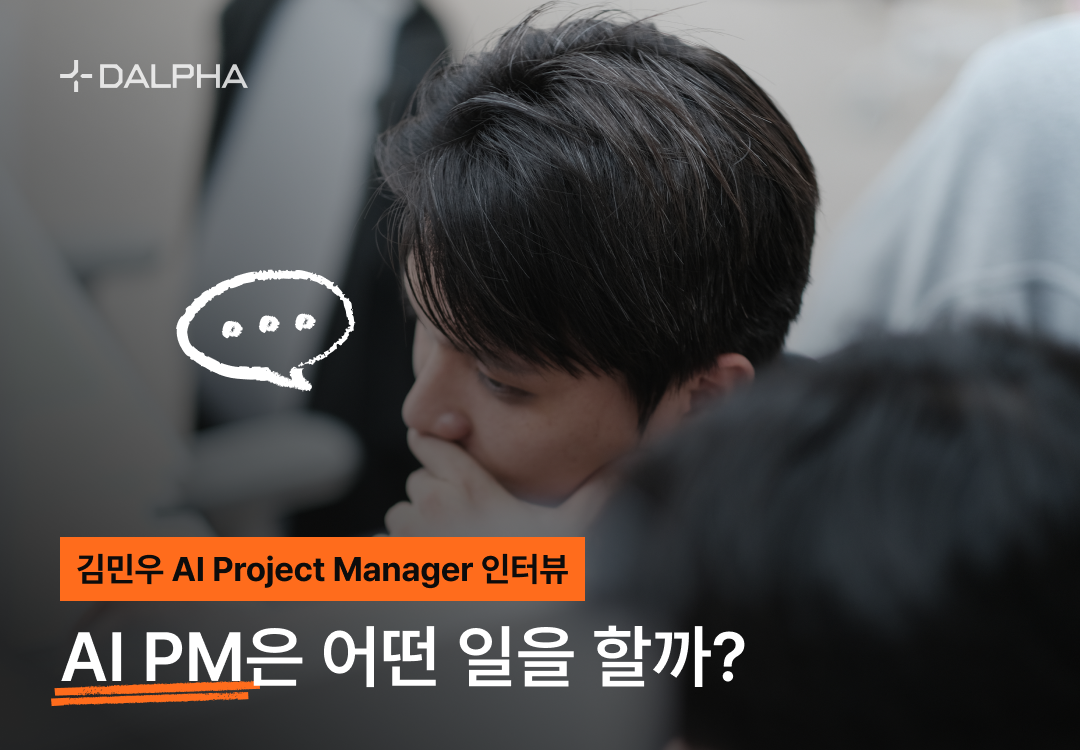
How does an AI project unfold? | Interview with AI Project Manager Kim Min-woo
When entrusting an AI project, the thing clients worry about most is: "Will they really take ownership of the project the way we would?"
A great AI development partner doesn't just process requests — they must communicate constantly with the client and create value that can be felt on the business front line.
We sat down with AI Project Manager Kim Min-woo, who has led projects with a wide range of clients including Daesang Corporation, Domeggook, and SOOP (formerly AfreecaTV).
Could you introduce yourself? 😄

Hello. I'm Kim Min-woo, and I work as an AI Project Manager (PM) on Dalpha's Sprint Team. I joined Dalpha last June and have been doing PM work for about a year and two months.
I've been responsible for leading AI projects with over 50 clients — ranging from companies that already run stable services, like Daesang Corporation, Domeggook, and SOOP (formerly AfreecaTV), to newly founded startups.
How did you get started as an AI PM?
I majored in Eastern philosophy as an undergraduate and studied data science in my master's program. Putting my major to use, I started my career as a data scientist at a data consulting firm. But I realized that what I found more interesting wasn't data analysis itself, but the process of using technology to create real business valueI came to realize. So, with a great opportunity, I started as an AI PM at Dalpha, where I get to work on a wide variety of projects.
I actually plan 'solutions where the client can feel the value,' implement them together with the engineers, and communicate with the clients. Even though I don't code directly, I work in a fun way — using a deep understanding of technology to accurately grasp what clients need, and carrying that through to planning and persuasion.
Could you tell us about the team you're on and the specific work you handle?
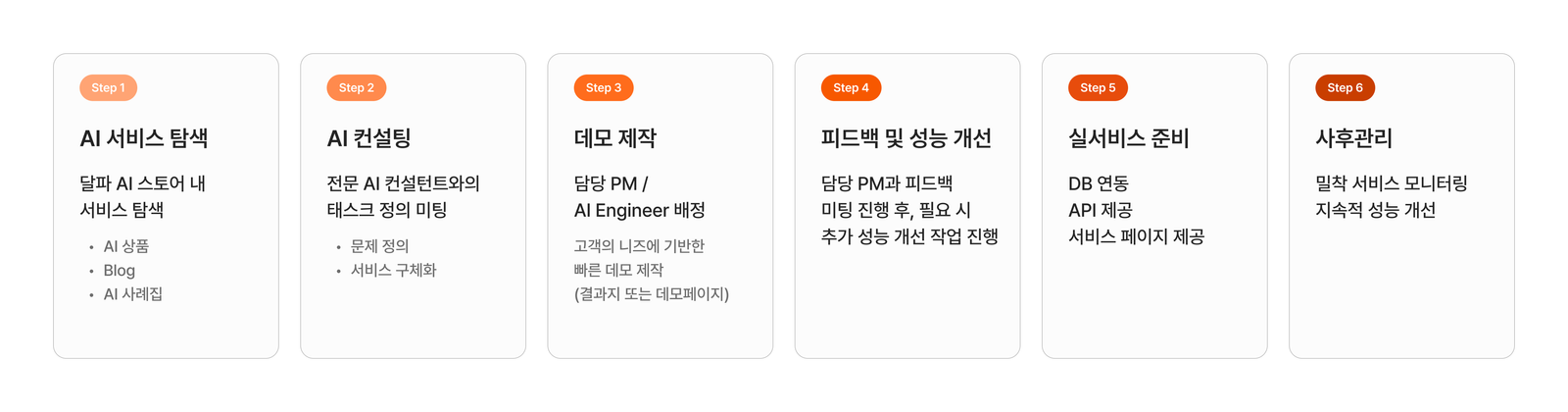
The Sprint Team I belong to is an organization where an AI Consultant, AI PM, and AI Engineer form a single team to solve clients' problems with AI.
The AI Consultantprecisely defines the client's problem, plans how it can be solved with AI, and breaks it down into concrete Tasks.
The AI PMis responsible for refining the plan as the defined problem is built into an actual PoC (Proof of Concept), validating the value the client can feel, and persuading them.
The AI Engineeruses the latest AI technology to develop the planned solution and deliver custom results to the client.
Including consulting, from the first meeting to the adoption decision, clients can receive a custom solution within about three months.
As the AI PM, I take full charge of communication with the client from the moment the PoC begins until the solution decision is made. In this process, I structure the requirements so the AI Engineer can develop them, while at the same time explaining to the client "what value this PoC can confirm" and making the case for its usefulness.
To developers, I mainly convey the client's needs or specific requirements broken down to a technical level so they can understand them. With clients, I mostly communicate by clearly distinguishing and explaining what is technically feasible and what is difficult.
What do you consider most important in AI project management?
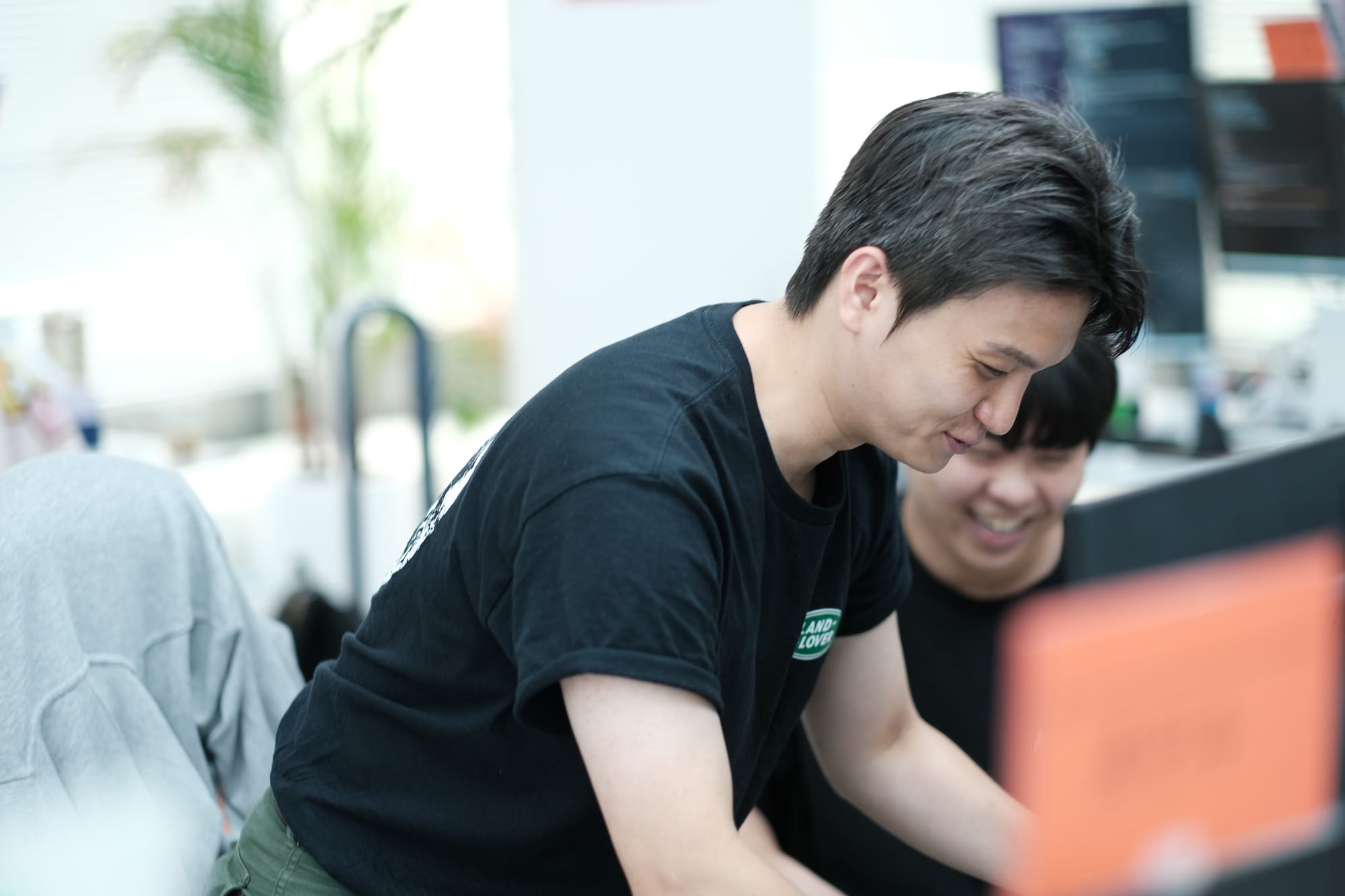
I consider 'value' the most important principle. An AI project is a process in which the client and Dalpha intensively pour in resources together for an average of more than two months. It's by no means a small investment of time and effort. So from the client's side, they must gain clear value and benefit, and from Dalpha's side, the service we put our passion into must persuade the client and create business value. I believe the PM's role of steering direction and keeping balance in the middle is important, so that all the effort both companies have poured in doesn't go to waste.
Also, I think 'fun' is likewise one of the most important values. Because the PM role sits in the middle between the client and the internal team, there's a lot of understanding and reconciling of different positions. If this process feels like nothing but exhausting mediation, it's easy to burn out — but I actually find it fun. Creating an atmosphere where the client and team members can work while laughing together, and sharing the sense of accomplishment that comes from solving complex problems, is a huge source of motivation for me.
In a word, then, making everyone involved in the project feel "this was time well spent" is what's important, I'd say.
What's the most memorable project for you?
The most memorable moment was the experience of staying up all night solving a problem together with the AI engineers on Company A's internal search chatbot project.
We needed to display documents from the correct sources in the chatbot's answers. In the process of implementing this, we spent a whole night until morning trying various approaches to break through a technical roadblock. I can't forget the sense of accomplishment when we finally found a solution and built a service that actually worked.
I thought carefully about why that project stayed with me. I think it's because it carried meaning beyond just the deliverable.
The very process of working through it together and ultimately pulling it off with the team members was deeply rewarding for me, and the client also expressed gratitude, deeply moved that we'd tried to solve their problem as if it were our own. Reactions like that made it all the more rewarding.
Conversely, was there a project that left you with regrets?
There was a period when I was handling more than ten projects at once. For one client's project, even though there was a part that needed usability improvements, I didn't allocate my resources properly, so my response was delayed. In that process the client's enthusiasm cooled, and it eventually led to dissatisfaction. It was one of the moments that weighed on me most as a PM.
There was a lesson I learned from this experience: I shouldn't try to handle everything alone. So now, when a problem I can't handle comes up, I don't force myself to take it all on. Instead, I make it a principle to share it with the internal team in advance and collaborate to minimize the impact on the client.
Not just on a personal level, but internally at Dalpha too, we improved how we run projects and built a system that lets us steadily run multiple projects in parallel without losing the client's trust.
What's the hardest part of the job?

The hardest moments are when I can't provide the value the client expects to a satisfying degree.
As a project progresses, there are times when it looks difficult to deliver a service with real value. Each time, I keep asking myself questions like "Did we really give it our all?", "Is there another way to solve this from a planning standpoint?", "Did I fail to find a better solution because my knowledge fell short?"
Sometimes these questions lead to an answer, but in the end there are times when we can't find a solution and have to explain the limits to the client. That moment feels like losing to the problem — like our efforts and the client's expectations both fall through at once — and it's the hardest of all.
That's exactly why I try not to neglect steadily studying and following up on new technology. I believe that constantly expanding my own capabilities — so I can propose even slightly better methods to clients and plan one step further than before — is the way to avoid facing this kind of difficulty next time.
What do you consider most important in communicating with clients?
There are two principles of communication I value.
The first is continuously sharing the current situation. Projects can always run into unexpected variables and delays. But if you don't share those situations in time, the client's anxiety grows — "Is this actually going well right now?" By steadily sharing even small bits of progress, I try to convey the message that we're continuously paying attention to the client and doing our best. I believe this kind of transparent communication ultimately builds good rapport and becomes an important foundation for a long-term partnership.
The second is expressing things with care. No matter how good a message is, if it's delivered crudely it can easily damage the relationship. Conversely, even a somewhat sensitive message can maintain a positive relationship if expressed thoughtfully. It's especially easy to overlook this the busier and more overloaded you are, so I always stay mindful not to miss it. I see careful expression as more than just word choice — it's an expression of an attitude of respect toward the client.
What's the most memorable thing a client has ever said to you?
The most memorable feedback was something I heard while working on the Daesang Corporation project. At the time, the person in charge told me, "Working with you, PM, I had real fun working for the first time in a long while," and those words resonated deeply with me. It confirmed for me that a project isn't just about leaving behind a deliverable — the process of working together can itself be an enjoyable and meaningful experience.
What goal or vision do you want to achieve as an AI PM?
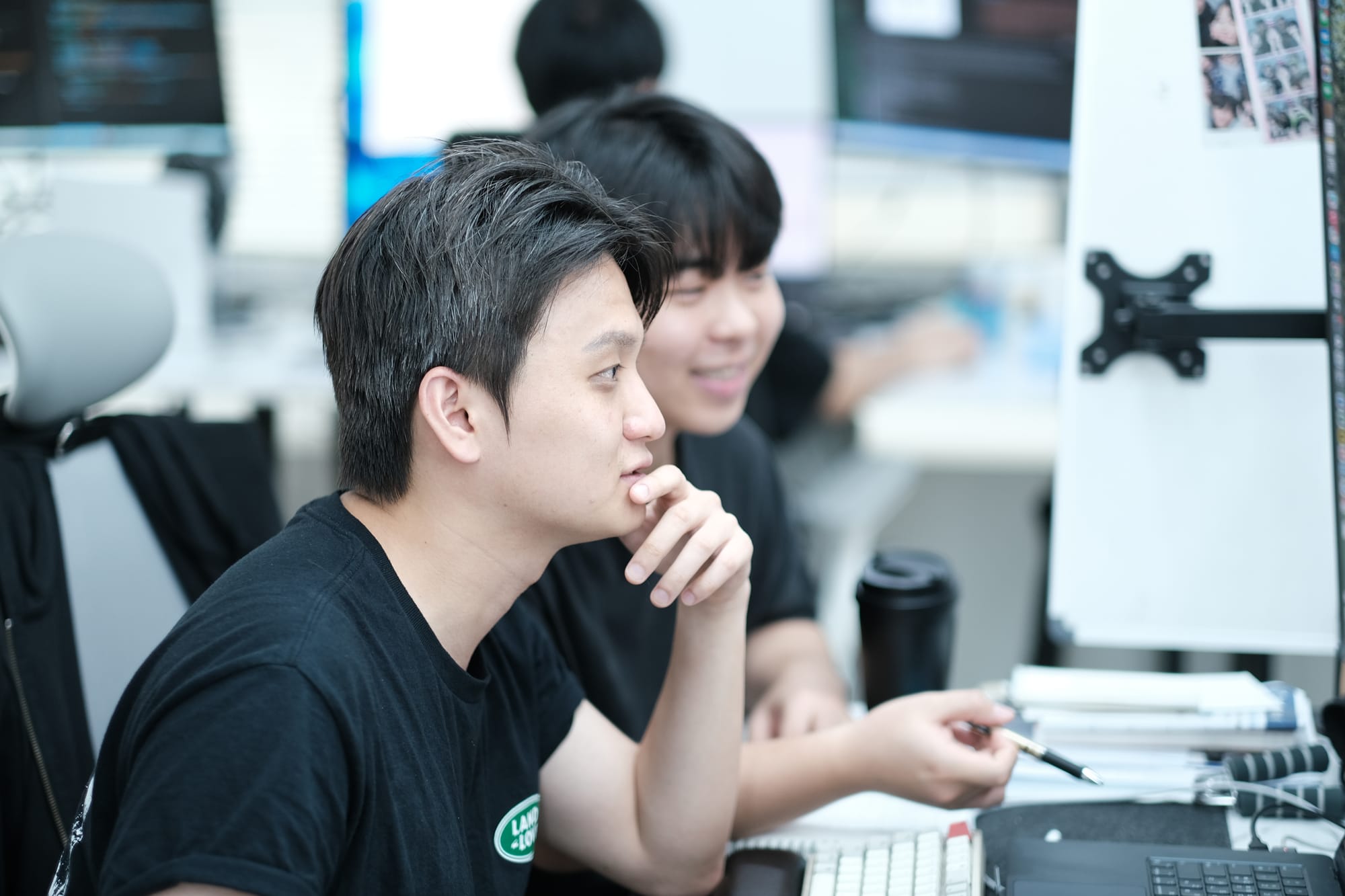
I want to be a PM who gives both clients and Dalpha the impression that working with this person is easy and enjoyable.
Because the PM role is, by nature, closely connected to many stakeholders, it can have a big impact on the overall mood and flow of a project. I've felt this when anyone — whether a client or a Dalpha member — gains both results and enjoyment in the process of solving a problem.
Going forward, I want to make the very process of solving problems an enjoyable experience, and naturally create better outcomes and business value along the way.
Looking for an AI development partner?
Dalphaoffers 1:1 consulting, where we
plan and build an AI agent optimized for each company and field.
Leave an inquiry below and we'll provide a free consultation.
Dalpha Blog