What if you brought AI into your store's search bar? 6 success stories of AI search
Here's what you'll take away from this post.
- You can see real results when you bring AI into your store's search bar.
- Discover 6 AI search features for improving product search.
- Learn how to raise purchase conversion rates and lower bounce rates.
For a successful online store, AI search is now no longer optional—it's essential.
For everyone who wants to raise the purchase conversion rate of the customers they worked so hard to attract, here are 6 examples of stores running AI product search.
If your product search looks like this, you need to pay closer attention
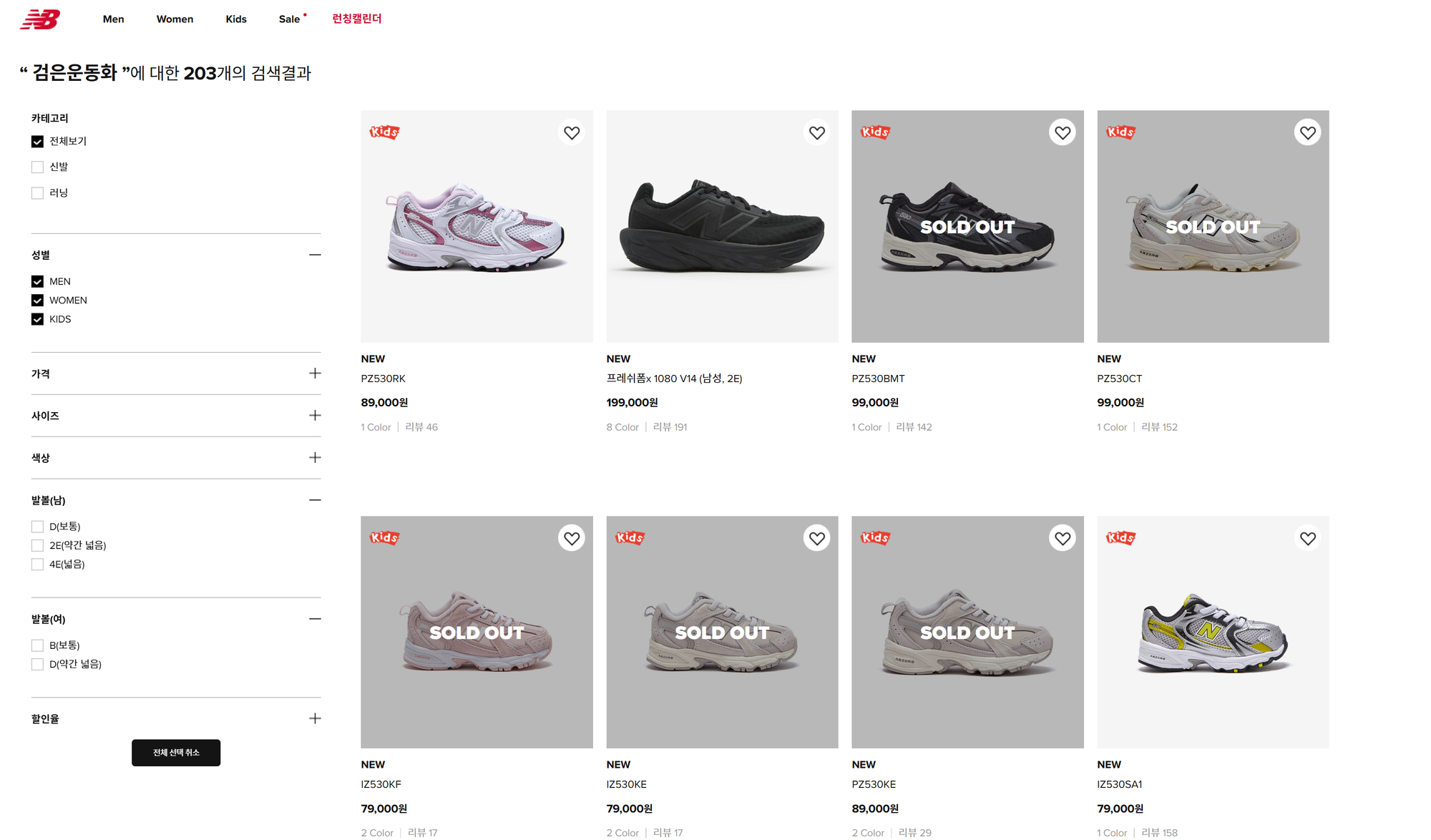
You search for sneakers, but last season's sneakers show up first.
You search for 'chima' (skirt) but no skirts come up.
fprldtm (typing 'leggings' with the keyboard in English mode) → no leggings come up.
You might think, "Come on, surely this much is fine, right?"
But these search failures lead to invisible losses.
When search fails, 90% of customers leave immediately
compared with customers who are just browsing, you lose the search-driven customer segment that converts at 6 times the rate
of all CS inquiries, 15-20% are wasted on search-related questions
Product search matters far more than you think
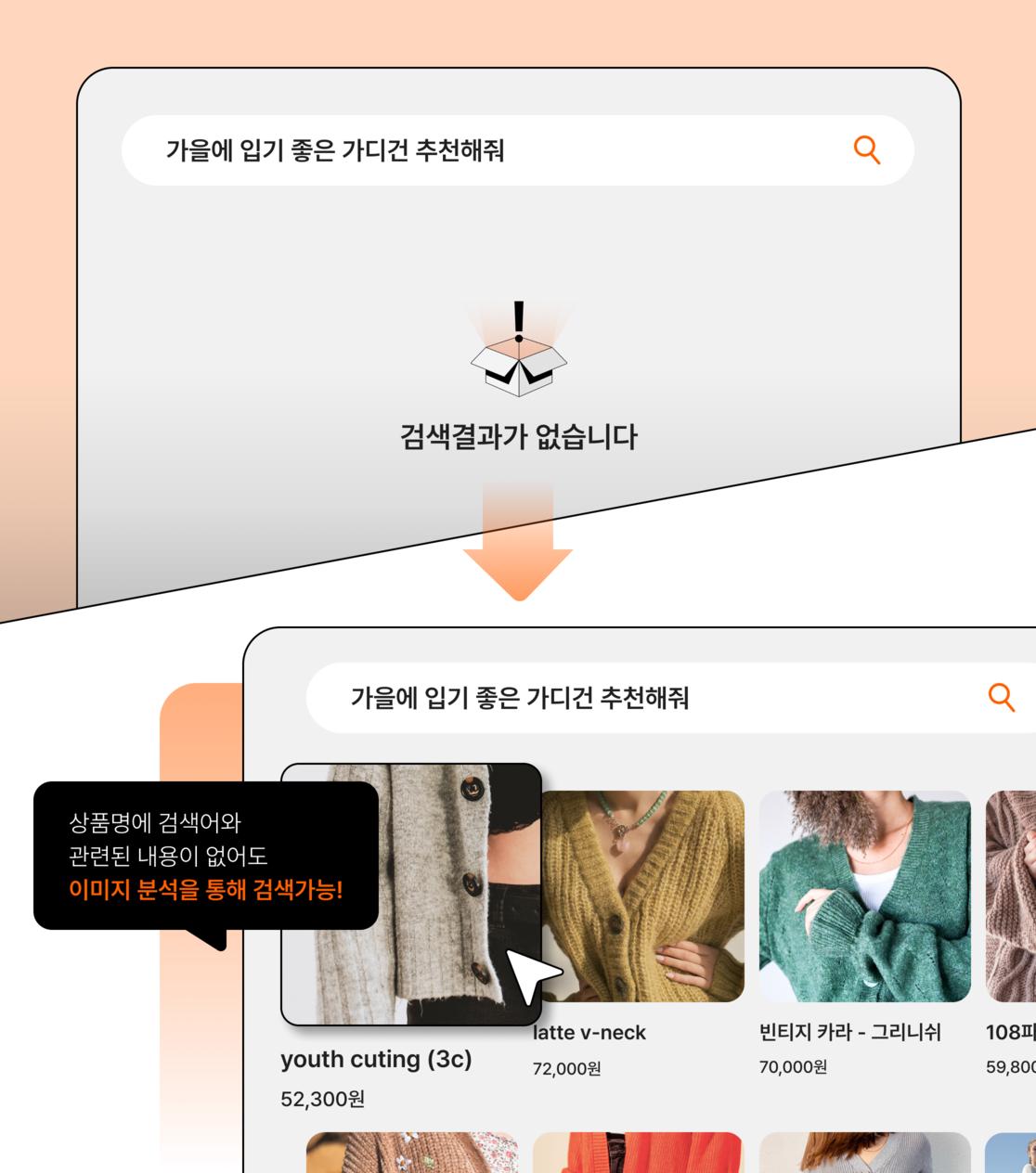
For three reasons, product search matters far more than you might think.
1) First impression
Product search determines the first impression customers form of your store.
When search doesn't work properly, the brand's image takes a hit.
Purchase conversion rates fall, and the store's competitiveness gradually weakens.
2) Consumers' expectations for search
Customers' expectations for search have risen dramatically.
They've come to expect, in your store's search, the same search experience they encounter every day on platforms like YouTube, Google, and Instagram.
Furthermore, with the arrival of ChatGPT, the tendency to want search to grasp 'the customer's intent' and surface the right products is likely to grow even stronger.
3) AI product search that drives revenue
Product search already equipped with AI is playing the role of an excellent in-store associate.
Here are the roles and effects AI product search can deliver across the customer's purchase journey.
Maximize revenue by giving priority exposure to the products you want to sell
Improve purchase conversion rates by reading customer reactions and recommending products
Prevent bounces with accurate product guidance
6 AI search success stories
Here are 6 examples of what becomes possible when you bring AI into your product search bar.
Example 1) It can understand meaning
We searched for 'black sneakers' on Nike and Adidas.

Searching Adidas for black sneakers returned no results.
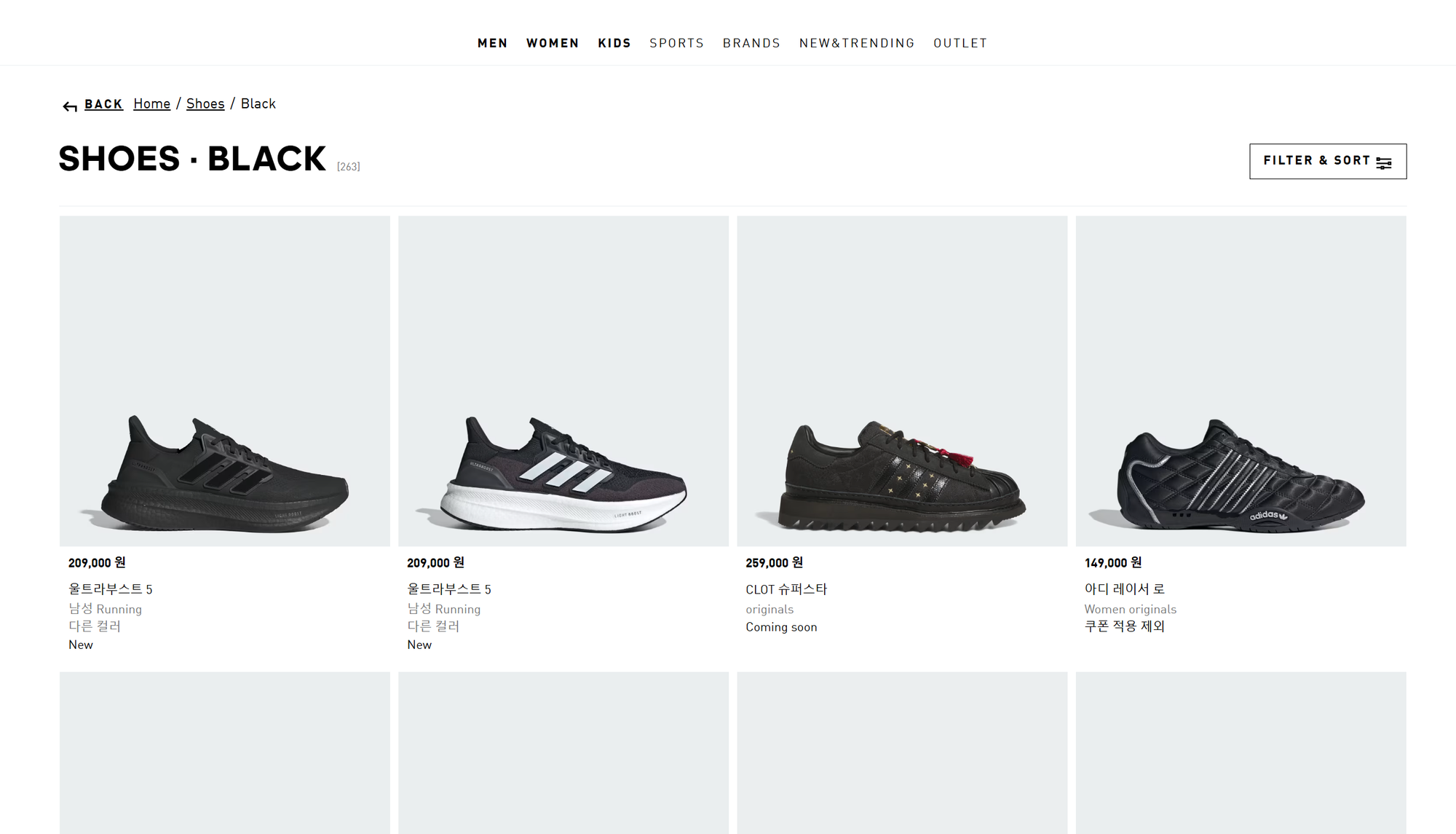
Yet Adidas currently sells about 263 black sneakers.
In other words, Adidas missed the chance to surface 263 products.
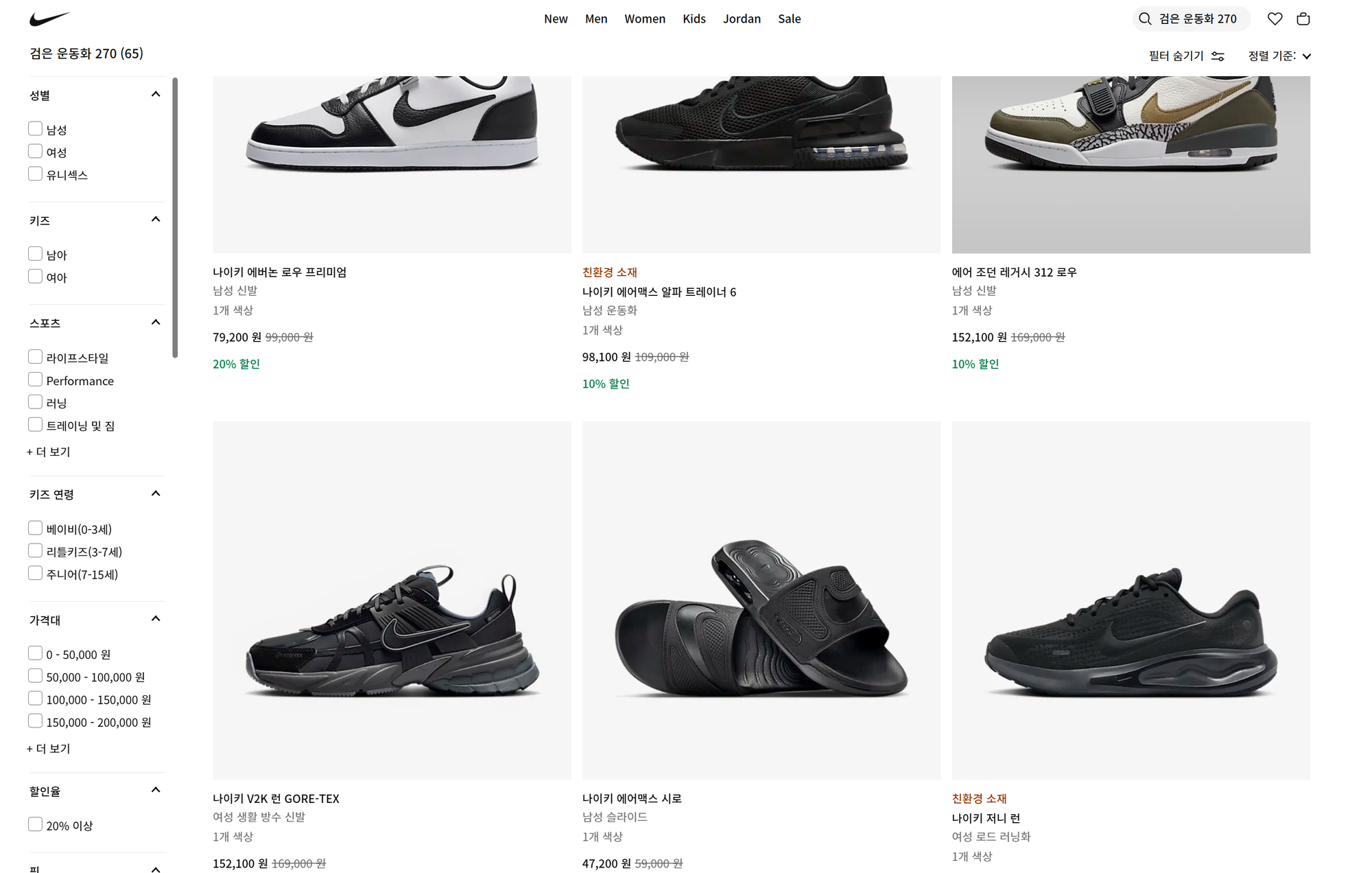
Nike, on the other hand, returned proper results when we searched for 'black sneakers'.
And when we added size 270 to the search, it also showed products available in that size.
It's just as if you'd asked an associate, 'Could you show me black sneakers in size 270?'—and they showed you the products.
Like this, AI search can grasp the customer's intent and surface the right products.
This is the key to preventing customer bounces and raising purchase conversion rates.
Example 2) AI can recommend the products you want on its own
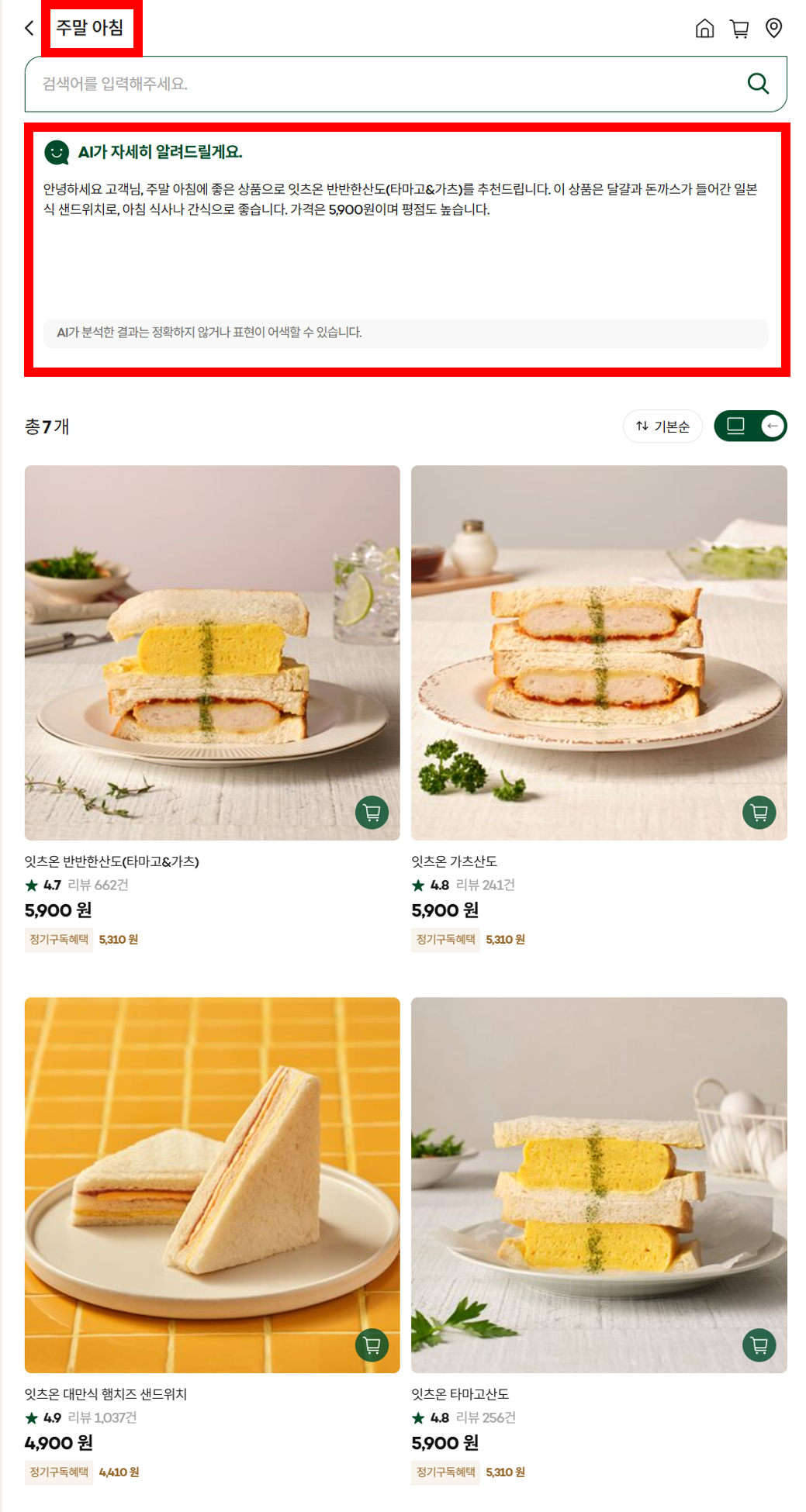
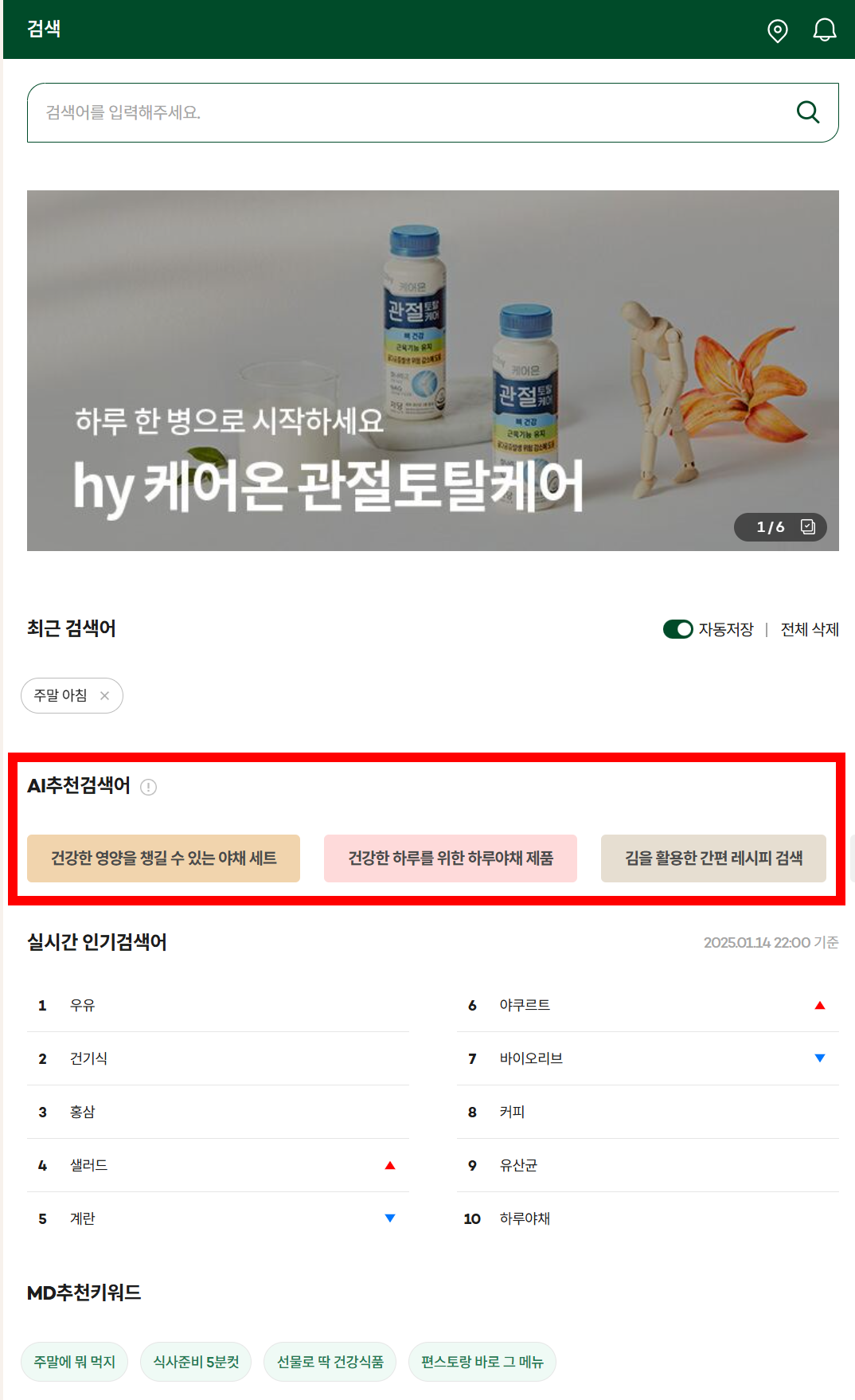
'Freedit,' the own-brand store launched by Korea Yakult, applies AI to power its product-recommendation feature.
When we searched 'weekend morning,' it recommended Banban Sando, a great choice for a weekend morning.
It also uses the data AI continuously collects as 'recommended search terms,' delivering a better customer experience.
Example 3) It can naturally correct typos

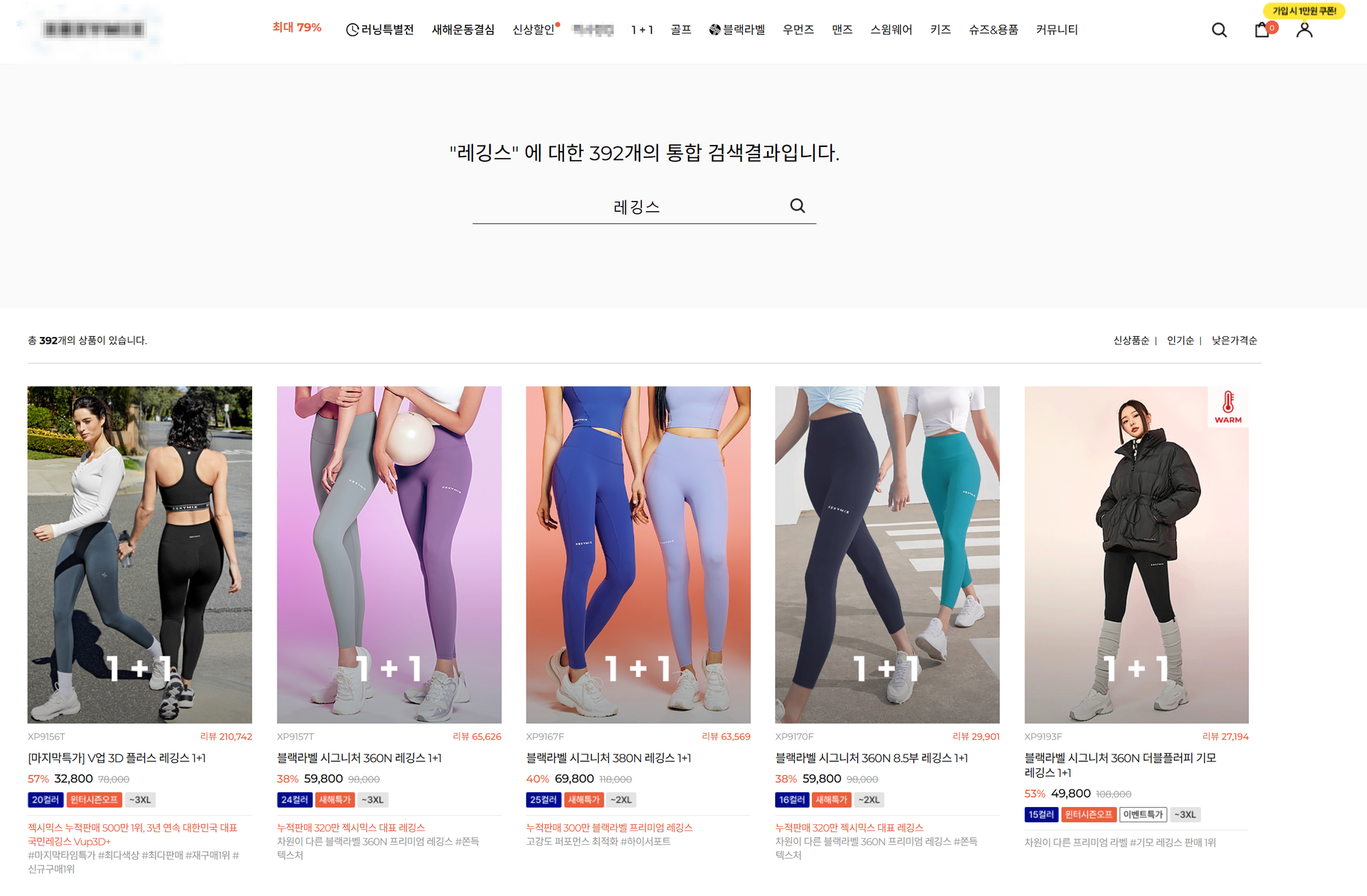
When we searched athleisure brand X for 'leggigs' (a typo for leggings), no results came up.
That brand missed the chance to show customers 392 products.
On average, 20–30% of searches are said to contain spelling errors or typos.
Doesn't it feel like a waste to let users leave seeing nothing but a "No search results" page just because they mistyped their query?
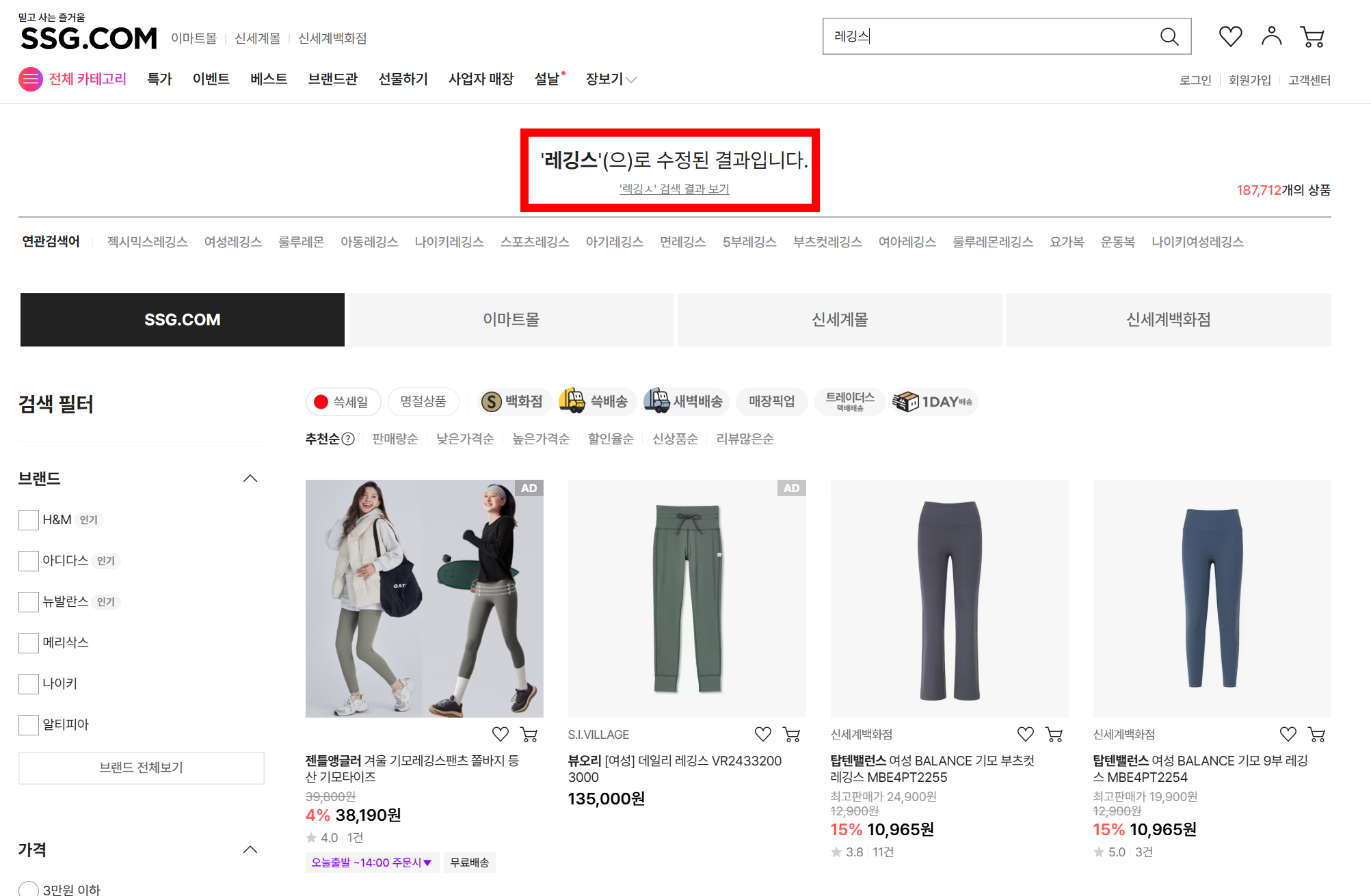
When you enter 'leggigs' on SSG, it automatically shows search results corrected to 'leggings.'
By showing search results that match the customer's original intent, it delivers a smooth customer experience.
It also avoided missing the sales opportunity.
Example 4) It can handle spacing
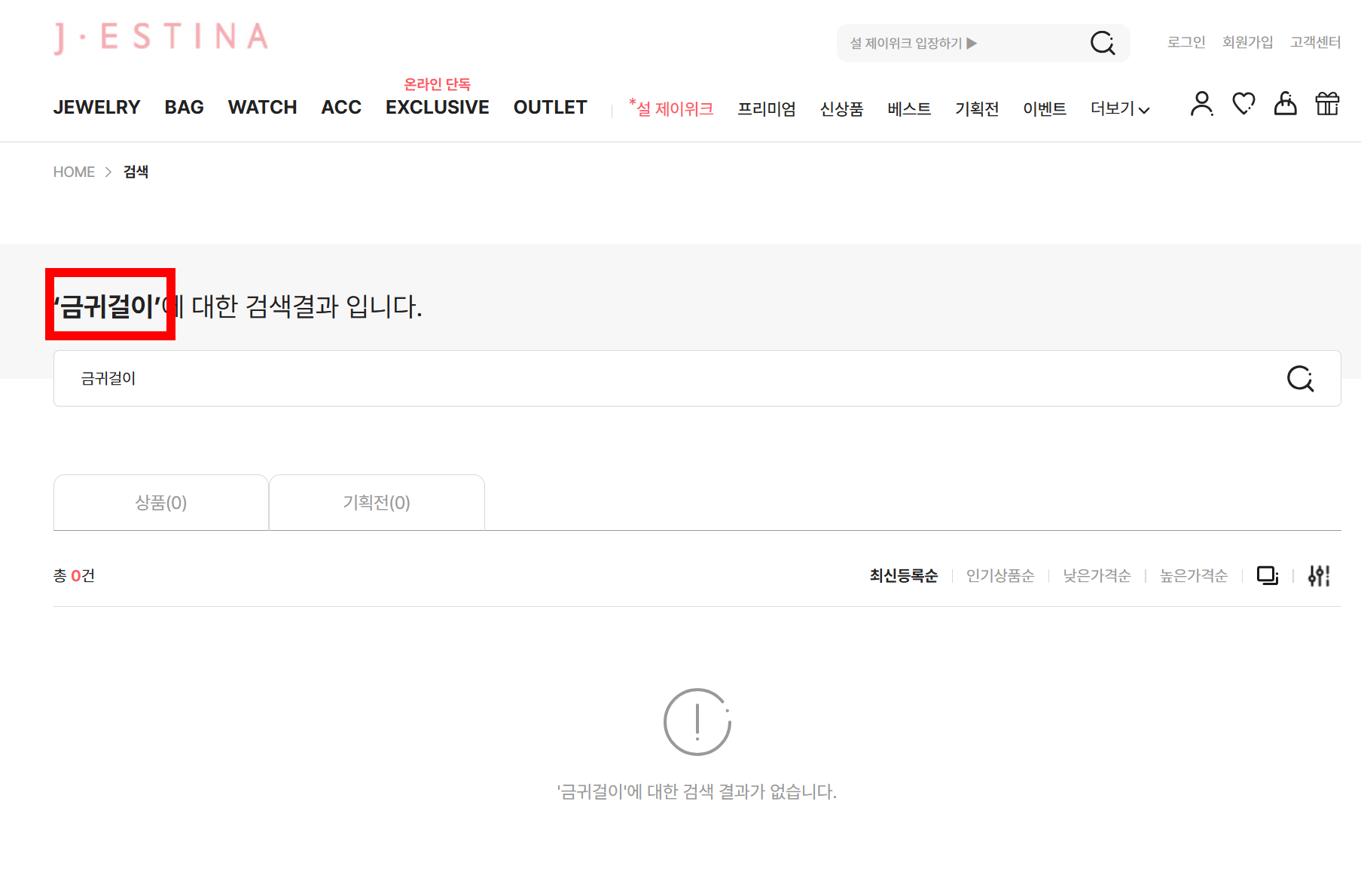
Screen of searching jewelry brand J for 'goldearrings'
On jewelry brand J, we searched for 'goldearrings' with no space.
Not a single gold earring product comes up.
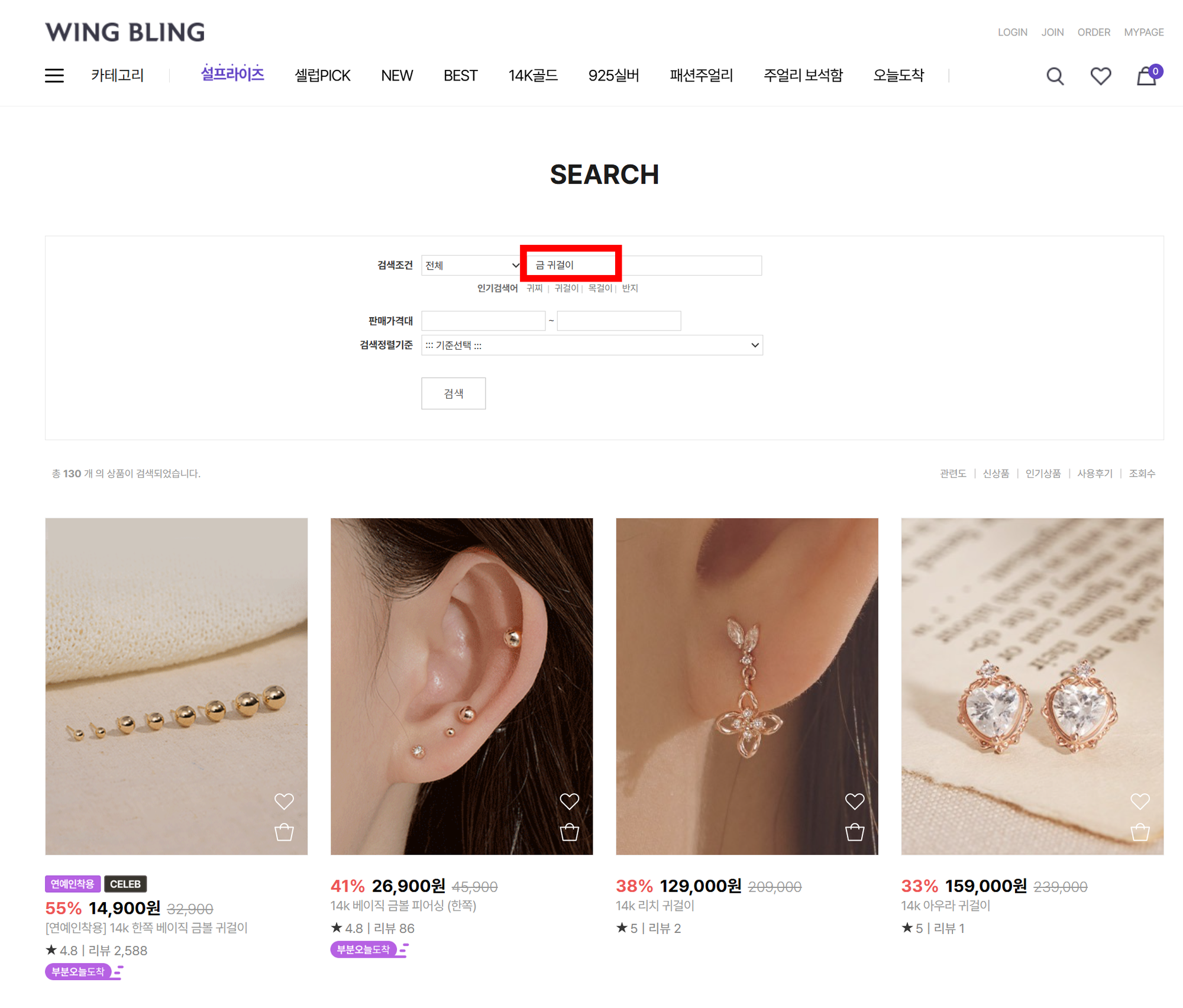
Screen of searching jewelry brand W for 'gold earrings' and 'goldearrings'
On jewelry brand W, by contrast, searching 'gold earrings' and 'goldearrings' returns 130 and 110 products respectively.
The difference in product count, and the types of products shown, aren't much different.
By delivering the products customers want regardless of spacing, you can prevent customer bounces.
Example 5) It can show the same results when synonyms are entered
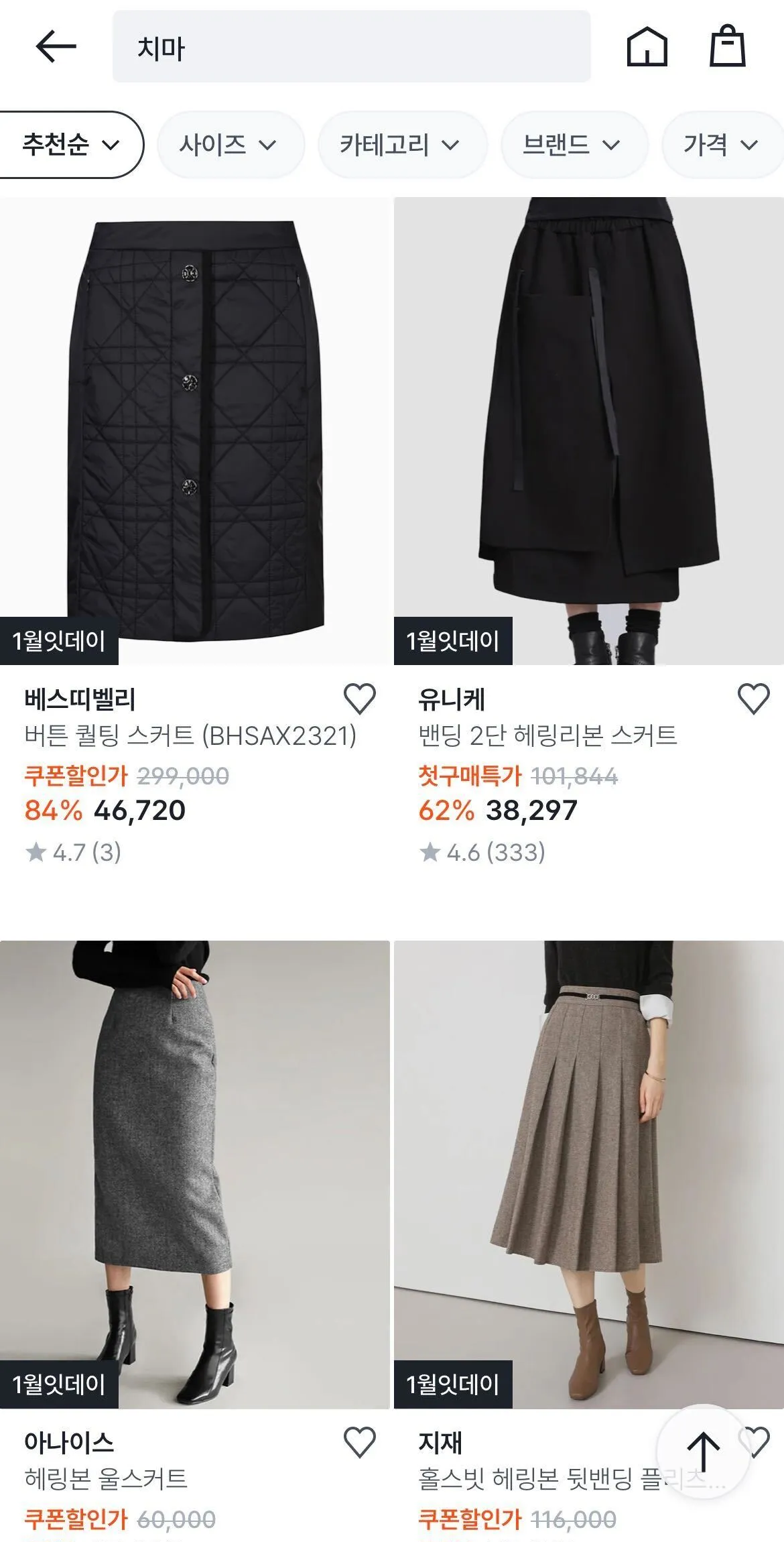
Queenit, a fashion app for those in their 40s and 50s, recognizes synonyms like 'chima' and 'skirt' as the same word and shows them together.
It looks like very simple handling.
But synonym handling can apply not only to commonly used nouns but also to specific products and brands.
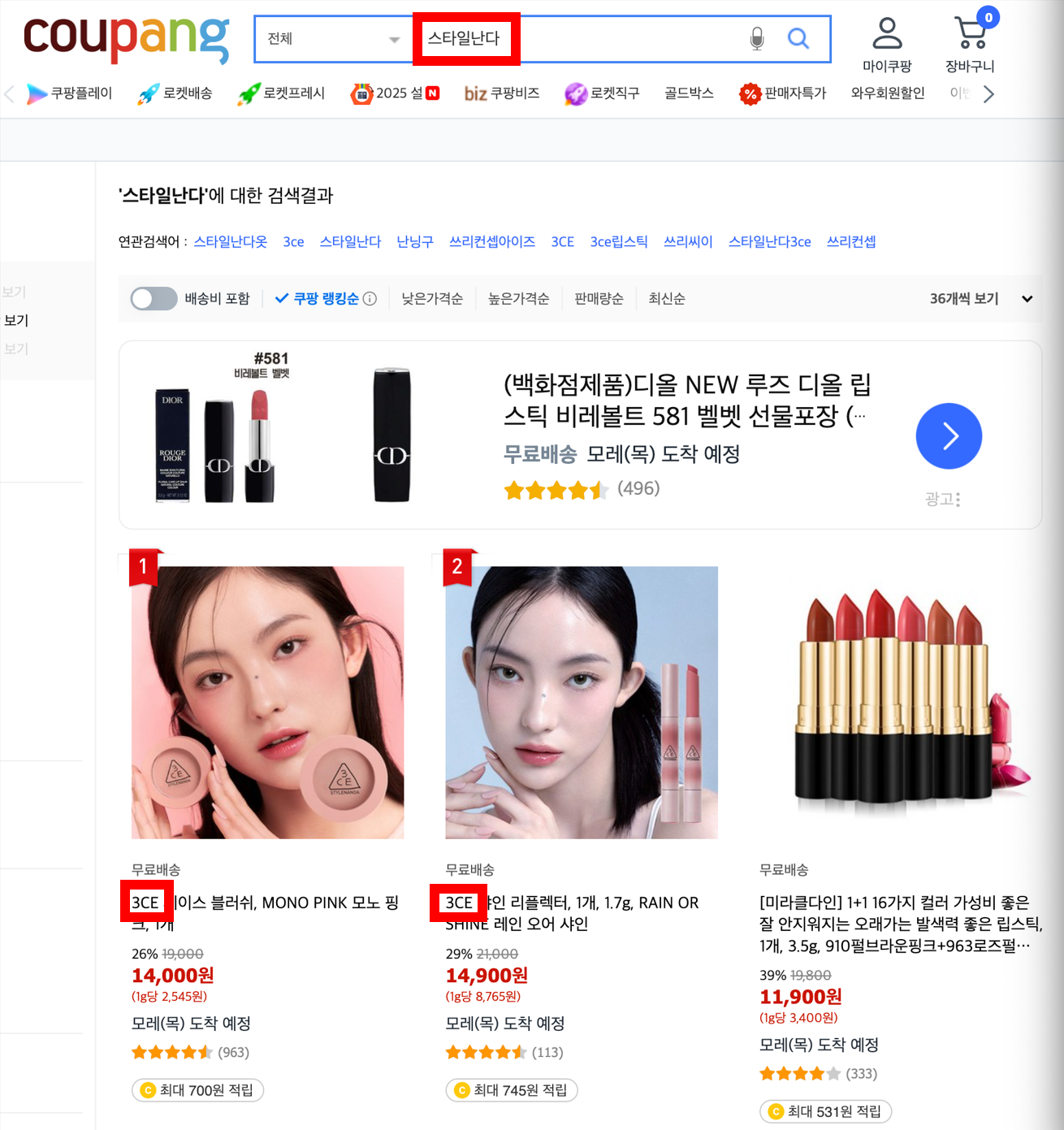
Searching Coupang for 'Stylenanda' surfaces 3CE products.
This is the search term that customers familiar with the old brand name 'Stylenanda' naturally used to look for 3CE products.
In effect, the request 'show me Stylenanda products' was interpreted to mean the same as 'show me 3CE products.'
Like this, synonym handling lets you effectively surface products that match the customer's intent.
Example 6) It can preview product thumbnails and prices
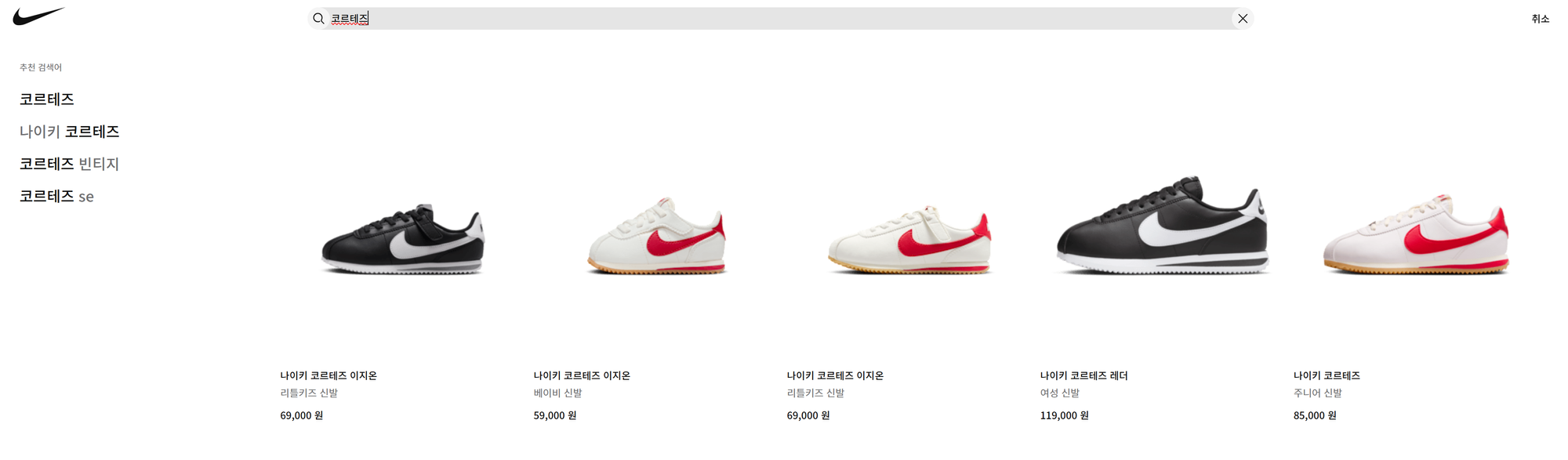
Nike provides a search screen like the following the moment a customer types a word into the search box.
Recommended search terms
Product price
Related product collections
By showing related products and their prices, customers are more likely to find what they're looking for.
By quickly guiding customers to the product they want, you can expand sales opportunities.
Beyond this, the following are also possible.
Adjust search-result rankings to surface the products you want first
Use customers' behavioral data to recommend exactly the right products
Discover business insights through your search data
Want to bring AI search into your store?
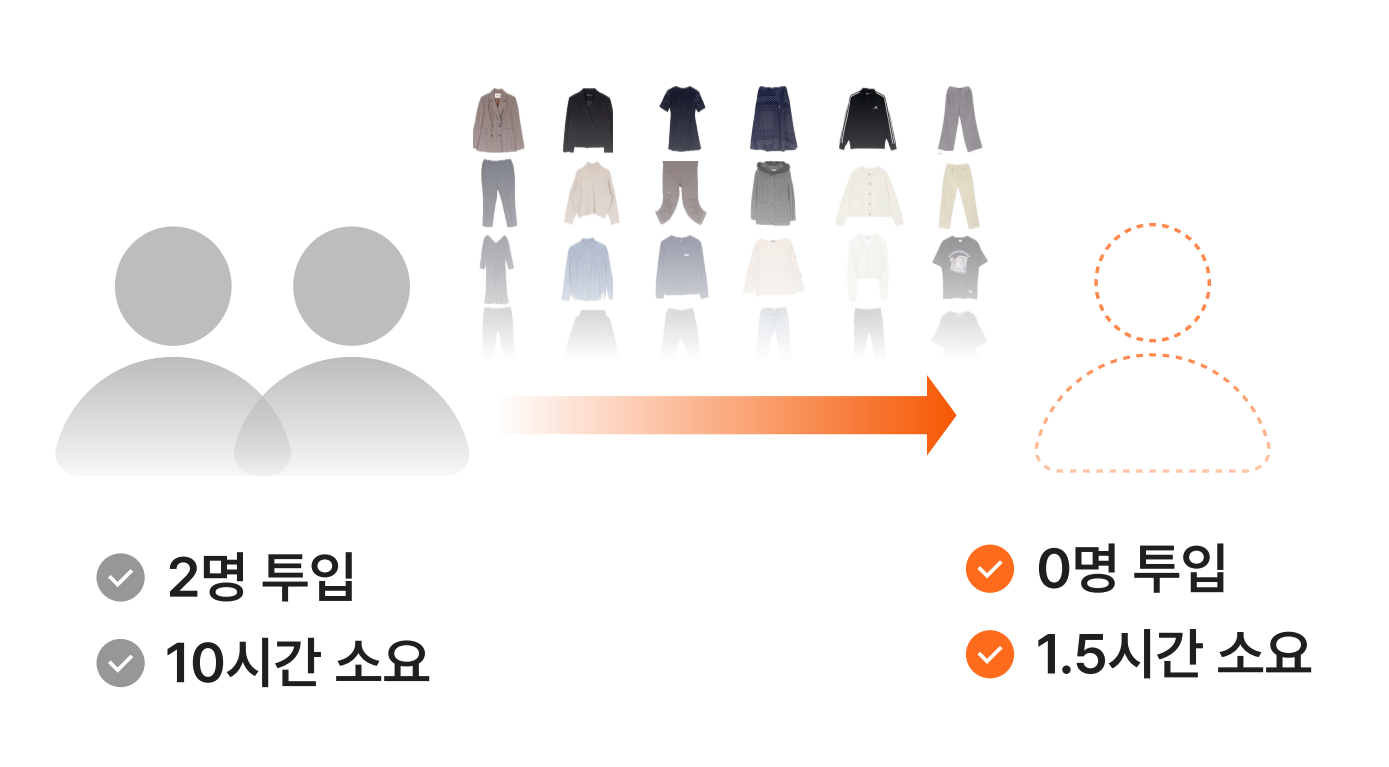
With Dalpha AI Search, you can carry out this entire process with ease.
Worried it might be an adoption that delivers no results? No need—we verify it for you directly.
We provide metrics that let you gauge efficiency: NR (No Result), CTR, CVR, ATCR, GMV...
We offer free consultations to stores interested in improving their search feature, so reach out right now.
Dalpha Blog