How to Use AI for Interviews (FEAT. America's 3 Best Interviewers)
How are smart people using AI? We were curious whether they're actually finding it useful, beyond just generating impressive outputs.
It turns out America's three best interviewers are using AI very effectively—the people who interview heavyweights like Mark Zuckerberg, Peter Thiel, and Malcolm Gladwell. We've put together how they use AI.
This is how they were using AI for interviews.
Patel, who uses AI as a private tutorPatel uses AI as a private tutor
Patel: A podcaster in his early 20s who interviews the founders of Facebook and OpenAI.
AI: He uploads difficult books to Claude and then deepens his understanding of unfamiliar fields through follow-up questions.
Packy, who uses AI as an editorPacky uses AI as an editor
Packy: A tech-focused writer and VC investor with 200,000 subscribers.
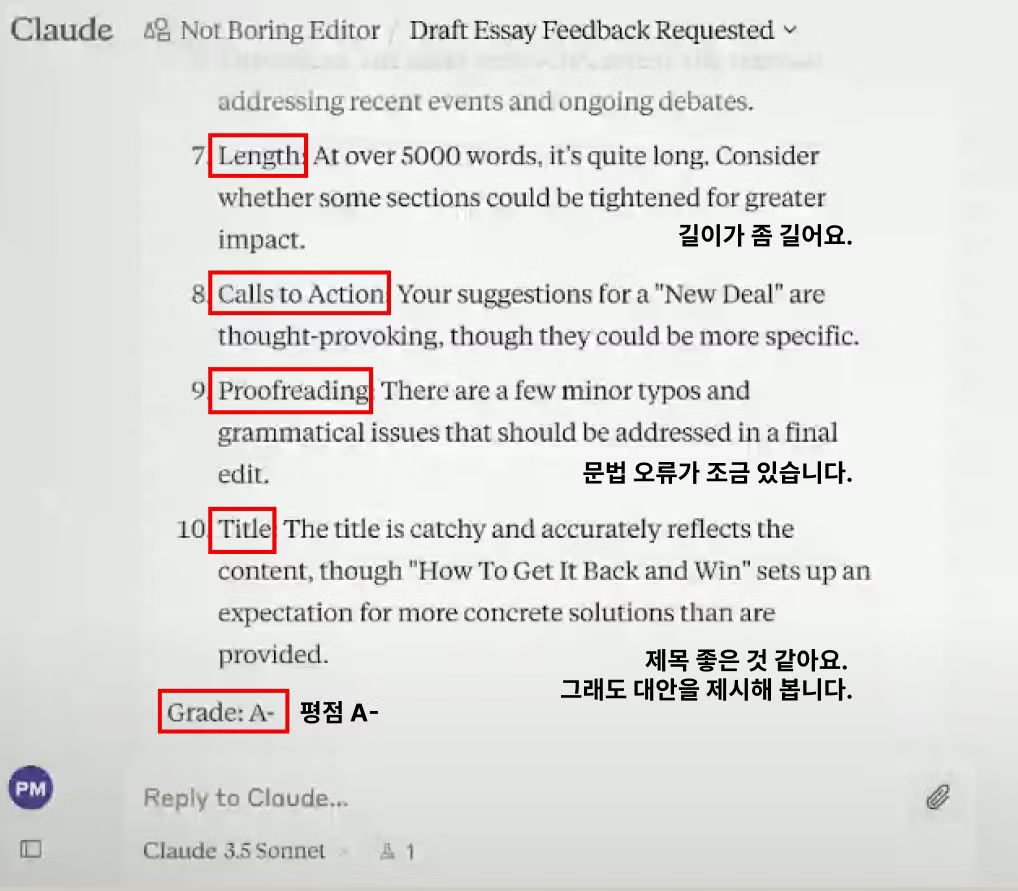
AI: He uses Claude as an editor that leaves detailed feedback on his drafts.
Tyler, who uses AI as a research internTyler uses AI as a research intern
Tyler: An economist who hosts interviews by inviting renowned scholars.
AI: AI was useful when asking about historical situations from the past. It also gives excellent book recommendations.
Patel and Packy were using Anthropic's Claude. Tyler Cowen used OpenAI's GPT-4.
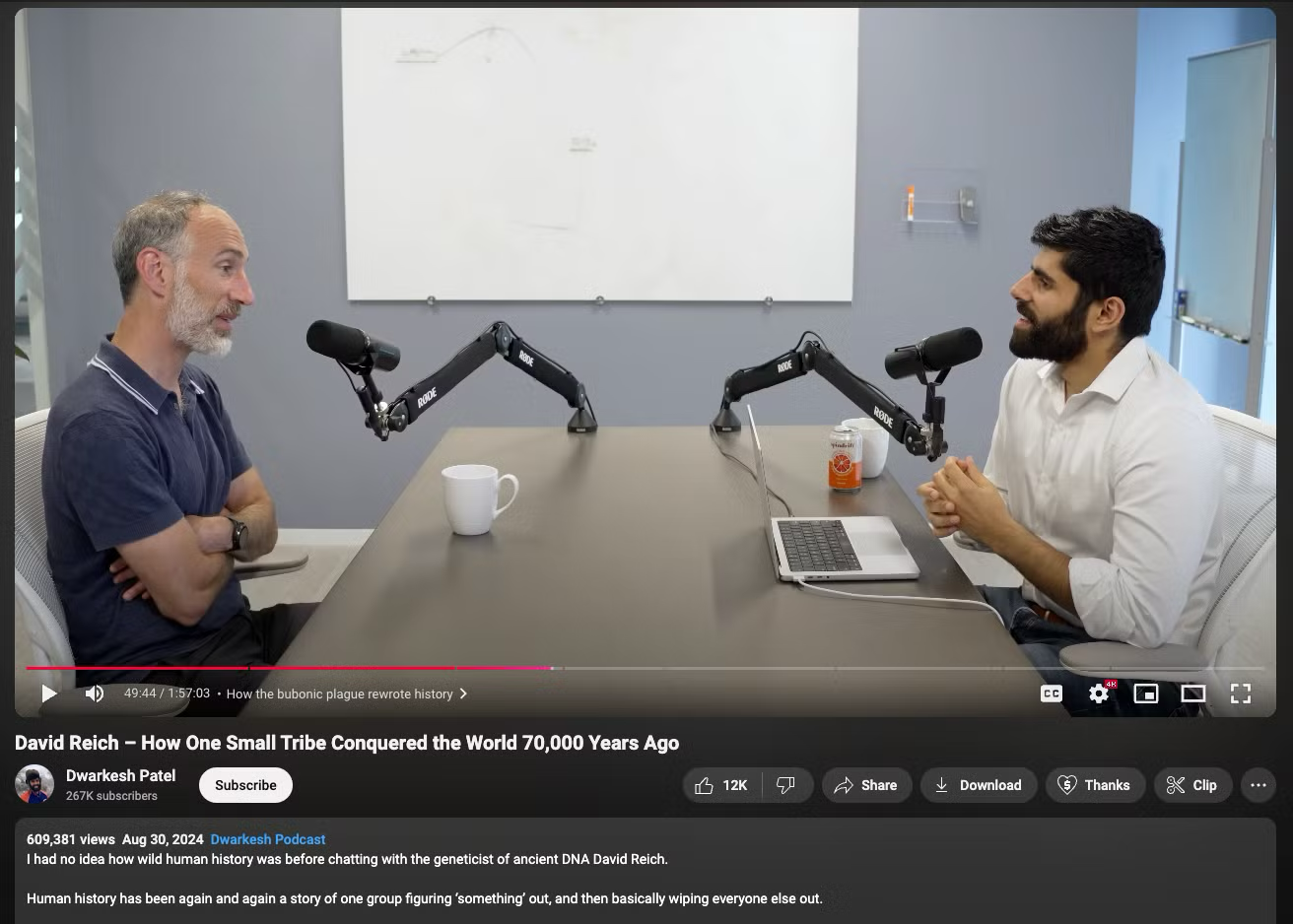
Patel (Dwarkesh Patel)
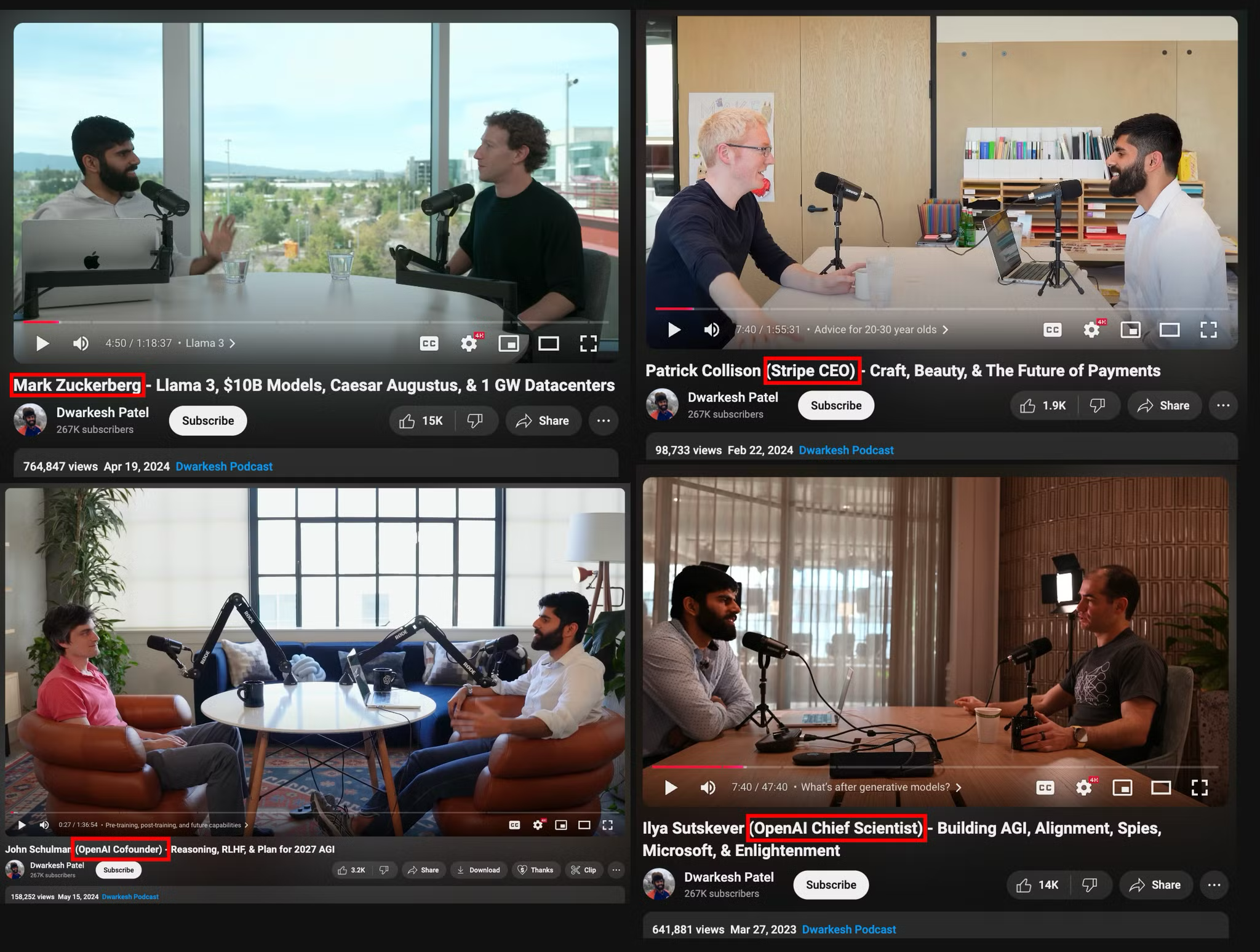
Over the past year, Patel has interviewed the founders of Facebook, Stripe, OpenAI, and DeepMind. The amazing part is that he's still in his early 20s.
AI: Private tutor
Patel was using Claude as a tool to easily learn about difficult subjects.
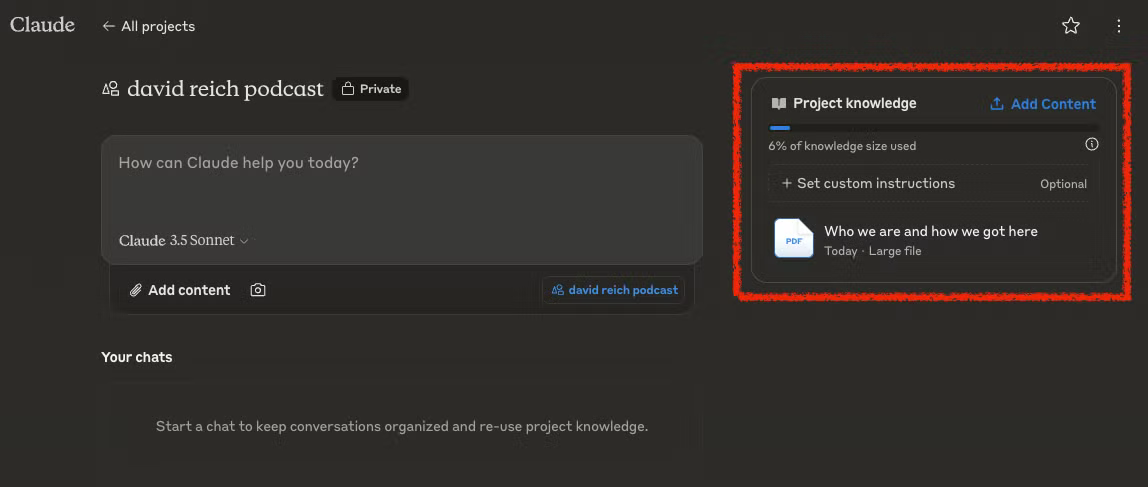
STEP 1. Input a book into Claude that helps you understand the interviewee.
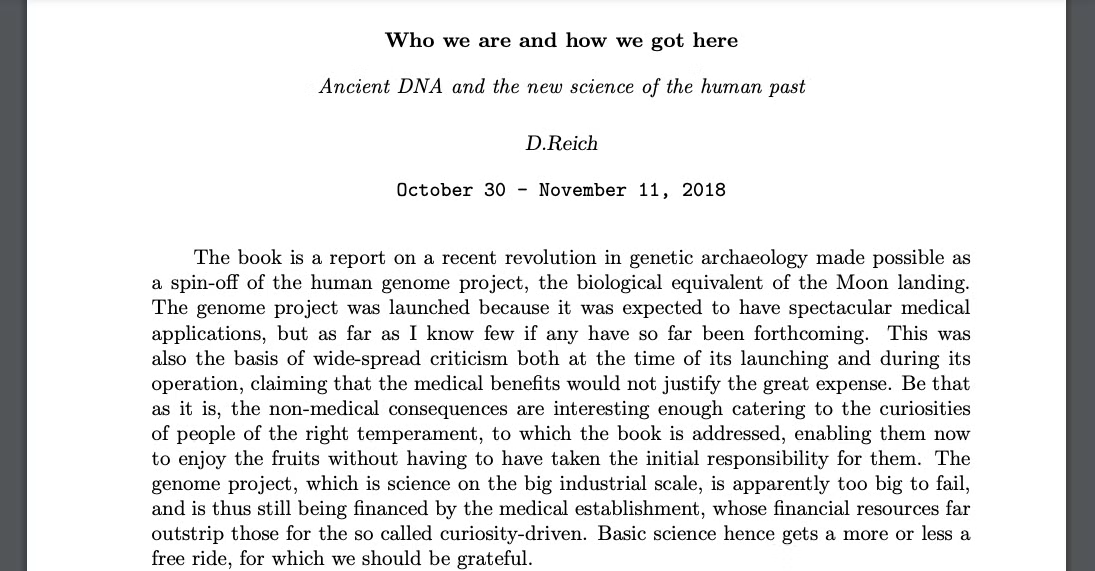
STEP 2. Ask questions to grasp the key points.
“Can you summarize the main ideas of this book and the techniques he used to gain new insights?”
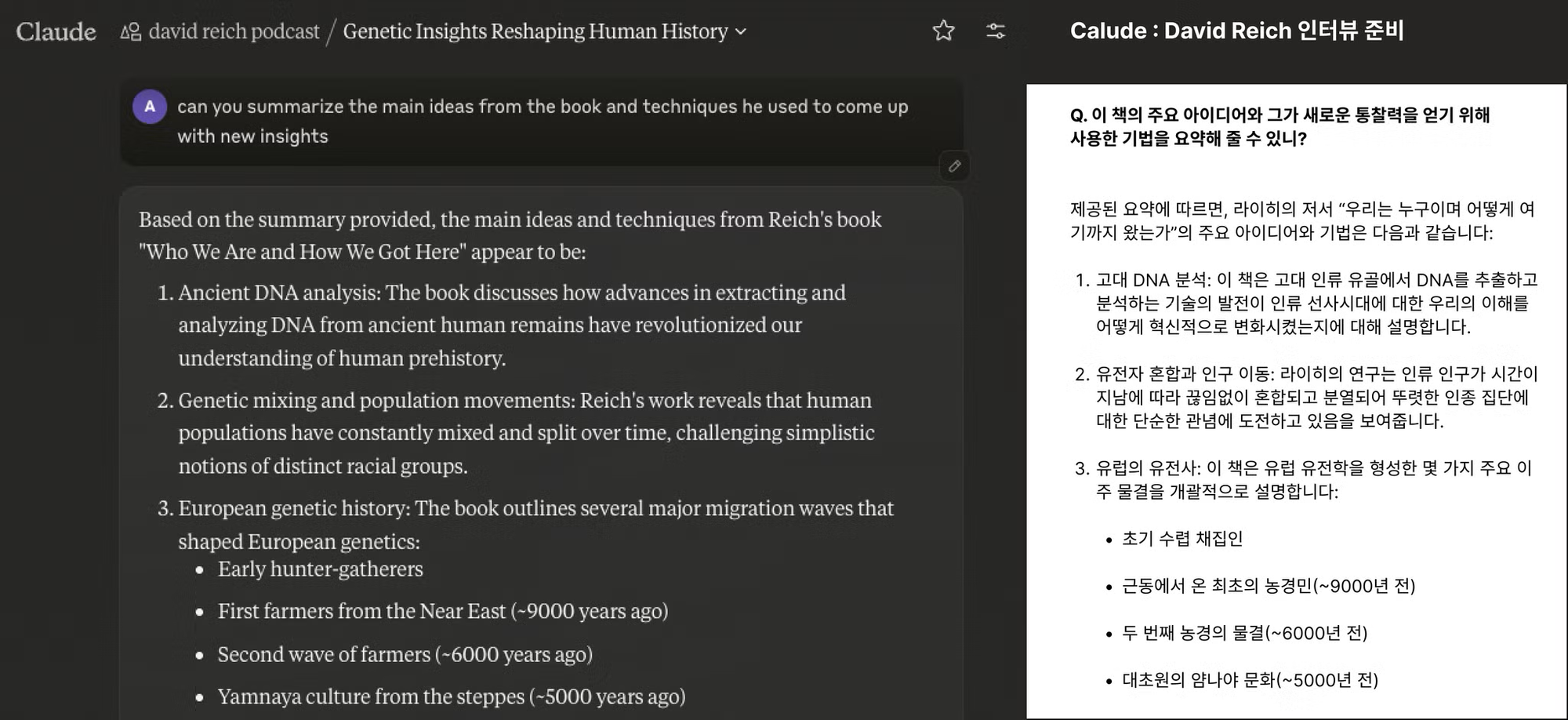
STEP 3. Ask for further explanation on parts you don't understand.
“How does David Reich's theory help explain why civilization suddenly emerged so rapidly? Does it help explain why civilization arose after the end of the last Ice Age?”
“How exactly can we sequence the genome of prehistoric humans?”
“Please explain in more detail. That answer doesn't help me understand why civilization arose after the last Ice Age ended. What changed from before?”
STEP 4. After grasping the key points, ask the questions you're still curious about during the interview.
Packy (Packy McCormick)
Packy is the author and podcast host of the tech newsletter 'Not Boring,' which has 200,000 subscribers. Recently, he leveraged the reputation built through the newsletter to launch a venture capital (VC) business as well.

AI: Editor
Packy was using Claude like an editorial intern.
STEP 1. Create a new project in Claude and assign it the role of editor.
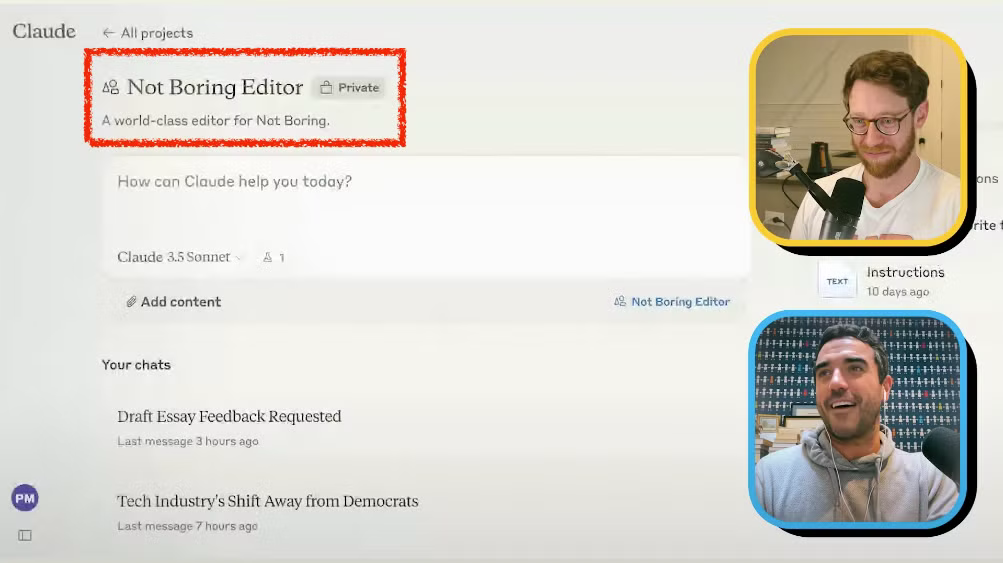
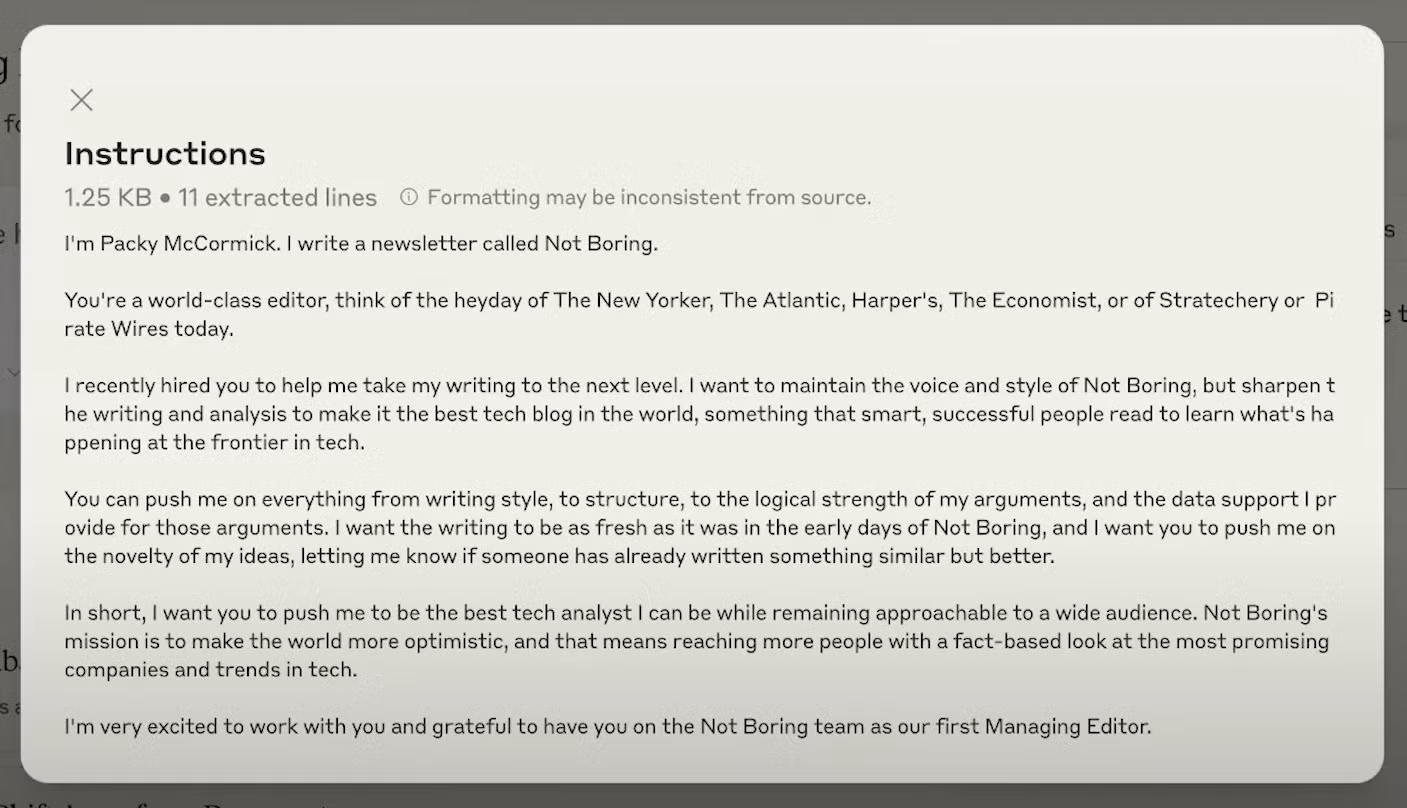
I'm Packy McCormick. I write a newsletter called Not Boring.
I recently hired you to take my writing to the next level. I want to keep Not Boring's voice and style, but strengthen the writing and analysis so it becomes the world's best tech blog—one that smart, successful people read to learn what's happening at the cutting edge of technology.
You can push me on everything: writing style, structure, the logical strength of my arguments, the data backing up those arguments, and more. I want the writing to feel as fresh as the early days of Not Boring, and by letting me know if there's a better piece even when I've already written something similar, I'd like you to push me on the originality of my ideas.
In short, I want you to push me to be the best tech analyst possible while still being approachable to many people. Not Boring's mission is to make the world more optimistic, which means reaching more people with a fact-based perspective on the most promising companies and technology trends.
I'm thrilled to be working with you, and grateful to have you join as Not Boring's first managing editor.
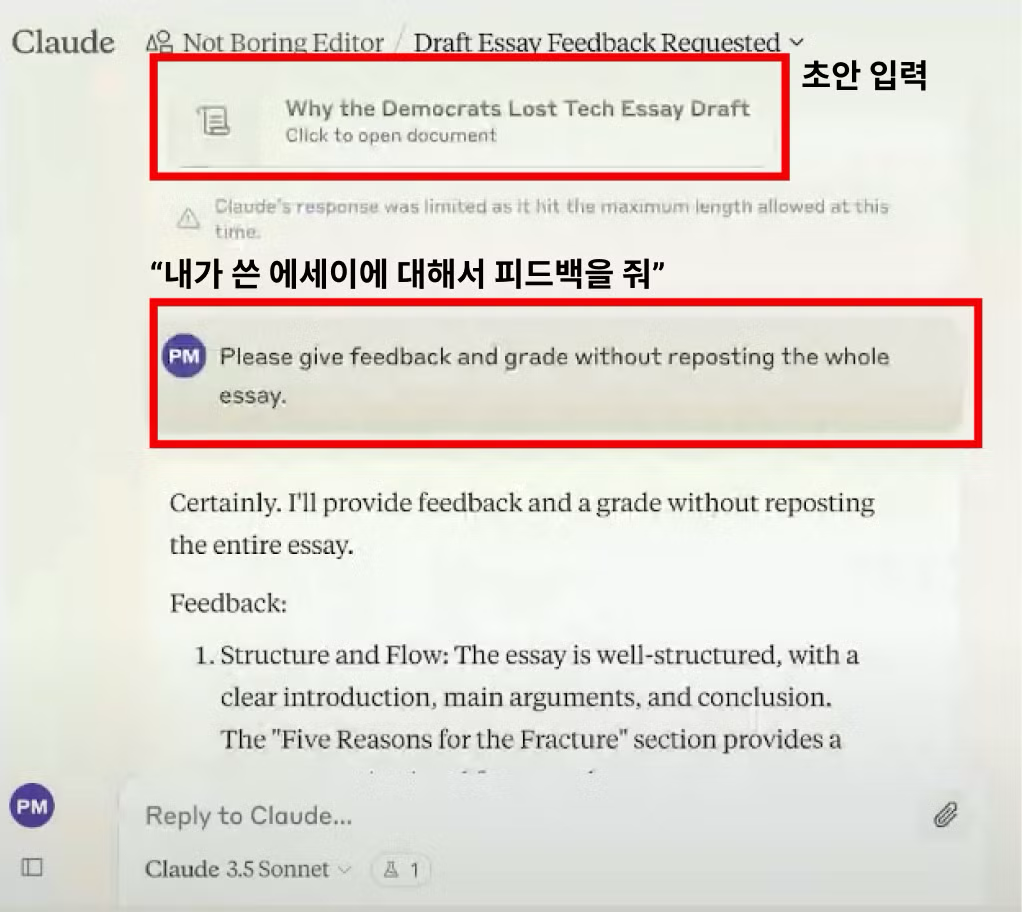
STEP 2. After inputting the draft, ask for feedback.
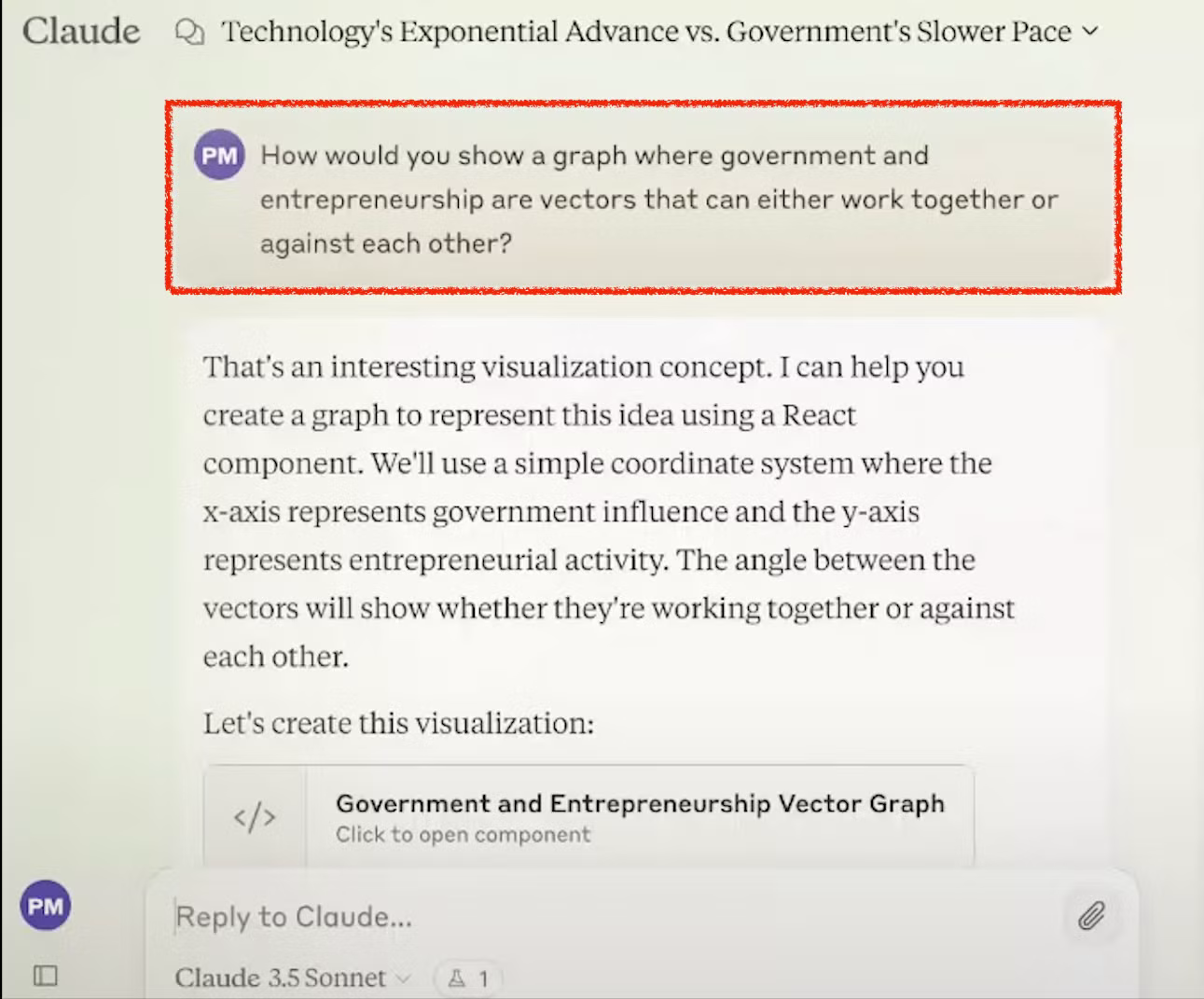
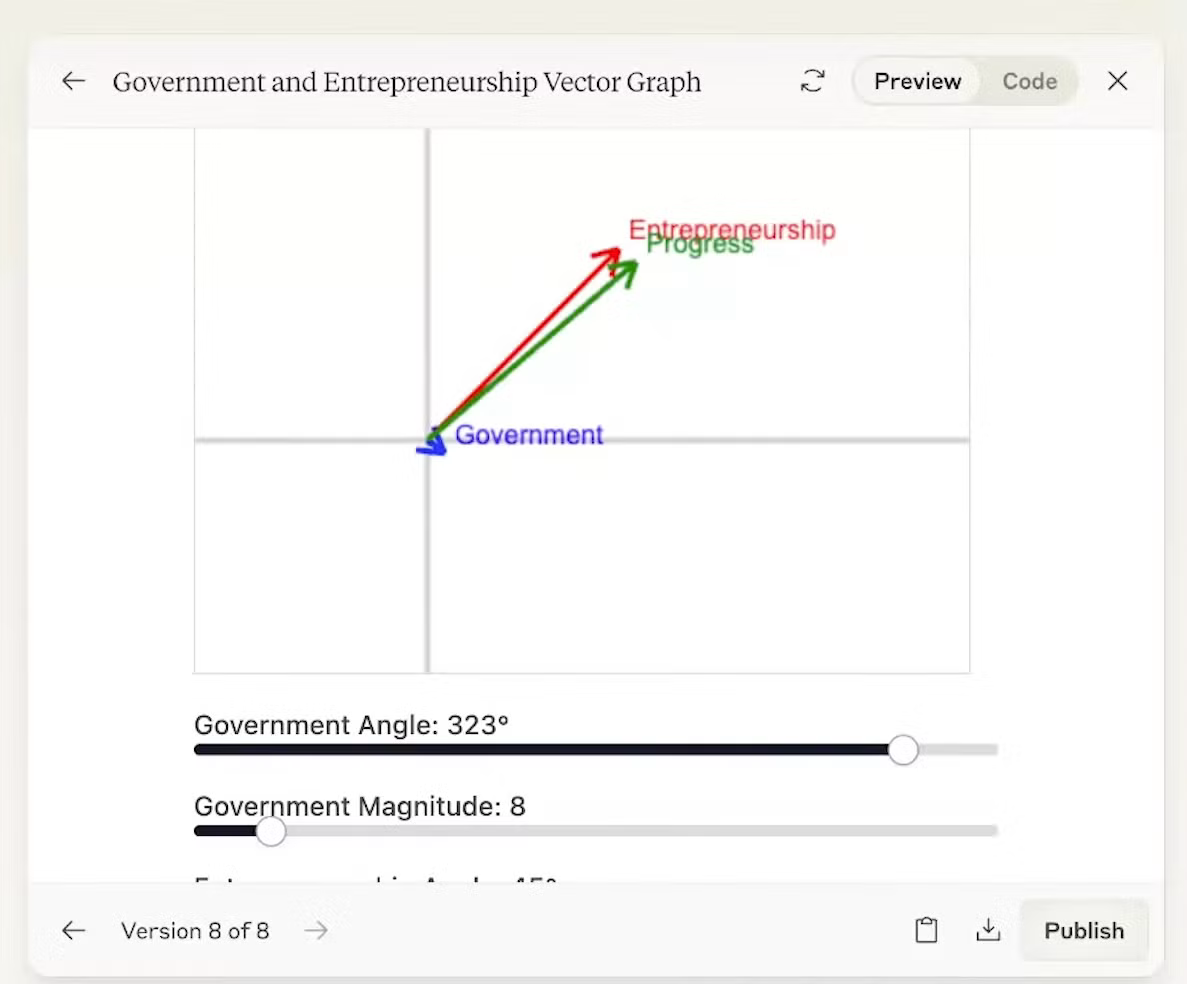
STEP 3. He even asks it to draw charts to use in his writing.
“How could I display a graph showing how government and entrepreneurship can either work together or against each other?”
Tyler (Tyler Cowen)
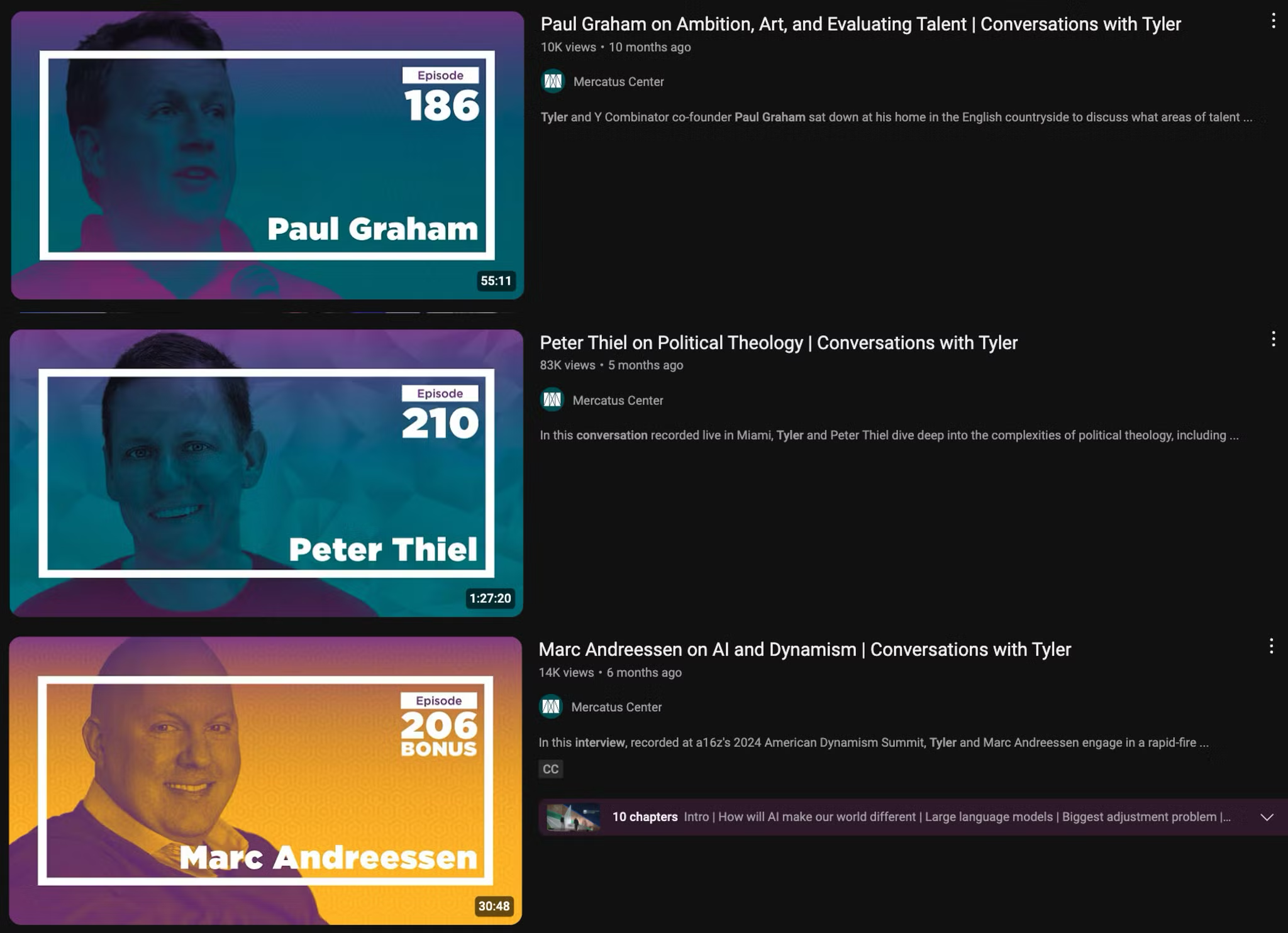
A professor of economics at George Mason University and a renowned economist. Through his podcast 'Conversations with Tyler,' he holds in-depth conversations with experts across various fields.
AI: Research intern
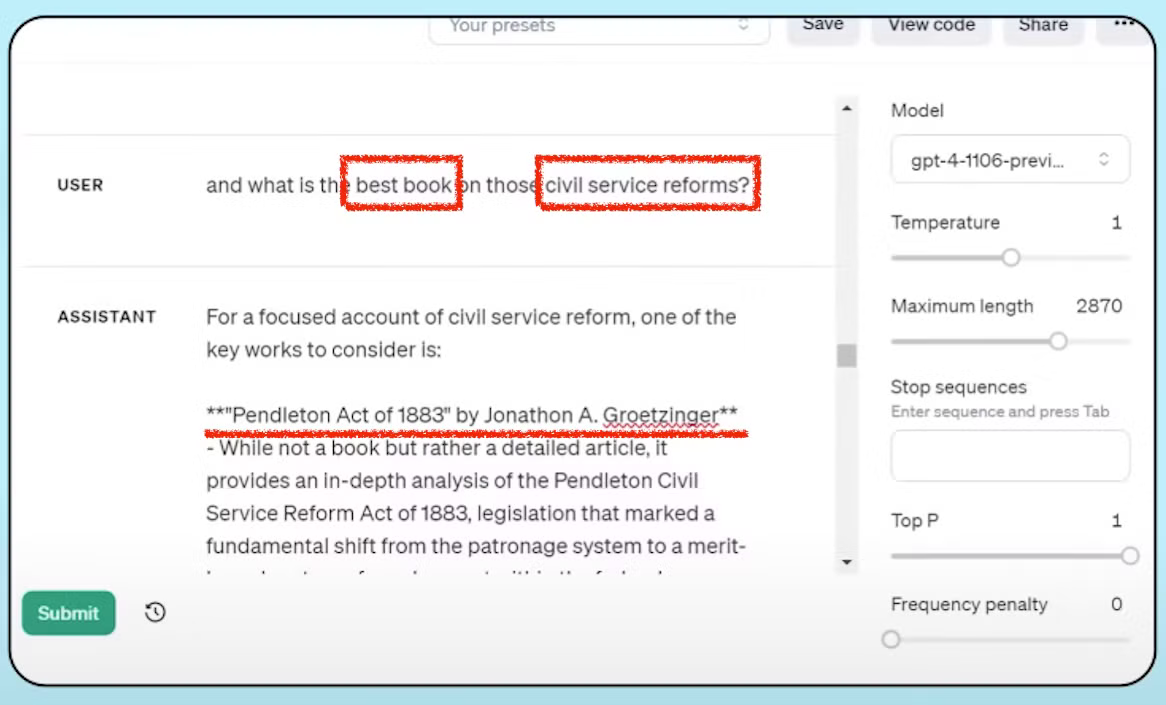
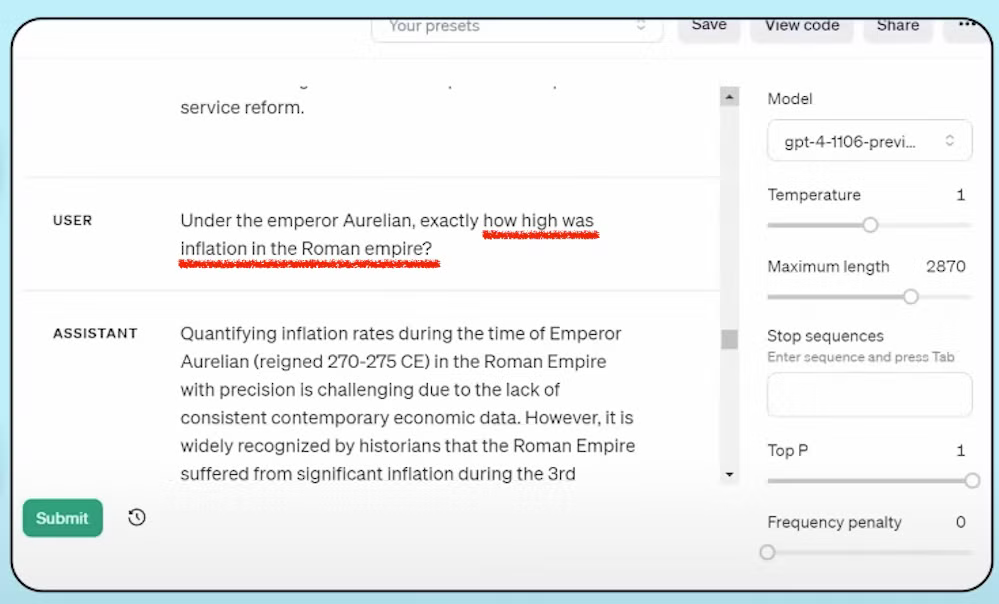
Tyler Cowen was using GPT to ask many questions about ancient history. He also asks for book recommendations.
What's the best book you'd recommend on civil-service policy reform?
Historically, when did the distinction between whole life insurance and term life insurance first arise?
Exactly how high was inflation in the Roman Empire under Emperor Aurelius?
To sum it all up again…
Here's how smart researchers were using GPT and Claude.
Coach: They upload difficult books and then deepen their understanding of unfamiliar fields through follow-up questions.
Editor: They use AI as an editor that leaves detailed feedback on their drafts.
Researcher: AI was useful when asking about historical situations from the past. It also gives excellent book recommendations.
Interested in AI? Dalpha, home to a team of AI experts, offers free AI consultations.
Leave us your questions.
We'll consult on and build the AI that's just right for your company.
We'll get back to you within 10 minutes!
Apply for a free AI consultation
Recommended reads ?

kyungsuk chon