AI Consulting: The 3 Most Common Questions Companies Ask, and How They Were Solved
How can you tell which tasks can be automated with AI?
As AI technology advances rapidly, more and more companies are asking, "Shouldn't we be using AI too?"
But in most cases, they have no idea what to do, where to begin, or how to get started.
Some organizations have tried using ChatGPT, but we often hear feedback that it fell short of boosting the productivity and competitiveness of the entire organization.
In this post, we've organized how real companies solved their problems, centered on the 3 key questions we hear most often in actual AI consulting.
If you want to go beyond simply 'adopting' AI to put it to practical, organization-specific use, take a hint from this.
FAQ 1. "How can we use AI in our work?"
– Start by finding the roles AI can take over, beginning with repetitive tasks

Many companies want to use AI but have no real sense of which parts of their work they could apply it to.
The starting point is distinguishing between areas that require human judgment and areas well-suited to AI, such as repetitive, standardized tasks.
❓ Typical questions
"Is there any part of our team's work where AI would actually be useful?"
"Everyone says they're using AI these days—how can we apply it to ourselves?"
"There are so many automation tools out there, but we don't know which one to use."
✅ Dalpha's consulting
We analyze your team's main workflows and first identify the repetitive, standardized tasks AI can handle.
We propose AI solutions suited to the nature of your work.
We factor in data quality, edge cases, and the scope of what can be automated to derive a realistic implementation plan.
💡 Real case: Underwear commerce company G
Situation: The MD team was overloaded with tasks like search refinement and related-product recommendations, and was weighing whether to hire more staff or solve it by adopting AI.
Dalpha's consulting:
We proposed AI solutions that could replace the MD team's repetitive tasks, such as HS Code tagging and personalized recommendations.
We confirmed that higher accuracy and throughput than before were achievable without adding MD staff.
Result: Without hiring additional MD staff, they were able to adopt the solution and more than double their data-processing throughput.
FAQ 2. "We want to adopt AI company-wide—where should we start?"
– You need to design organization-specific priorities and a strategy together

Companies often have the will to adopt AI across the whole organization but feel lost about where to actually begin.
It's especially hard to sort out because each department's work differs in nature, and their understanding of and needs for AI vary too.
❓ Typical questions
"We want to use AI across every team—where do we start?"
"We formed a task force, but each department's situation is different and it's hard to organize."
"We don't know how to analyze each department's work from an AI-utilization perspective."
✅ Dalpha's consulting
We provide an AI-suitability diagnostic checklist covering each department's repetitive tasks, document processing, simple judgment calls, and more.
We set priorities and build a strategy starting with areas that offer high impact and low risk.
We design an execution roadmap together, structured as pilot deployment (PoC) → validation → scale-up.
💡 Real case: Marketing agency C
Situation: A task force was formed to roll out AI across the company's 5 divisions, but they were unsure where to begin.
Dalpha's consulting:
Manual research via templates → organizing the AI solutions to apply per department → summarizing AI feasibility and expected impact
Proposing AI solutions classified by category, such as news scraping, an internal search chatbot, and influencer-seeding automation
Result: Deriving a PoC execution plan → organizing cross-department priorities → establishing a phased scale-up strategy
FAQ 3. "Can this problem be solved with AI?"
– You need to analyze the workflow and design it into a structure where AI can be used
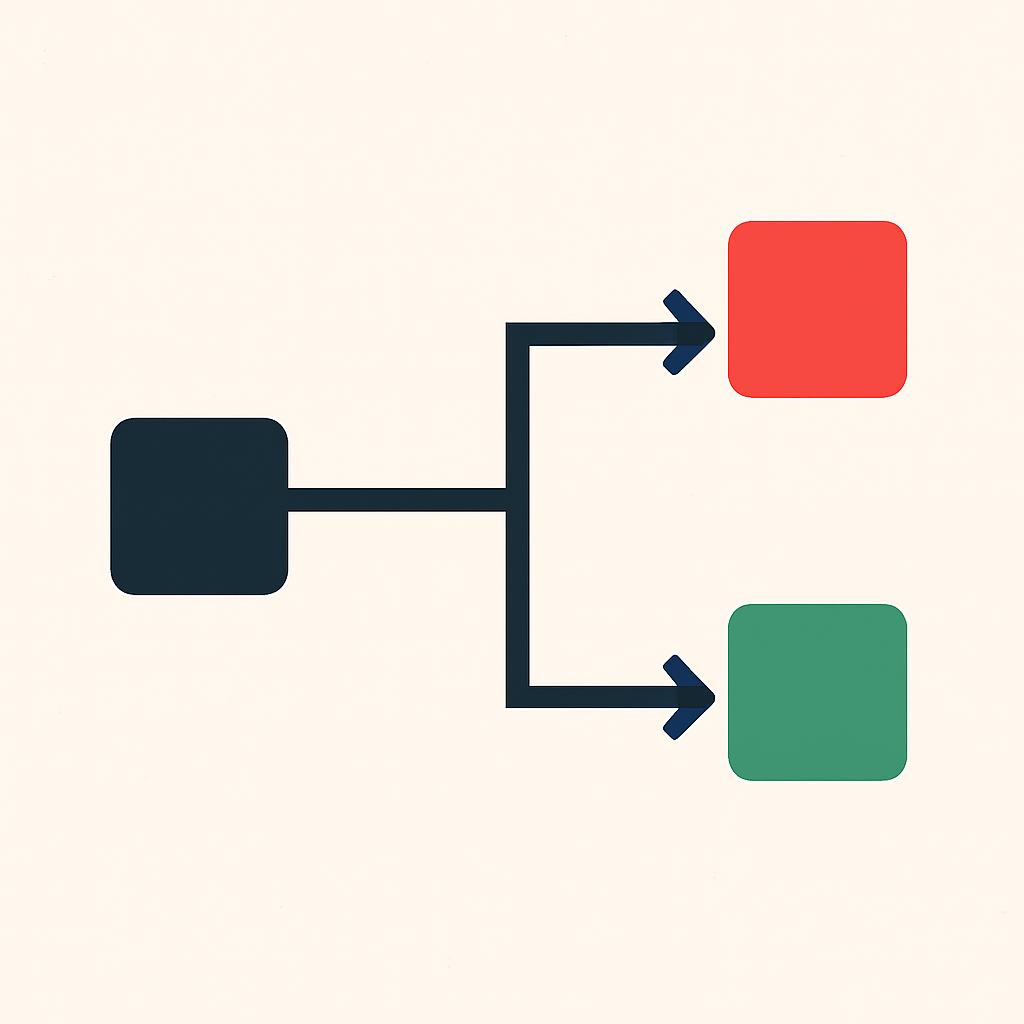
The problem an organization wants to solve internally is clear,
but it's often unclear how AI can be applied and how it should connect with existing systems.
❓ Typical questions
"There are so many customer reviews that real-time response is difficult. How can we solve this?"
"We want to build a structure that lets us write reports faster."
"Our documents are scattered and even searching is hard—can we build internal information search with AI?"
✅ Dalpha's consulting
We redesign the customer-defined problem into a structure that can be solved with AI.
We analyze the entire workflow and clearly separate the points where AI can be used from the tasks only humans can do.
We present a realistic design plan that takes your current data, the tools you use, and your organizational structure into account.
💡 Real case: Automotive parts specialist U
Situation:
The company's internal design documents were so vast that employees frequently couldn't quickly find the information they needed.
They had a need to easily find previous design materials and similar drawings.
Dalpha's consulting:
We explained that AI can readily explore the structural context within documents to find overall direction and similar cases.
However, we clearly distinguished that precise interpretation of detailed drawings and specialized judgment cannot be replaced by AI.
Result
Ultimately, we established a hybrid design plan where AI handles basic information search and similar-case exploration, while humans handle precise drawing analysis.
Adopting AI: How much in-house? Where do you bring in experts?
When considering AI adoption, you don't have to outsource the entire process.
In fact, there are areas you should organize well in-house.
On the other hand, there are points where an expert's perspective and experience are more efficient.
For the three types above, we've separated out what you can do in-house from what requires expert help.
1. How can we use AI in our work?
What you can do in-house
Compile a list of your team's repetitive tasks and inefficient work
Organize the tools/systems you currently use and any past automation attempts
Compile the pain points your team members feel
What requires expert help
Selecting which repetitive, standardized tasks AI can handle
Diagnosing AI-application conditions based on data structure and quality
Proposing the right type of AI solution and adoption approach
2. We want to adopt AI company-wide—where should we start?
What you can do in-house
Organize each department's main tasks and processes
Designate a task force or point person interested in AI adoption
Organize the internal systems and tools you currently use
What requires expert help
Providing an AI-suitability diagnostic checklist
Setting adoption priorities and establishing a scale-up strategy
Designing a pilot project (PoC) and proposing an execution roadmap
3. Can this problem be solved with AI?
What you can do in-house
Clearly define the problem you're currently facing
Organize the work flows and data flows related to that problem
Organize similar past cases and methods you've tried
What requires expert help
Reinterpreting the problem into an AI-usable structure (input–processing–output)
Designing the usable tech stack/models
Planning a design and operating method that can integrate with existing systems
If your organization needs to adopt AI
So far, we've looked at the 3 questions companies considering AI adoption most often ask.
To recap, here's what you need to check for each question:
How can we use AI in our work?
→ Start by finding the roles AI can take over, beginning with repetitive tasksWe want to adopt AI company-wide—where should we start?
→ You need to design departmental priorities and a scale-up strategy.Can this problem be solved with AI?
→ You need to analyze the workflow and design it into a structure where AI can be used
Just by properly organizing and diagnosing these three questions, the direction for AI adoption becomes clear.
If you're considering adopting AI, use the 3 questions above as a reference to assess where your company stands.
Dalphaprovides 1:1 consulting to
plan and build AI agents optimized for each company and industry.
If you're curious about a free consultationleave us an inquiry!
Dalpha Blog