
Work Automation AI for B2B Sales Teams: Lead Collection, Estimate/Sales Report Writing, and Sales Data Recording/Management
How much of a B2B sales team's repetitive work can be automated with AI?
B2B sales teams handle a wide range of documents — business proposals, estimates, sales activity reports, tax invoices, and more.
A mistake can directly translate into a loss, so careful review is essential. Yet much of this work is repetitive, rule-based manual labor, making inefficiency easy to creep in.
✅ Researching and compiling a list of companies by various criteria — industry, revenue, headcount, and so on — to find new leads takes a considerable amount of time.
✅ Since every customer has different needs, building a tailored proposal and estimate means digging through past materials one by one and writing each draft from scratch.
✅ Turning the day's accumulated sales activities into reports takes up more time than you'd expect.
✅ Even frequently created documents like transaction statements and tax invoices are a hassle, since you have to look up and enter the needed information yourself.
In this post, we introduce four concrete cases of how real B2B sales teams can use AI to make their sales work more efficient.
4 AI Solutions for B2B Sales
🔎 Solution 1: Corporate Lead Collection & Classification AI
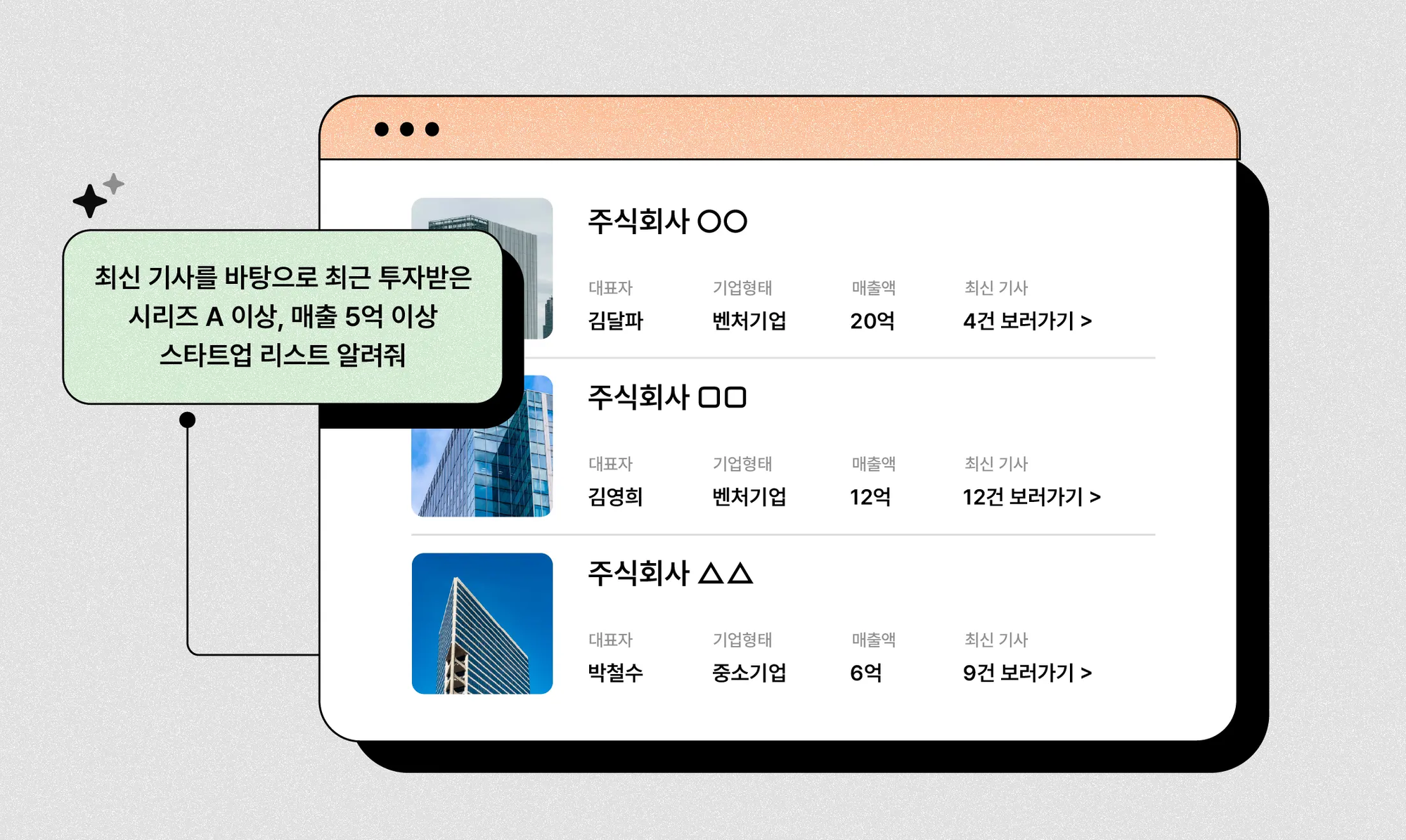
BEFORE: Are you still searching for new sales leads one by one?
In B2B sales teams, the work of collecting company lists by industry, checking headcount and revenue on websites or various portals, and organizing it all is endlessly repeated to find prospective customers (leads).
But the relevant data is scattered across multiple channels, and because the information isn't standardized, finding leads that match the desired criteria takes a lot of time.
Scattered lead-collection channels: data is spread across various channels such as company-information portals, news, and websites
Manual classification by criteria: each lead has to be sorted by hand into industry, revenue, headcount, and so on
Duplicates/omissions: leads can easily overlap with existing clients or be missed during selection
Limits on priority targeting: it's hard to extract leads by the specific criteria the sales team wants
AFTER: Now AI automatically collects company data and even classifies it
AI crawls company data in real time from key channels (company-information portals, news, websites, etc.) and automatically classifies it by major criteria such as industry, revenue, and headcount.
Now you just set the criteria you want, and the sales team instantly has a ready-to-target lead list.
Automated lead collection: gathers lead information in real time from company-information portals, news, websites, and more
Automated classification by criteria: automatically sorts leads that match key conditions like industry, revenue, and headcount
Automatic duplicate and omission detection: AI automatically identifies duplicate or missing leads by comparing them against existing customer data
Priority target list provided: generates a ready-to-use target lead list based on the priorities you set
📌 With a custom AI, you can also do this
✔️ Automatic identification of existing customers and duplicate/similar leads: cross-references existing customer data to automatically filter out duplicate or similar leads.
✔️ Automatic tailored lead lists by team: automatically generates and distributes lead lists tailored to each sales department and representative's needs.
✔️ Automatic recording and reporting of lead-management history: automatically records lead contact history, status changes, representative notes, and more, and provides them in report form.
✔️ Tailored messages generated per target lead: combines key issues about the target lead — press coverage, business changes, and so on — with the strengths your company wants to emphasize to generate a message tailored to each target lead.
Real DALPHA Case 1: Domestic Corporate Lead Collection & Classification AI
Before
For new sales, IT services company B had one or two sales-management staff manually collect prospective-client information. They had to pull together not only contact points like company name and main email/phone number, but also headcount, three-year revenue and operating profit, company descriptions, and more.
Even so, companies that overlapped with existing clients weren't filtered out, and a great deal of resources were repeatedly spent judging whether a company fit the ideal customer profile (ICP).
After
Just enter a company name, and key information like revenue, operating profit, and headcount is filled in automatically, with the company domain, main email/phone number, and company description all organized at once.
(1) AI automatically filters out duplicate or similar leadsby cross-referencing existing customer data.
(2) Then AI provides lead lists tailored to the conditions each sales department and representative needs.
As a result, the company can now efficiently collect new leads without any intern resources and quickly identify targets that match its priorities.
Real DALPHA Case 2: Overseas Corporate Lead Collection & Classification AI
Before
Company C, which has a global B2B sales team, faced an important challenge: discovering new partners and prospective clients in overseas markets like Japan to expand local sales opportunities.
To do this, they needed to understand in real time how their industry, brand, and competitors were being mentioned abroad, and where promising companies or partner candidates could be found.
But the Company S solution they had been using was limited to domestic data, making it hard to obtain the information they needed from overseas social media, industry news, and websites.
In the end, the sales team had to visit sites for each country and channel one by one, collecting and organizing mentions of target keywords, competitors, and partner candidates. Listing overseas leads took more than an hour every time.
After
Now the sales team simply enters the industry keywords or conditions they want. From social media, industry news, and websites in countries around the world, AI automatically collects mentions of their industry, brand, and competitors, as well as partner candidates and market trends, all viewable at once.
(1) The discovery records and management history of new overseas corporate leads are recorded automatically. You can see at a glance, in report form, which leads were discovered when and through which channels.
(2) In addition, AI analyzes key issues about new overseas corporate target leads — press coverage, business changes, and more— and combines them with your company's strengths to generate messages tailored to each target lead.
As a result, Company C can not only collect high-priority overseas corporate leads quickly and accurately, but also approach those leads effectively.
📄 Solution 2: Estimate / Proposal-Request Draft Auto-Generation AI
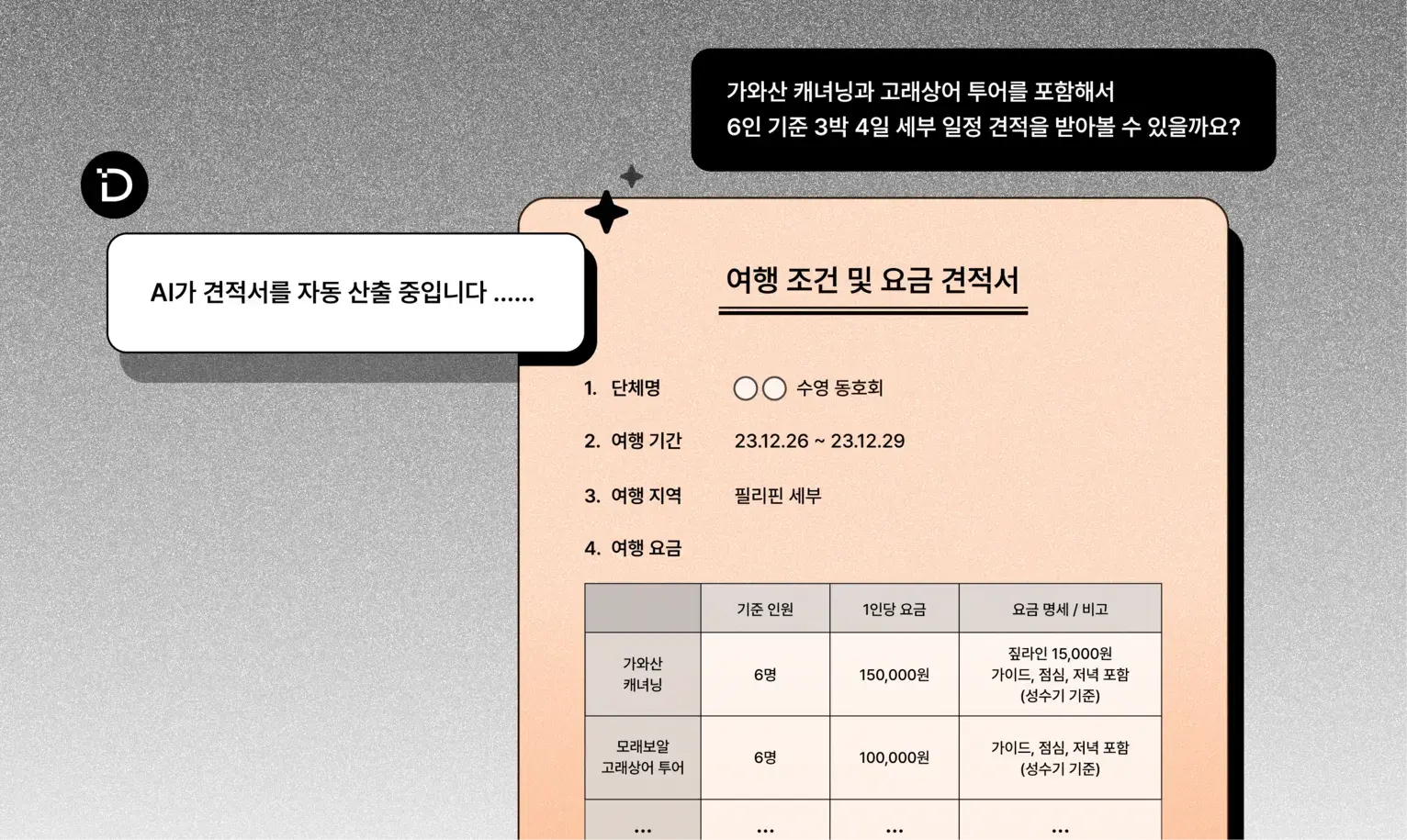
BEFORE: Are you still spending a lot of time writing proposals and estimates?
B2B sales teams repeatedly write proposals and estimates whose requirements differ slightly from client to client.
Every RFP (request for proposal) has different requirements, and even when you want to reference past materials, the files are scattered, making the information you need hard to find.
In the end, even for similar content, finding materials and creating a new draft from scratch every time takes a lot of time.
Scattered proposal-request and estimate materials: past documents are scattered, making the content you want hard to find.
Repetitive draft writing: even similar proposals have to be written from scratch every time.
Manual reflection of RFP requirements: requirements have to be checked and reflected one by one for each complex RFP.
Limits to standardizing forms/formats: forms differ by client or project, making standardization difficult.
AFTER: Now AI automatically generates proposal/estimate drafts
AI analyzes the company's past proposals, estimates, and RFP data to automatically generate drafts that fit the needs of each client and project.
Automated material consolidation: gathers past proposal requests and estimates in one place, making the content you need easy to search and use
Automated draft writing: instantly generates similar drafts based on comparable cases
Automatic reflection of RFP requirements: just upload the RFP file, and it automatically analyzes the requirements and reflects them in the draft
Automatic form/format standardization: AI automatically distinguishes and organizes the varied forms used by different projects and clients
📌 With a custom AI, you can also do this
✔️ Automatic form recommendations by customer: automatically pulls up the proposal and estimate forms each customer uses most often.
✔️ Automatic linking of past similar documents: automatically finds similar past proposals or estimates so you can reference them in your draft.
✔️ Automatic reflection of key project details: important project-specific information such as delivery date, budget, and key specs is entered into the draft automatically.
✔️ Differentiation points proposed based on competitor and market data: analyzes competitor proposals, market cases, and more to automatically organize your unique strengths and differentiation points.
Real DALPHA Case 1: Estimate Draft Auto-Generation AI
Before
At travel-services company D, about 10 staff members received customer inquiries, organized information like itineraries, party sizes, and destinations, and wrote every estimate draft entirely by hand.
Since each person used different methods and templates, materials were scattered, and estimate quality and pricing standards were inconsistent.
Because of this, even similar inquiries required rewriting estimates from scratch every time, and since past materials were hard to reference, writing and sending took a long time, leading to delayed responses and a heavy staffing burden.
After
Now, when a customer requests a travel estimate through the website or chatbot, the necessary information is collected automatically and AI instantly creates a tailored estimate draft.
(1) Each customer's key information (itinerary, party size, destination, budget, etc.) is automatically reflected in the estimate, greatly reducing the variation between staff.
(2) Through the feature that proposes differentiation points based on competitor and market trends, it analyzes similar travel products, the latest trends, and competitor estimate data to automatically reflect your unique strengths or popular service elements in the estimate.
This dramatically reduced estimate-writing time, improved quality and consistency, and greatly enhanced customer satisfaction.
Real DALPHA Case 2: Estimate Draft Auto-Generation & Price Recommendation AI
Before
When responding to construction-estimate requests from various firms, construction company E had to calculate the appropriate unit price for each item by hand and write the bill-of-quantities draft manually.
The problem was that every estimate had different items, requiring staff to look through past bills of quantities and design materials and compare several unit-price candidates — repetitive work that ate up a lot of time for each person.
In construction in particular, producing an estimate is a race against other firms, so even a slight delay usually meant losing competitiveness. Under Company E's existing process, however, when requests from multiple firms piled up, processing estimates simultaneously with limited staff was difficult, and longer lead times often delayed responses to clients.
After
Now AI analyzes past bills of quantities and design materials to automatically recommend unit-price candidates for each newly requested item. Staff compare several unit prices on a single screen, and once they select the optimal one, AI immediately completes the construction bill-of-quantities draft.
(1) With the automatic linking of past similar documents feature, AI can accurately reference similar past estimates — considering the similarity of 1) building type, 2) construction region, 3) work type, and 4) construction-item category — and reflect them in the estimate calculation.
(2) With the automatic form recommendations by customer feature, AI automatically pulls up the bill-of-quantities format or estimate form each firm uses most often, so staff can complete estimates right away without unnecessary repetitive work.
The once-complex manual process was simplified, speeding up estimate processing and enabling quick responses to multiple firms' requests even with limited staff. As overall lead times dropped significantly, both customer satisfaction and the order-win rate rose as well.
📈 Solution 3: Sales Activity Report Automation AI
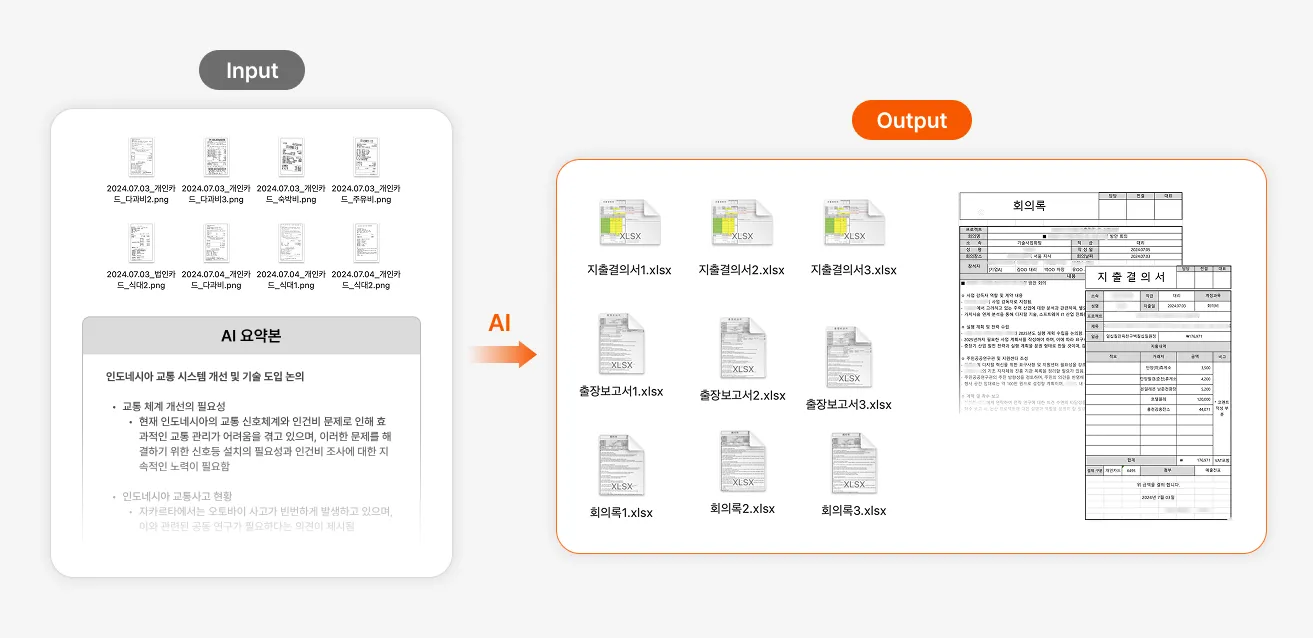
BEFORE: Are you still spending a lot of time writing sales activity reports?
B2B sales teams have to organize their sales activities — meetings, calls, and so on — themselves, repeatedly writing reports every time.
But recording each activity's data one by one and organizing results and issues takes a long time. On top of that, because forms differ by team and client, managing standardized reports is also difficult.
Repetitive report writing: you have to re-enter similar activity content every day.
Manual organization of results and metrics: you have to gather performance, meeting outcomes, issues, and more yourself.
Limits to standardizing forms/formats: forms differ by team and client, making consistent management difficult.
Manual organization of sales activity recordings: you have to listen through recorded calls and meetings and record them one by one.
AFTER: Now AI automatically writes sales activity reports
AI analyzes the sales team's activity data in real time, automating everything from repetitive report writing to performance management and recording transcription.
Now the sales team can cut the time spent writing reports and focus on more important strategy execution and customer response.
Automated repetitive report writing: similar activity content is written automatically every day.
Automatic organization of results and metrics: performance, meeting outcomes, issues, and more are organized automatically.
Automatic form/format standardization: AI automatically unifies and organizes even varied forms.
Automatic transcription of recordings and reflection in reports: AI automatically converts sales activity recordings into text, and the key content is reflected directly in the report.
📌 With a custom AI, you can also do this
✔️ Automatic template recommendations by activity: automatically pulls up frequently used report templates for meetings, calls, and more.
✔️ Automatic application of company-specific terminology: AI automatically reflects frequently used expressions and formats.
✔️ Automatic emphasis on key metrics and results: important metrics and results for each project are automatically reflected in the report.
✔️ Automatic highlighting of issues and noteworthy points: key issues or noteworthy points for each activity are automatically marked in the report.
Real DALPHA Case: Sales Activity Report Automation (using OCR)
Before
Sales reps at food & beverage company F visited supermarkets daily, photographed the displays in the beverage section, and then checked the price and display status of their own and competitors' products in each photo one by one, writing reports by hand. Since prices and display conditions differed from store to store, they had to examine each one carefully, and because frequently used terms and report forms varied by store, adjusting and writing them each time also took a long time.
Recording issues and noteworthy points separately whenever they came up was especially tedious, and feeling burdened by this repetitive process, reps often forgot to submit reports or submitted them late. The reps found this work cumbersome and difficult, making it hard to focus on actual sales activities — yet for headquarters it was essential for field management and data accumulation.
After
When a rep uploads a photo, AI automatically analyzes the display image and extracts each product's price and display status at once. The sales report is also automatically organized into tables and graphs, making submission much faster.
(1) With the automatic application of company-specific terminology feature, AI automatically reflects the terms and expressions that differed by store, so anyone can quickly complete reports in a consistent format.
(2) With the automatic highlighting of issues and noteworthy points feature, AI automatically detects key issues or noteworthy points such as price changes and stockouts, and emphasizes them so they can be seen at a glance in the report.
After introducing the sales report automation AI, reps submitted their reports more smoothly, and headquarters found data-driven management easier. At the same time, reps could spend more time on field activities.
📁 Solution 4: Sales Data Recording Automation & Strategy Report AI
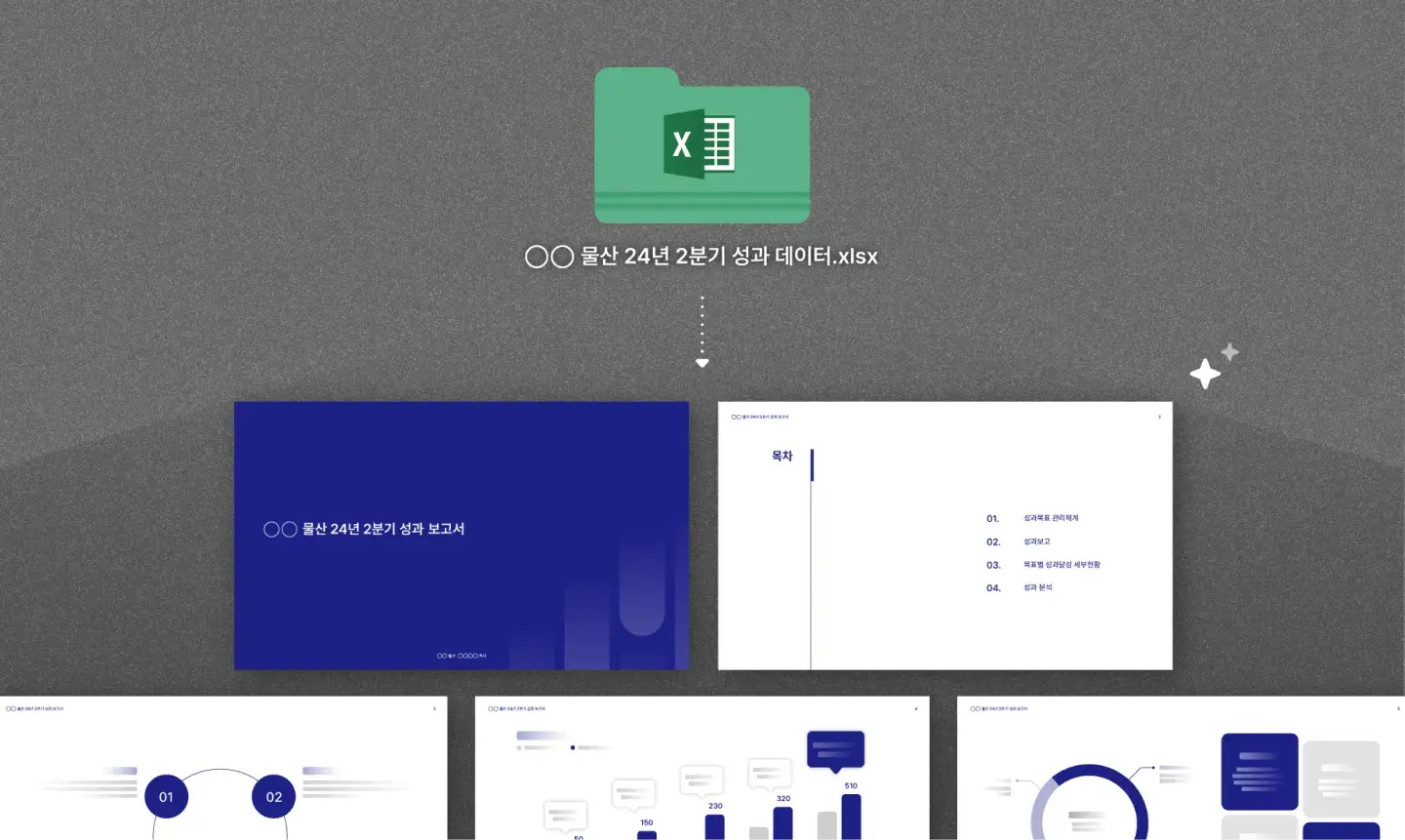
BEFORE: Is your sales data still scattered and difficult to manage?
Sales data is an essential asset for company-wide strategy and performance improvement. But in the field, records are easily missed or scattered in various forms, and to use them for analysis they have to be organized into a standardized form.
Because frontline staff have to enter data one by one amid busy customer service, important information is often left out or remains poorly organized.
Missing/unentered sales data: recording everything in the field is cumbersome, so important information is often left out
Data fragmentation: transaction statements, tax invoices, meeting records, receipts, and more are scattered across different forms and files
Limits to standardization and consolidation: with forms and formats all over the place, it's hard to grasp the whole flow at a glance, and analysis is complex
Difficulty putting it to practical use: even as data piles up, it's hard to use directly for actual strategy or report writing
AFTER: Now AI standardizes scattered sales data, gathers it automatically, and makes it ready to use right away in practice and strategy
AI automatically extracts and refines all kinds of sales data, consolidating it without omissions, and completes everything from CRM status to strategy reports.
Step 1 – Automatic sales data collection & standardization
AI automatically extracts and refines a variety of documents and voice data — transaction statements, tax invoices, meeting recordings, receipts/slips, and more — and manages them in a standardized, consolidated form
Step 2 – Automated CRM status analysis
Based on the standardized data, AI automatically analyzes key CRM metrics by account such as revenue, receivables, sales activity, and visit/call records
Step 3 – Automatic sales strategy report generation
Based on the consolidated data, AI automatically generates reports containing strategic insights such as trends, issues, similar cases, and risks
Staff need only focus on the insights and action points
📌 With a custom AI, you can also do this
✔️ ERP/CRM/accounting system integration: connects organically with your company's various systems to minimize duplicate or missing data
✔️ Strategy reports tailored by company/industry: automatically designs strategy reports to the criteria you want, such as performance, issues, KPIs, and growth points
✔️ Tailored insights by customer/account: compares and analyzes sales patterns and performance by customer and account to propose tailored sales strategies
✔️ Automated performance-trend and issue tracking: AI automatically tracks performance changes by period and recurring issues, delivering them as alerts and analysis reports
Real DALPHA Case: Sales Data Standardization Automation & Strategy Report Use
Before
For franchise company F, having headquarters collect and manage sales, customer, and transaction data from every store nationwide without omission was a critical challenge.
Accurate sales tallies and customer-information management form the foundation not only of headquarters' performance management, but of every decision — from future marketing and new-service planning to writing strategy reports.
To do this, store staff had to handwrite customer names and phone numbers on receipts each time a transaction occurred, photograph the receipts, and send them to headquarters.
Headquarters' management team received more than 15,000 receipt images per month and tallied them by transcribing all the data — each store name, transaction date/time, customer information, and so on — into Excel by hand according to a set format.
But receipt-writing methods and information-entry formats differed from store to store, and handwritten information was hard to read or easy to miss, so important data was frequently left out or entered incorrectly during input.
The repetitive manual work placed a heavy burden on the management team, and accurate data consolidation and rapid strategy-report writing also had their limits.
After
Now field staff just upload the receipt image. AI automatically extracts every field value — store name, customer name, phone number, transaction date/time, and so on — organizing more than 15,000 sales records per month into a standardized Excel file all at once.
(1) With the automatic sales data collection & standardization feature, AI extracts even handwritten information without omission, automatically tallying every store's data into a unified format.
(2) With the automatic sales strategy report generation feature, AI analyzes large volumes of sales data to immediately provide key insights such as revenue, customer characteristics, and recurring issues, ready to use right away for company-wide reports and performance management.
As a result, the sales management team cut the work time spent entering 15,000 records per month by over 60%, and data omissions and input errors dropped dramatically.
Both the field and headquarters gained real-time strategic analysis and rapid decision-making, and with the input burden reduced, the field could focus even more on customer service and actual sales activities.
Now focus on key customer response and order-win strategy
So far, we've looked at four major cases of what can be automated with AI in a B2B sales organization — from securing leads to repetitive document work.
When the sales and business-development teams break free from manual, repetitive work and immerse themselves in more important work — customer analysis, order-win strategy, and the like — the performance of the entire organization changes.
Curious how far you can automate your company's sales document work?
Click the button below and briefly tell us about your situation.
We'll propose a custom automation solution along with real implementation cases.
Dalpha Blog