
7 Ways a China-Import Wholesale Store Cut Its Workload and Won More Customers with AI
Recommended for businesses like these
- Overseas logistics that needs translation — import & distribution companies
- Handling vast, varied inventory — wholesale platforms
- Needing AI search & review analysis — commerce & online stores
Global import & distribution businesses are also being dramatically transformed by AI.
Repetitive translation and classification work is automated with AI to save manpower and time,
and by bringing AI into the sales platform too, they're improving the customer experience beyond anything before.
It's now a matter of who adopts more optimized AI, and faster.
For everyone in the import & distribution industry weighing AI adoption,
today we'll introduce the 7 successful AI solutions actually adopted by
a wholesale shopping mall that directly imports and sells Chinese clothing.
<Contents>
- 3 AI solutions that automated operations
1. Image translation & inpainting
2. Size-chart translation & databasing
3. Automatic category tagging
- 4 AI solutions that grew the store
4. Image search
5. Natural-language search
6. Multilingual review-analysis AI
7. Return-review analysis AI
- Adopting a custom AI solution for your business
3 AI Solutions for Workflow Automation
AI Solution 1 — Image Translation & Inpainting
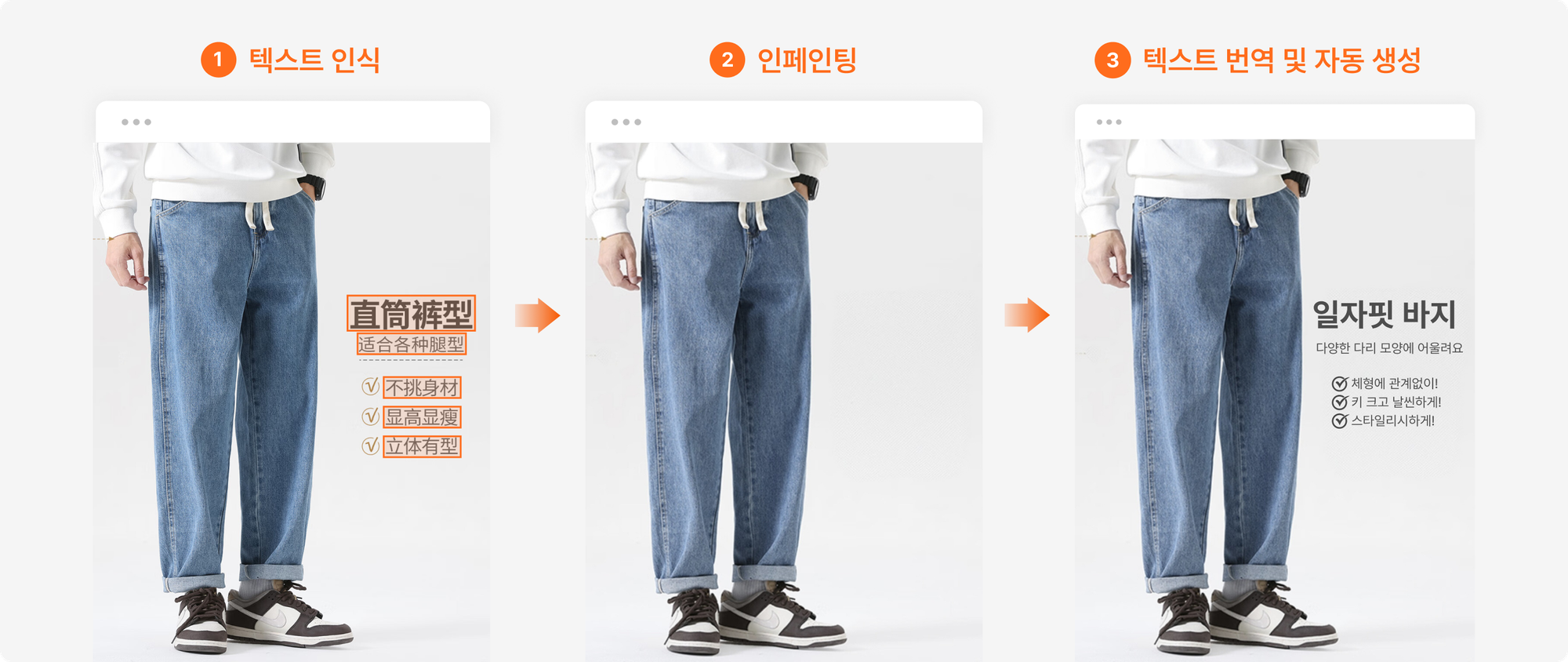
Problem:
The range of clothing categories handled is broad, and the product lineup is vast
Using translated product images noticeably boosts the sales rate, but manually redesigning the images of countless products one by one consumes considerable manpower and time
Solution:
From the product's main image, extract the Chinese text with AI OCR and remove it via AI inpainting
On top of the inpainted image, automatically generate the Korean text translated from the extracted Chinese
Results:
Cut over 80% of manual design time versus before
Using translated product images noticeably increased the sales rate
AI Solution 2 — Size-Chart Translation & Databasing
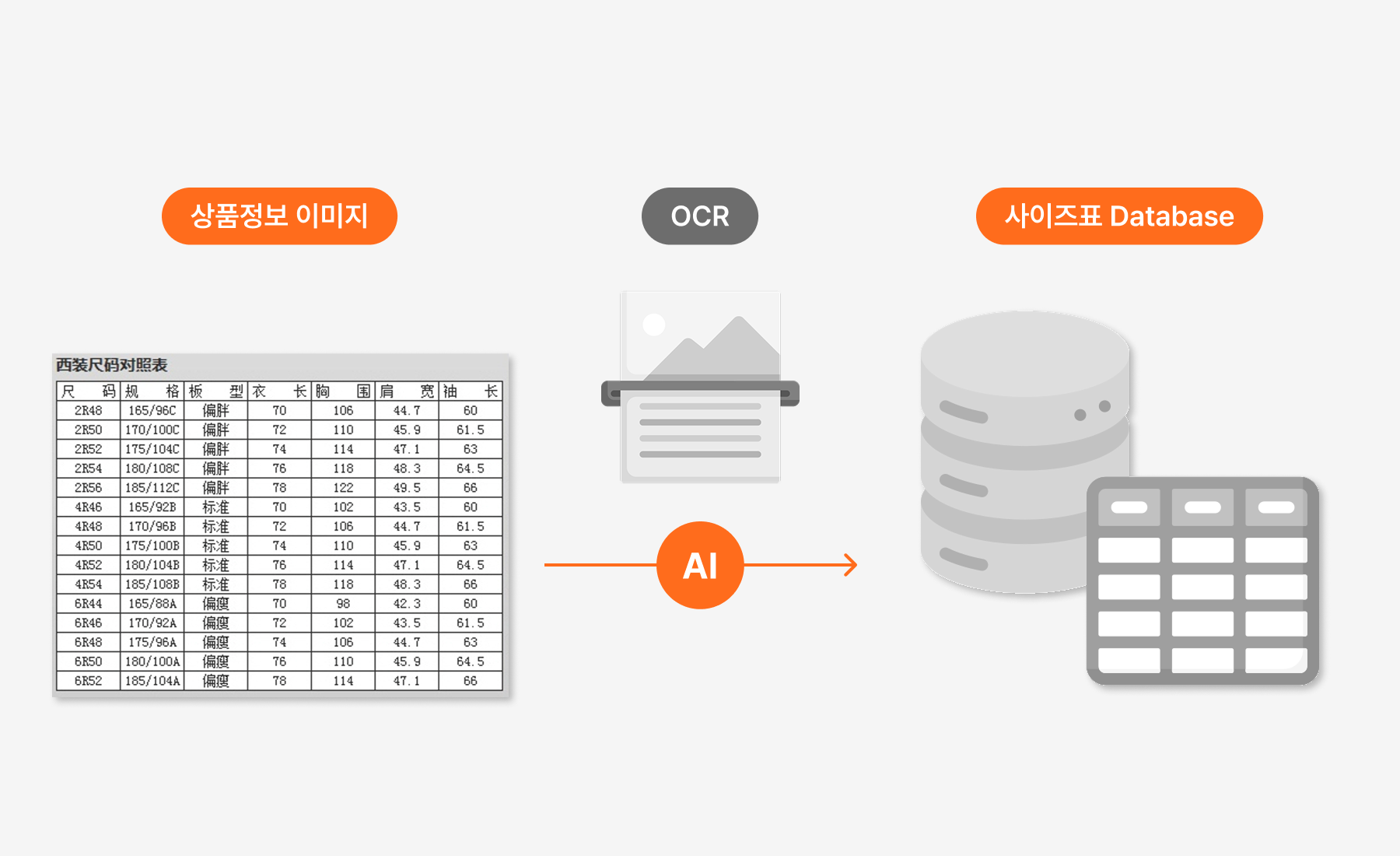
Problem:
Because they import diverse clothing from diverse suppliers, the format and terminology of product information aren't standardized
Translating detail images and manually extracting and organizing product attributes (color, size charts, etc.) consumed considerable manpower and time
Solution:
From the product's detail-page images, AI OCR automatically extracts the text and translates it
Size charts are collected into a predefined format and organized to build a database
An LLM comprehensively analyzes the product information to automatically tag attributes and sort items into the right category
Results:
Through a unified database, the product-management system was standardized across the board
People review only what's necessary, dramatically cutting manpower and time
AI Solution 3 — Automatic Category Tagging
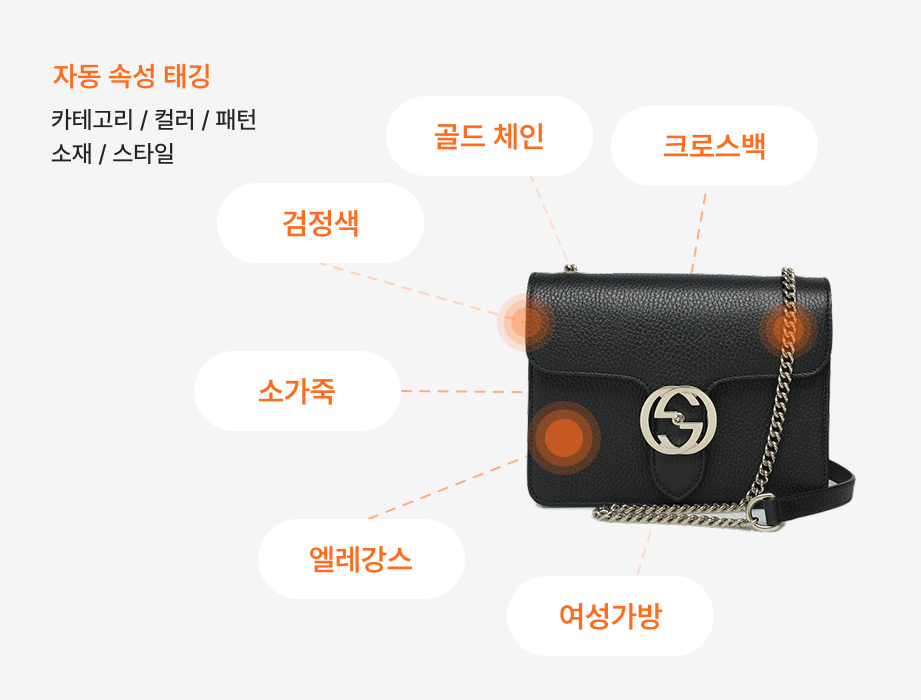
Problem:
The range of clothing categories handled is broad, and the product lineup is vast
Because imported clothing has inconsistent product names and terms, they had to manually check the attributes of countless garments and sort categories by hand
Solution:
AI analyzes product information such as color, pattern, material, and style, automatically extracting and tagging key keywords and attributes
The AI model also automatically judges and classifies each product's category
Results:
Managers only need to do the review step, so manpower and time are greatly saved
Higher classification accuracy lifted the sales conversion rate
With the workflow-automation AI solutions above, by reducing repetitive work they not only save on labor costs, but also shorten the time from import to sale, quickly seizing trends and lifting their sales rate.
Now that we've covered workflow automation, shall we look at how to improve the customer experience and raise sales?
4 AI Solutions for Growing Store Revenue
In an online store, 'search' is one of the key features that lift the purchase conversion rate.
Accordingly, many stores now adopt 'multimodal AI search.'
We'll introduce it in detail, split into image search and natural-language search.
What is multimodal AI search?
Multimodal AI search is an AI search engine that learns information in many formats—images, natural-language text, and more—to intelligently produce the results you want.
You can learn more about multimodal search in the article below.

AI Solution 4 — Image Search

Problem:
Given the nature of a wholesale mall, many retailers wanted to find and sell products similar to bestsellers on major platforms, creating strong demand
Beyond just color or category, there was also strong demand to search by garment shape and style itself
But given the nature of overseas clothing, product names and terms aren't standardized
Searching took a lot of time, and sales opportunities were lost as a result
Solution:
Upload an image captured from social media or another store, or a photo you took yourself, and the AI analyzes style, color, details, and more to automatically match similar products
The same AI model is used for both image search and similar-style recommendations
Impact:
Fast search and similar-style recommendations improved the customer experience
Even when the search term is unclear, customers can find the style they want, noticeably raising the purchase conversion rate
AI Solution 5 — Natural-Language Search
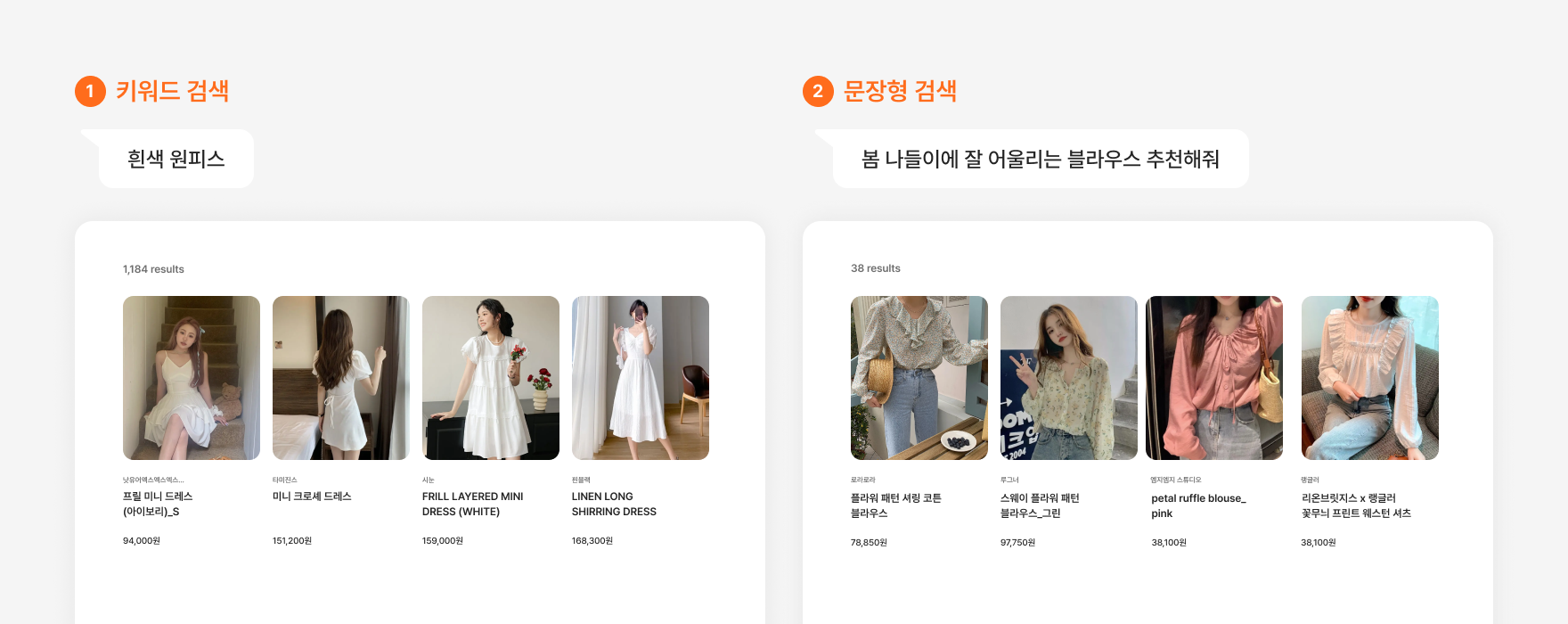
Problem:
Given the nature of overseas clothing, product names and terms aren't standardized
Searching with things like 'white square-neck puff blouse'—complex phrases combining several keywords—often failed to return proper results
Solution:
The AI model understands unstructured expressions too (color, mood, material, etc.) and surfaces products that match the customer's intent
It returns accurate results even for complex phrases combining several needs
It even enables natural-language searches like 'recommend a blouse that's great for a spring outing'
Even for wrong keywords, it recommends by similarity, greatly reducing failed-search experiences
Results:
Natural-language search lets wholesale buyers convert even when they don't have a specific product in mind
Overall search improvements greatly raised the purchase conversion rate
Once you've held onto customers with 'search,'
the biggest influence on the purchase decision now is 'reviews'.
Nothing in marketing matters as much as collecting VoC. Let me show you how AI solves this intelligently.
What is review-analysis AI?
Review-analysis AI is one of the hottest AI solutions right now.
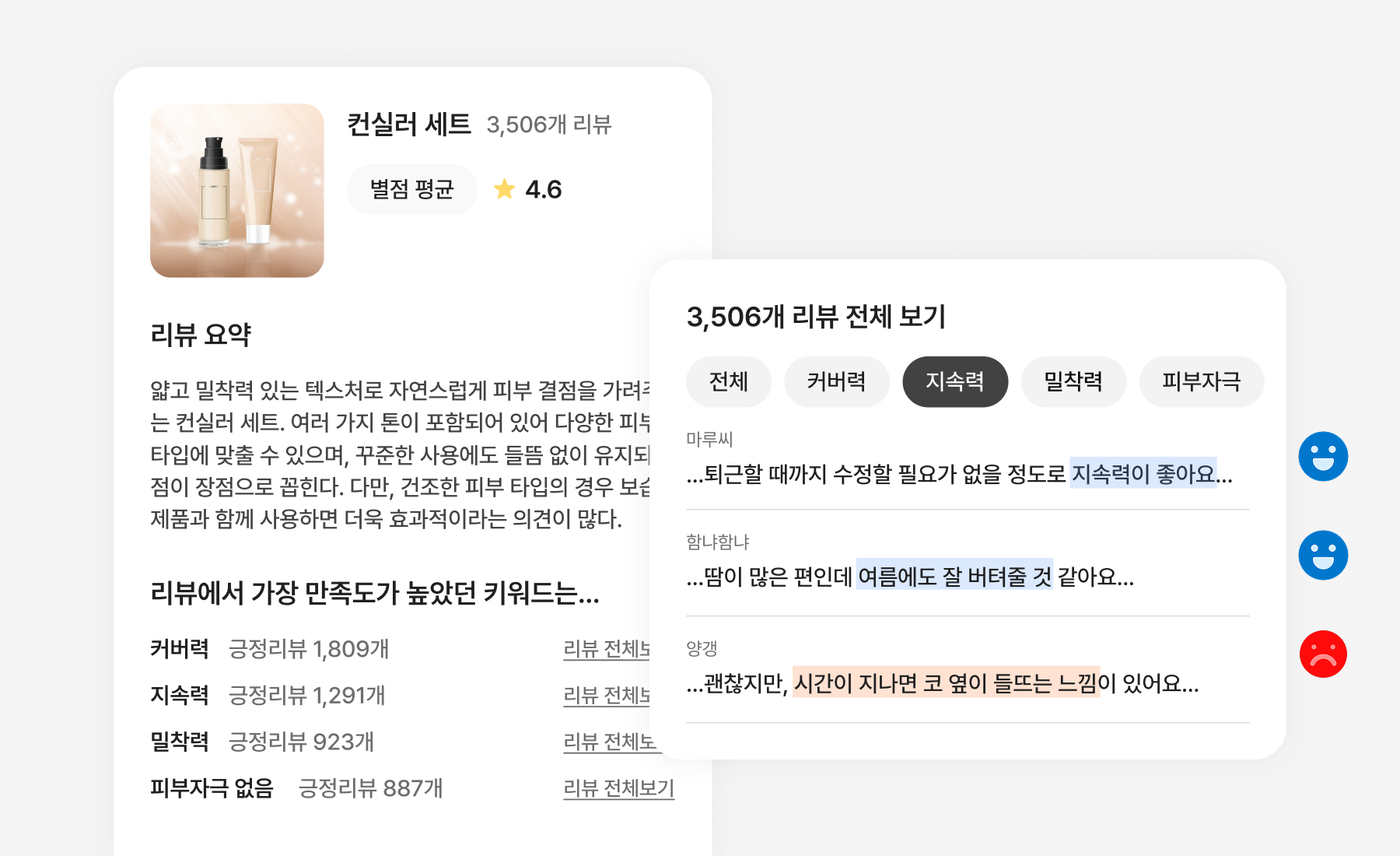
It turns customer reviews—once a qualitative signal—into statistics and draws quantitative insights, usable in decisions across the whole company: product strategy, CS response, competitor comparison, global expansion, and more.
You can learn more about review-analysis AI in the article below.
AI Solution 6 — Multilingual Review-Analysis AI
Problem
They have to analyze Chinese-language reviews to decide which products to source, but the basis for selection is qualitative, and reading them consumes a lot of manpower and time
Korean reviews on the company's own store also need monitoring and analysis
Solution
Crawl the selected product's reviews (up to 400)
Split each review body into sentences, then classify categories and extract positive/negative sentiment and main keywords
For the company's own store, real-time analysis monitors and screens out unsuitable reviews
Results
By checking visualized analysis results instead of reading every review, analysis time was cut by over 90%
With nothing missed, grasp exact customer needs, and build sourcing and sales strategies on quantitative data with confidence
Damage from malicious reviews can be detected and blocked in real time, on the spot
AI Solution 7 — Return-Review Analysis AI
Problem
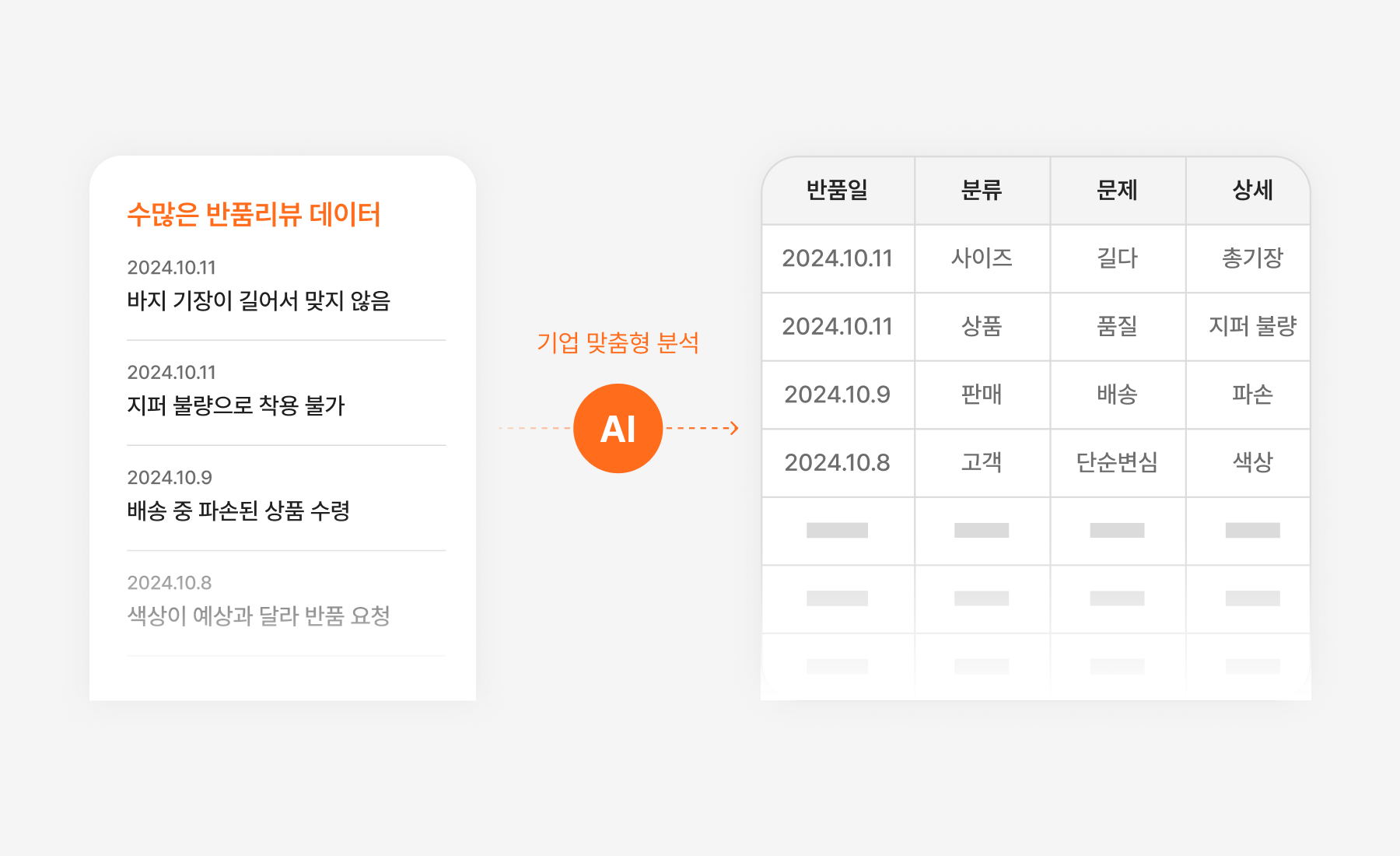
Over 10,000 return-review texts pile up every month and had to be classified by hand
The multiple-choice return-reason categories are limited, making it hard to get the information actually needed
More than half of all return reviews are written as free text, and classifying them consumes much manpower and time, with VoC getting missed in the process
Solution
The AI model automatically breaks the 10,000+ monthly return-review texts into a 3-level category scheme
By building a classification scheme tailored to the client, analysis by product and by period (season) is also possible
93% is classified automatically and accurately, so only the remaining 7% needs review—cutting manpower and time
Cross-validating multiple-choice and text reviews minimizes data noise and delivers accurate analysis
Results
Classification time actually dropped from 60 hours to 10 hours
By analyzing 300,000+ return texts, they secured accurate customer insights with no VoC missed
Make quantitative, data-driven decisions, and improve satisfaction by reflecting customer feedback
Adopting a Custom AI Solution for Your Business
So far, we've shared how a Chinese-clothing direct-import wholesale store
automated its operations and lifted its sales with AI.
If you're a trade or distribution company that imports overseas goods and needs translation,
if you're a wholesale or retail business that must handle vast, varied inventory,
if you're a commerce or online store that wants higher conversion and quantitative decisions,
why not be quick to adopt a custom AI solution for your business?
At Dalpha, through 1:1 consulting,
we plan and build AI solutions optimized for each company.
Free consultation — if you're interested, reach out anytime!
Get a custom AI solution for your business

Serin Choi