CEO Interview: "100 billion won in revenue with Agents alone, no people" — the rise of Agent-Native Brands
AI startup Dalpha has abandoned its 'department-store-style' expansion and narrowed its focus to the K-consumer-goods industry. Over the past three years, Dalpha has supplied custom AI to more than 200 companies across distribution, manufacturing, media, and other sectors. Starting this year, the company is making a bold bet on an 'agentic OS' that takes command of the entire range of work in K-beauty, fashion, and food & beverage (F&B). Building on the data accumulated through experience across diverse industries, Dalpha chose consumer goods as the intuitive field where AI can make its results visible.
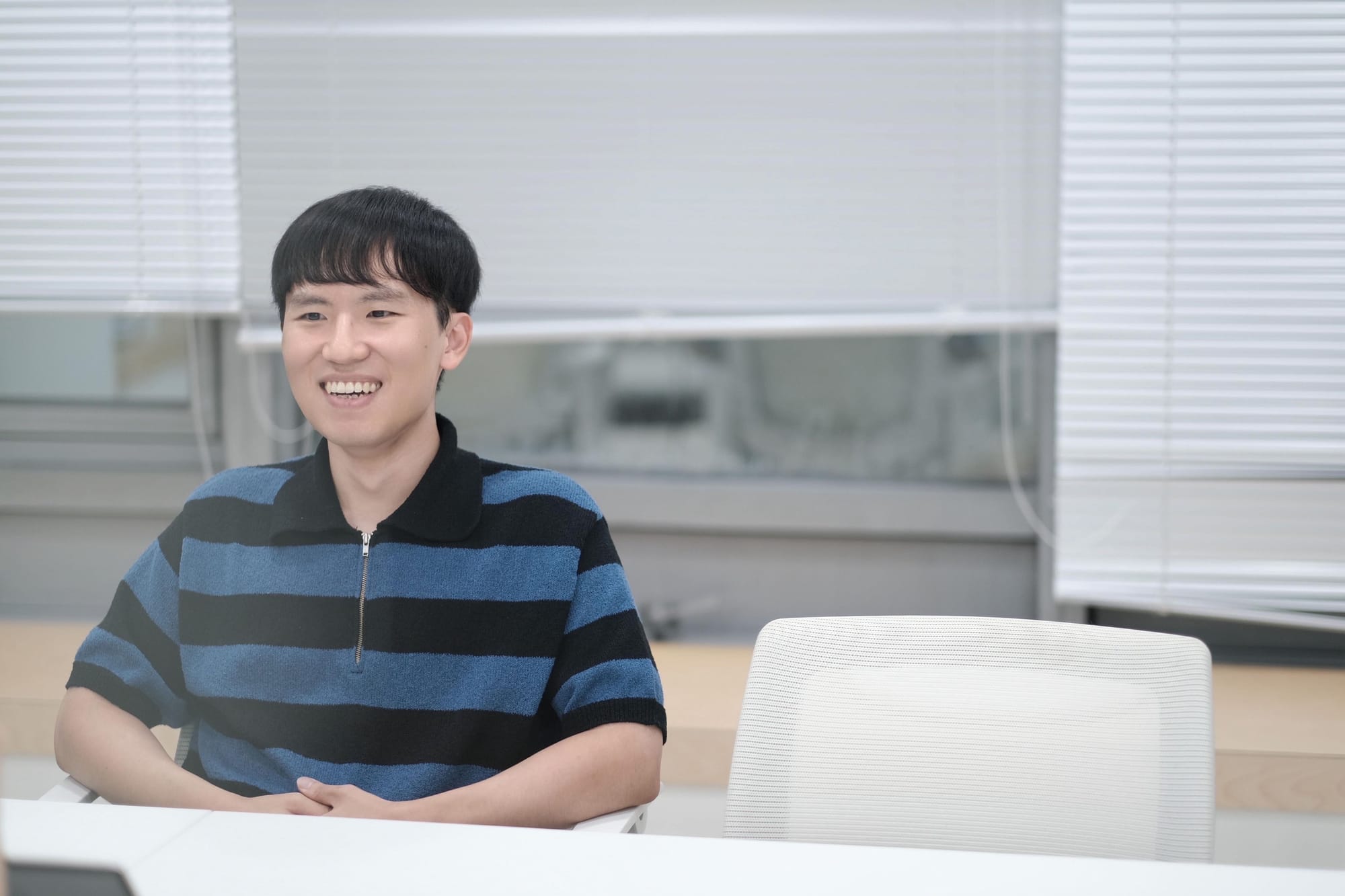
Kim Do-gyun, CEO of Dalpha, said, "We've now entered an era where agents can complete the entire process from decision-making to execution," adding, "This isn't just about providing features—we will prove, on the front lines of consumer goods, that AI can deliver higher revenue performance than people can."
Replacing work with AI agents… consumer-goods adoption gets serious
Kim diagnosed that the AI agent market has only just entered the stage of real industrial adoption. Whereas AI had until now stayed in supporting roles such as answering questions or assisting with development, it is now evolving—he argues—to a stage where agents are given goals and design and carry out a company's core work.
"If existing AI was at the level of automating specific functions, the key with agents is that they are given a goal and then design and carry out the work themselves," he explained. "For example, in influencer marketing, if you give an agent a goal of view counts, the agent decides on its own what content to create and who to collaborate with."
Ontology and Agent technology are the core
He cited the integration of data and work structures as the biggest challenge in corporate AI adoption. Because a company's data is scattered across various systems, the process of connecting it all becomes the central task, he explained. He also emphasized that this is a structural problem that can't be solved simply by adopting a solution.
"Every company has its data scattered across Excel, PPTs, internal systems, and so on, and connecting it all into one is the hardest part," Kim said. "We need a process that goes beyond simply adopting software-as-a-service (SaaS) and instead designs AI to fit the actual work processes."
To solve this kind of problem, Dalpha is putting forward a consulting-based approach. The method involves analyzing a client's work structure and data through a preliminary proof of concept (PoC), and then designing a custom agent. It helps companies adopt AI naturally while maintaining their existing workflows.
Kim described this as a structure similar to the business model of Palantir, a leading U.S. data-analytics and AI platform company. It is a strategy that reshapes the entire brand operations of consumer-goods companies around AI.
"It's a way of structuring corporate data and workflows on an ontology basis, and then having agents take charge of decision-making and execution on that foundation," he stressed. "On top of that, we combine consumer-goods industry knowledge to boost operational efficiency."
Q. It's been three years since you founded the company.
An enormous amount has happened in the AI industry over these three years. Technology advances so fast that, in the end, how well you keep up with this flow seems to be what makes an AI company competitive. Rather than clinging to our own technology or way of doing business, we keep changing. Honestly, I didn't start this thinking there would be no hardships. Business and technical challenges are constant, but those are things you expect going in anyway. I think of it as a process of defining and solving problems, and I'm enjoying it.
Q. In what direction is Dalpha changing?
Over the past three years, we've implemented AI for more than 200 companies, driving AX (AI transformation). Now we believe it's time to innovate an entire industry, and we chose the 'consumer goods' field. Not only do we have a lot of experience applying AI to consumer goods, but it's also a great area for innovation. Consumer goods handle their work on a data basis. A significant amount of that work is still performed by people. This can be innovated with AI agents. There's another reason, too: Korea is a consumer-goods powerhouse, so we saw that if we innovate with the most quintessentially Korean things, we can naturally become a global company. Right now we're solving the problem of innovating the entire scope of work with K-beauty, fashion, and food brands.
Q. How do you see the recent trends in AI technology?
If conversational large language model (LLM) technology advanced in the year after ChatGPT's launch, then from 2024 it became the era of agents that carry out work automation that can't be solved with chat alone. Rather than simply answering questions, agents work by using multiple tools. Recently there have been many attempts to overhaul a company's work or an entire industry wholesale. At places like U.S. law firms, the very way they work is shifting to an agent-based model. Once agents make decisions and execute, people shift to merely checking or revising the results. I believe that within a year, the way office workers who work on digital data do their jobs will all change. This year is the inflection point.
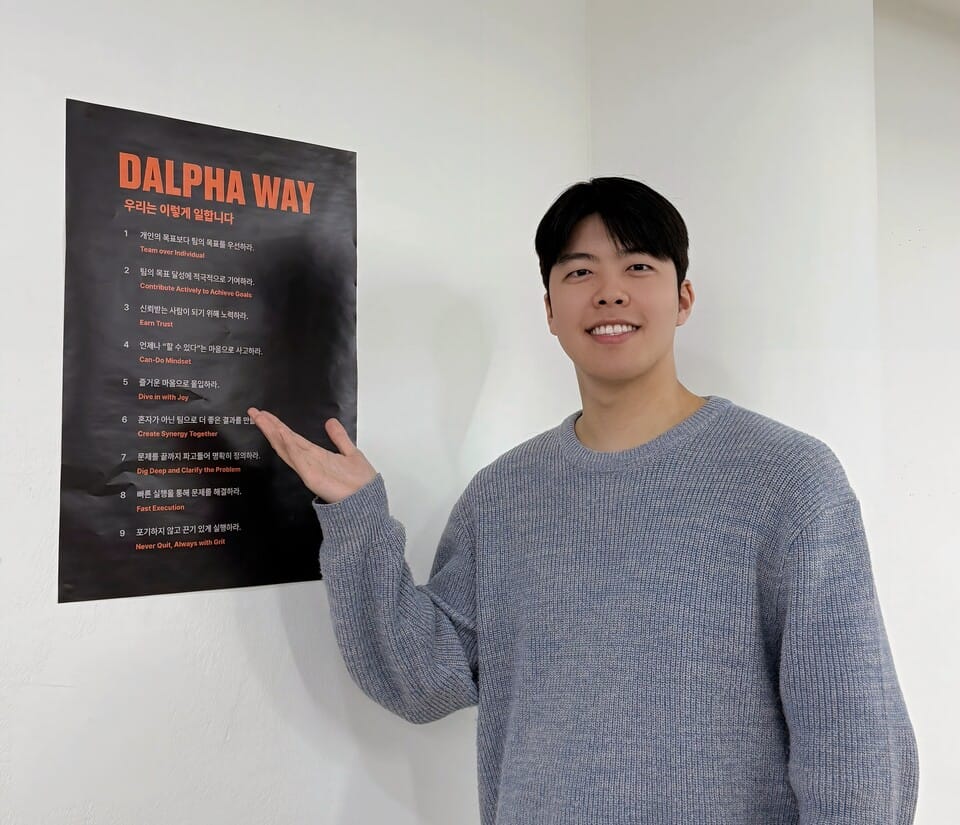
Dogyun Kim