AI Playbook Ch. 3 — The Limitless World of Education AI
Classic education, gradually changing
Education is an industry where the interaction between educator and learner matters greatly.
To make this interaction flow smoothly, it has been an industry with a strong classical character.
An education system centered on academic subjects like language and math was dominant, and most institutions applied a consistent curriculum. Also, most education flowed mainly offline.
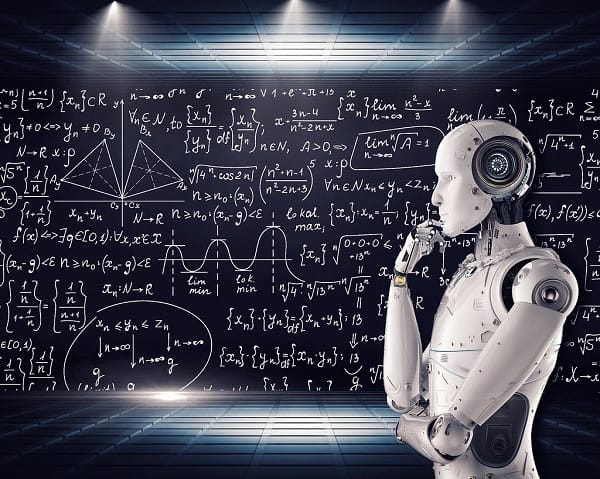
But perceptions of this classic education gradually began to change, and after COVID-19 the change hit its peak.
The biggest change is the lowered barrier to entry for non-face-to-face education — as in-person contact became impossible, education had to be conducted remotely, and learners and guardians gradually began to realize the importance of remote education.
To meet the growing demand, many edtech platforms and companies began to appear, and the online-education market grew rapidly.
Now that everyone is somewhat used to remote education, many institutions and companies are weaving AI into their services to offer easier, more convenient education.
Today, I'll explain what AI is being used in the education market, and what education-related AI Dalpha has developed.
A personalized management system for my students
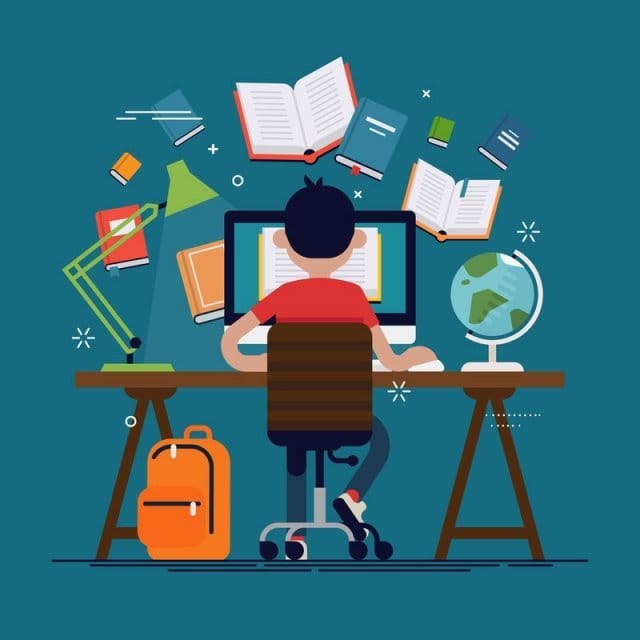
One of the most important keywords in education lately is 'hyper-personalization'.
Each learner has very different preferred learning styles, learning abilities, and preferences.
But except for 1:1 classes, it's not easy to provide individually tailored education due to the physical limits of educators or institutions.
To solve this problem, AI-powered personalization has been rising in the education industry, and various edtech companies are actually adopting AI.
Dalpha, too, has developed AI for hyper-personalization, which I'll explain in more detail below.
Personalized learning curation

Every student has a learning curriculum suited to them, but they don't clearly know which learning roadmap to follow.
However, this is not only highly repetitive manual work, but it's also not easy to judge every individual learner's disposition and learning level.
So AI can recommend tailored educational content based on the learner's behavior data, matched to difficulty, learning level, timing, and so on. For example, if a high-level student has studied basic-concept content, it might recommend a more advanced version of the content.
This can be used most effectively on typical online-lecture or learning-material platforms, where AI recommends more accurate, tailored content so the learner can study with greater immersion.
Learner-focus monitoring
Once suitable content has been recommended to the learner, the learner now actually studies based on the educational content.
But one of the biggest problems with online education is that the guardian can't measure how well the learner is studying. Because the guardian can't monitor beside the learner every time, the high degree of freedom can backfire and harm the learning experience.
Because of this problem, some guardians are actually reluctant to educate online, and if this problem is solved, you can monitor the learner's focus as much as offline.
AI can analyze the learner's face in real time to monitor focus. By analyzing the learner's gaze and expressions, it visualizes a focus graph after the lecture is taken.
Through this, the guardian can monitor how much the learner focused on studying, and at the same time indirectly grasp that student's learning rhythm.
Learning-report generation
One of the most important things in education is 'continuity'.
The key is to further advance the learning experience based on the insights gained through learning.
But with only an educator's qualitative advice, there are limits to tracking where a learner is strong or weak, or how their learning is trending.
So, based on the data and experience accumulated over time, AI can generate a report containing insights about the learner.
By providing understanding of a specific topic, strengths/weaknesses, and real-time grade-change trends based on correct/incorrect data and learning progress, it can help establish the learner's future learning direction.
Although there are limits to perfectly replacing the insights accumulated through an educator's experience, I have no doubt it can help with an educator's advice.
Automating repetitive educator work

Educators continuously think about how to provide effective education to learners, and this is the most important value for an educator.
But there are physical limits to focusing only on thinking about education itself. Educators also have to handle simple educational-administrative tasks like grading answer sheets and creating questions.
So, if such manual work can be automated, educators can focus on more valuable work. On top of that, it can also reduce the human error that can occur as educators do manual work one by one.
Demand for this kind of manual-work automation is rising as the number of educators active online — and the platforms building education services together with them — gradually increases.
The AI below can meet this demand.
Automatic answer-sheet grading
Grading hundreds of answer sheets one by one every time is very tedious work.
For multiple-choice answer sheets, OMR machines have made grading faster, but for short-answer sheets there's still the manual work of educators grading one by one.
These short-answer sheets can be graded automatically via OCR technology. Based on existing answer keys, AI automatically compares the answers a learner wrote to judge correct/incorrect.
On top of that, by automatically computing representative values like the mean and median, it can visualize learners' score distribution for a specific exam or question sheet.
Automatic essay correction
If the automatic short-answer grading mentioned earlier was about short answers, essay auto-correction AI grades somewhat longer narrative open-response questions.
AI analyzes the essay a learner wrote to correct typos and grammar and revise awkward context. It can also automatically write written feedback on that essay. It can efficiently give feedback like 'this student should pay more attention to subject-predicate agreement.'
If a sample-answer essay exists, you can get even more accurate AI results.
Automatic question generation
AI can also automatically generate questions.
If you input educational material containing concepts and a question in a form similar to what you want to extract, it generates similar questions based on that input.
By letting educators directly edit based on the generated draft, you can quickly produce more polished questions.
A smart AI learning assistant
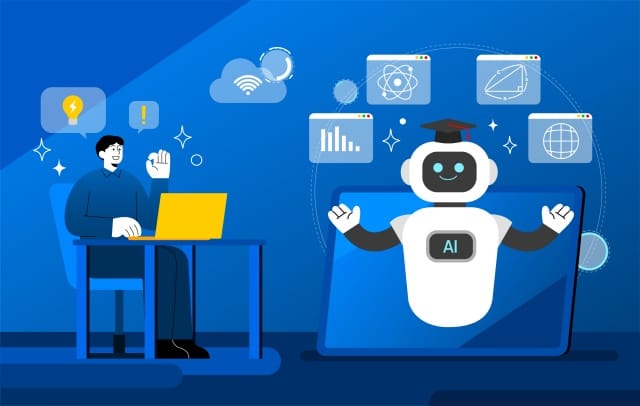
So far I've explained AI helpful to learning guardians and educators, but really, in education, the most important party is the learner.
To maximize a learner's learning experience, it's really important for a guardian or educator to assist learning by their side, but there are physical limits to assisting the learning experience beside the learner at all times.
Learners often Google or use ChatGPT while studying, but it's still not enough to quickly obtain the information they really need.
So, if an assistant for learners is provided on the education platform a learner uses, they'll be able to study much more easily.
Online-lecture STT/TA
After taking an online lecture, there's the hassle of having to replay the lecture to review or to get information helpful for later study.
If, when you can't remember the content after taking an online lecture or need to review, you could see the lecture content as text, you could review much more conveniently.
You can also add features to receive a summary of the text-converted lecture, or to search for desired keywords. For example, if you search 'sentence structure' in an English lecture, you can conveniently find the content related to sentence structure the educator mentioned.
AI Q&A tutor
An AI Q&A tutor can provide suitable answers to a learner's questions.
By studying based on the educational material a platform or educator holds, it can answer learners' questions based on that material.
Going further, when a specific question is asked, it maximizes the learner's experience by recommending similar learning materials where the answer to that question can be found.
Beyond this, there's also an AI foreign-language conversation tutor you can naturally converse with in a foreign language.
The limitless scope of AI use in the education industry
So far I've talked about AI that can be used in the education industry, but I think education AI is truly limitless beyond this. In fact, many edtech companies are adopting AI.
Dalpha also has many AIs applicable to the education industry, so it would be great to browse through the AI Store :)
Then, in the next article, I'll explain in detail AI that can be used effectively in other industries!

Yongchan Park