Comparing Core LLM Technologies: What's the Difference Between RAG, Fine-tuning, and AI Agents?
Summary
- LLM: the general-purpose model that forms the foundation of AI use
- Fine tuning and RAG: two ways to customize an LLM for your company
- AI agent: the final form, where a customized LLM is connected to workflow design and tools so it can automatically carry out real work
In 2025, with large language models (LLMs) everywhere, which technology fits your work?
One of the hardest things for companies considering AI adoption is choosing how to use AI. LLM, RAG, fine tuning, AI agent. You've heard these terms, but it's hard to tell which one is right for your company, isn't it?
In this article, we'll clearly explain exactly how they relate to each other and how they differ.
We'll clearly compare the differences, pros, and cons of each technology, and share a guide to help you choose.
1. LLM, RAG, Fine tuning, AI agent: how the four technologies relate
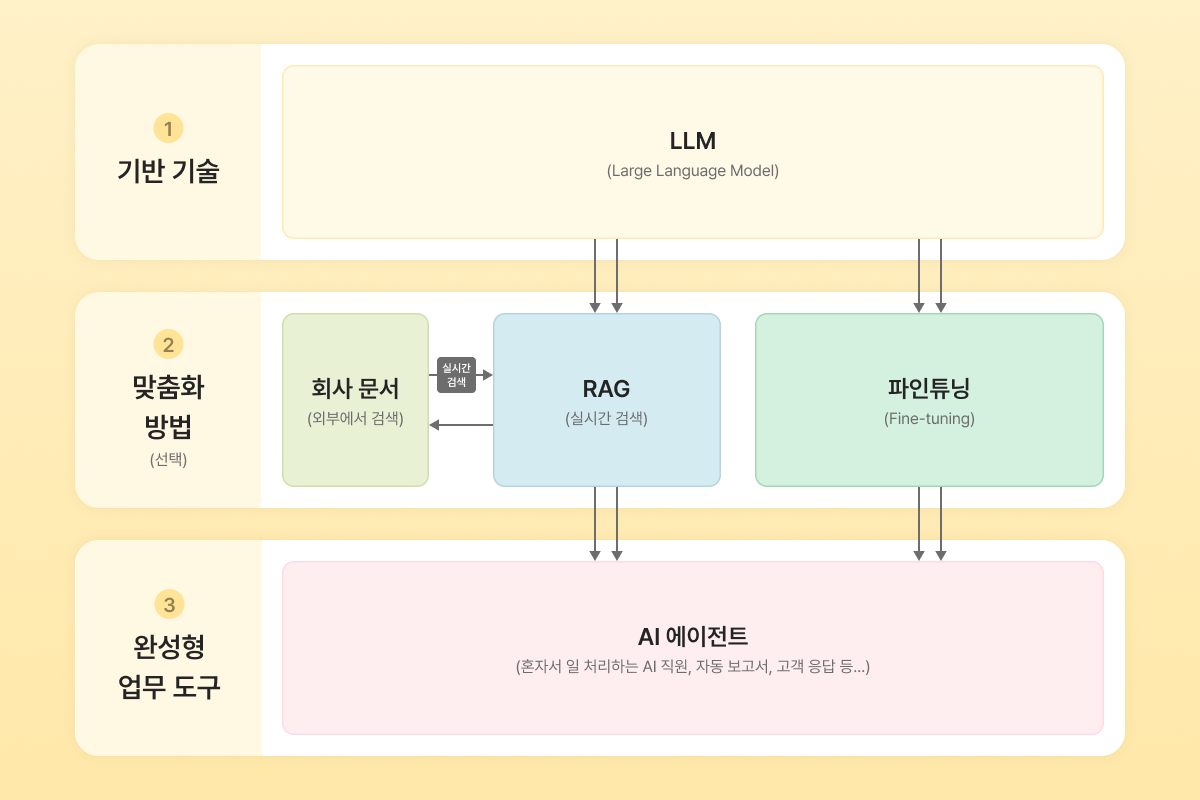
You can understand these four technologies as a step-by-step progression.
An LLMis the foundation of AI use. Base models like GPT-4o, Claude, and Gemini fall into this category. But simply using an LLM as-is makes it hard to handle your company's work.
That's why customization methodslike RAG and Fine tuning emerged. RAGis a method that makes the LLM look up your company's documents in real time. Fine tuning is a method that re-trains the LLM itself in your company's style. You choose one of the two to adapt the LLM to fit your needs.
Finally, an AI agentis the completion stage, where this customized LLM goes beyond just giving answers and can actually perform work. It can send emails, update databases, and connect with other systems to automate your entire work process.
So let's take a closer look at the specific pros and cons of each stage.
2. LLM: the general-purpose model that forms the foundation of AI use
What is an LLM?
An LLM (large language model) is an AI model that learns from vast amounts of data to understand human language and generate responses. Representative LLMs include OpenAI's GPT-4o, Anthropic's Claude, Google's Gemini, and Meta's LLaMA. Each has its own unique characteristics: GPT-4o is highly versatile, Claude is specialized for coding tasks, and Gemini is rated as having outstanding image-processing capabilities.
What you can do with an LLM
Even a basic LLM can handle a surprising amount of work. For example, if you say "Write an apology email to a customer," it produces a natural draft, and if you say "Summarize the sales data," it pulls out just the essentials. It doesn't simply string words together—it understands context and intent to deliver results you can use in your work right away.
Limitations
Basic LLMs like ChatGPT or Claude don't know your company's specific information or work processes. For example, if you ask it to "Write a report," it provides a generic report format, but it can't reflect your company's particular template, terminology, or internal data.
They also don't know the latest information, can't access real-time data, and can't connect with external systems to actually carry out work. Certain models can do this to some extent, but they only provide limited answers—they can't take actions like actually sending an email or updating a database.
Customization technologies emerged precisely to overcome these limitations. RAG and Fine tuning are the two leading methods for customizing an LLM to fit your company.
3. Fine tuning: A method of customizing an LLM by training the model (1)
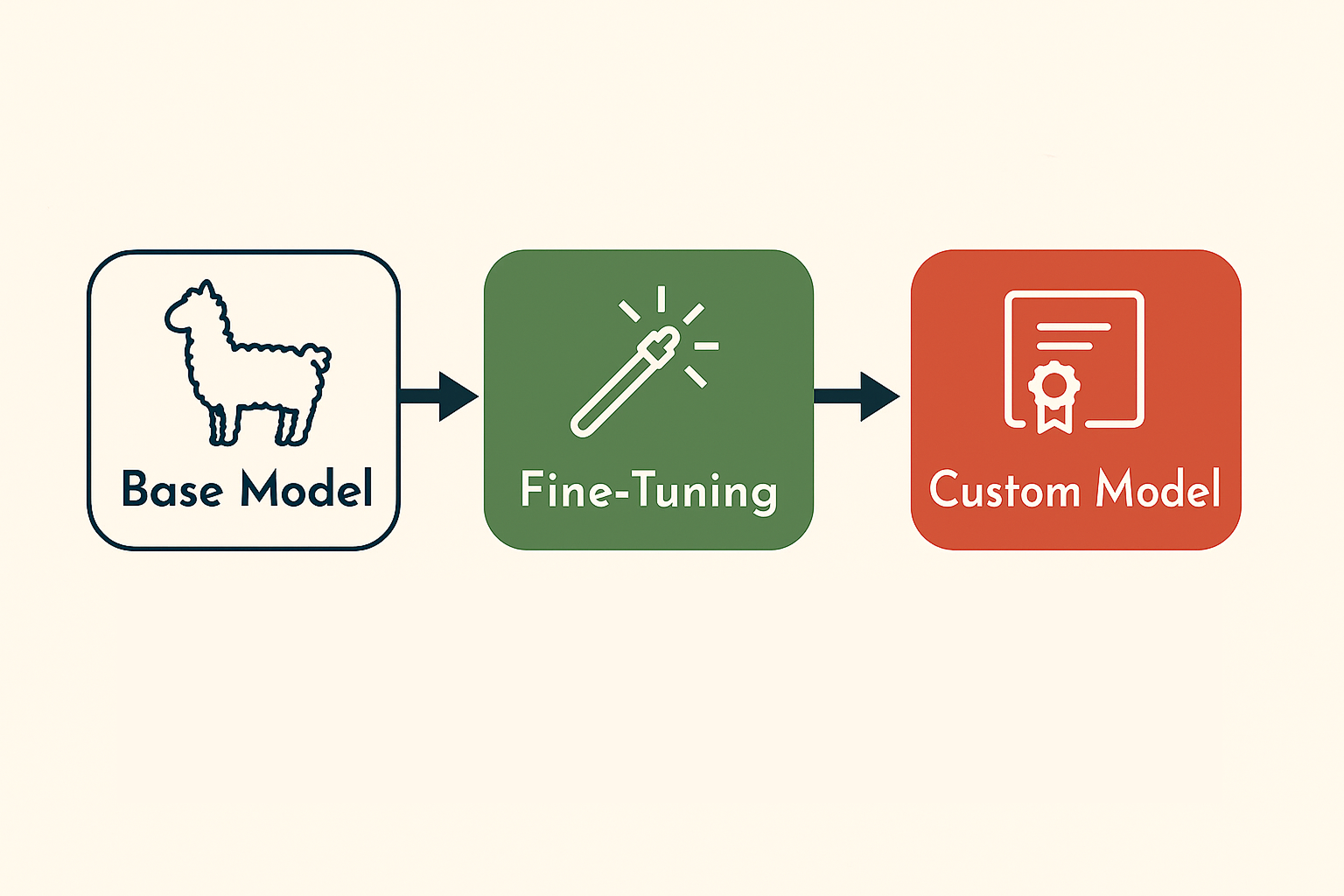
Fine tuning: retraining an LLM in your company's style
Fine tuning is a method of training your company's materials directly into the LLM model. It fully imprints your own terminology, formats, and style onto the LLM. Once training is complete, it can respond in your style without any separate reference materials.
The biggest advantage of this approach is speed and consistency. It answers quickly without any separate search and maintains a consistent style and quality. For specific tasks or domains, it delivers expert-level accuracy and can operate independently without an internet connection.
What kinds of work is Fine tuning suited for?
Fine tuning is a good fit for fixed work that doesn't change, situations where fast responses are essential, tasks where consistency matters, and cases requiring deep knowledge of a specific specialized field.
Fine tuning delivers excellent performance in cases where it must perfectly learn specific clauses and phrasing styles—such as when a legal team automatically generates standard contracts—when medical staff need to write opinions matching a particular hospital's medical-record format, or when a financial firm needs to automatically generate investment reports in its own proprietary template.
When is Fine tuning not a good fit?
It's not suitable when you're short on budget and time. The initial investment ranges from tens of millions to hundreds of millions of won, and building and training take anywhere from a few weeks to several months. In particular, it requires high-spec dedicated GPUs, so infrastructure costs are substantial, and refining and preparing the training data also requires considerable time and expertise.
It's also hard to use when updates are frequent. Reflecting new information means retraining from scratch, which makes it difficult to keep pace with a changing business environment.
4. RAG: A method of customizing an LLM by adding a document search system (2)
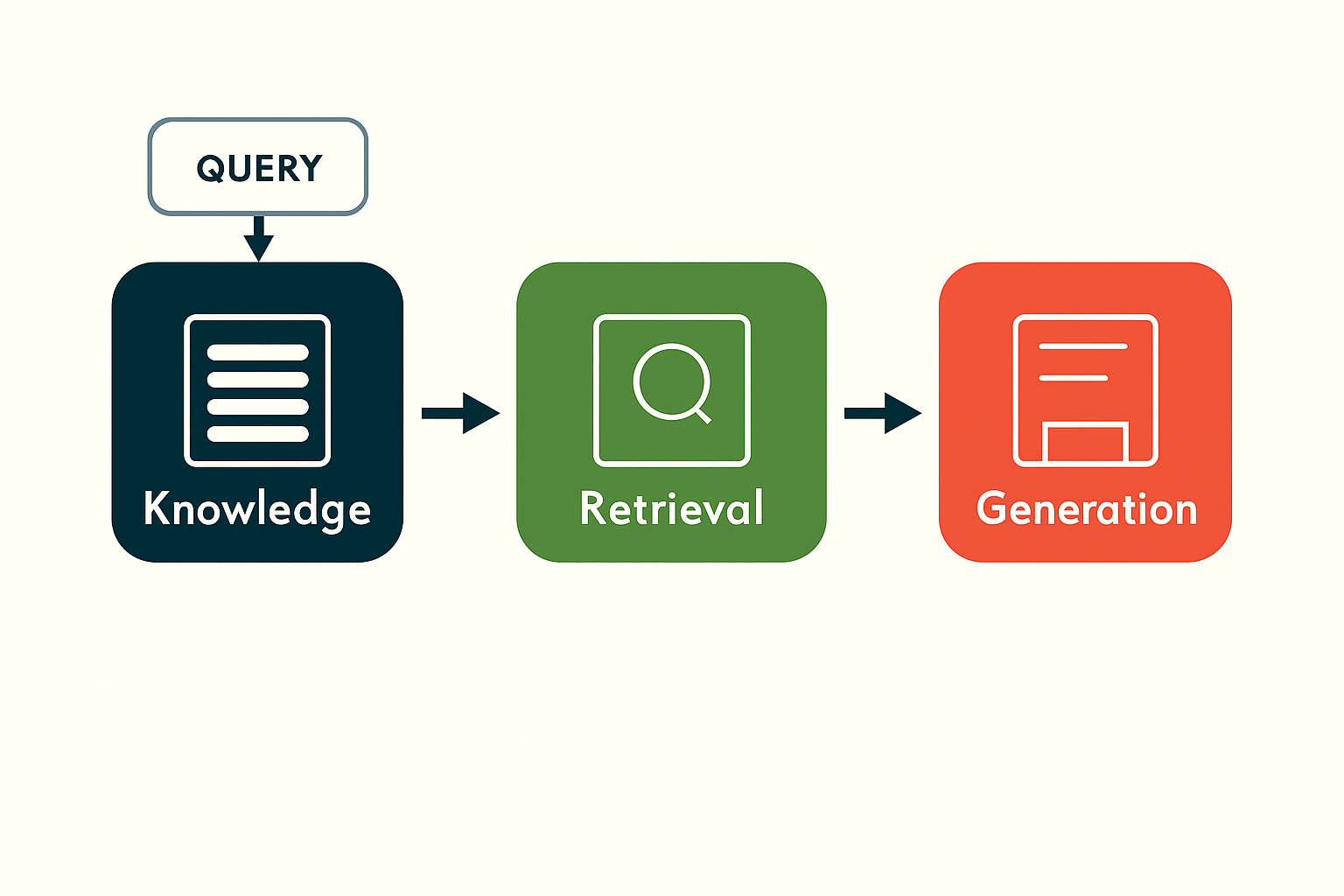
RAG: combining your company's document search system with an LLM
RAG (Retrieval-Augmented Generation) is a method that combines an LLM with your company's document search system in real time. When it receives a question, it searches for relevant documents and then combines the search results with the AI's knowledge to generate an answer. Because it doesn't adjust the LLM itself and instead stores only the documents in a separate database, it's far safer and more flexible.
RAG's biggest advantages are flexibility and cost-efficiency. Just swapping out the documents immediately reflects the latest information, and the build cost is about one-tenth that of fine tuning—ranging from a few million to tens of millions of won, making it far cheaper. It enables rapid prototype building and testing, and can flexibly handle a wide variety of questions.
What kinds of work is RAG suited for?
RAG is a good fit when you need to handle information that requires frequent updates, find information within vast volumes of documents, build rapid prototypes and adopt experimentally, have multiple departments each using different documents, or clearly cite the source of information.
RAG performs excellently when a customer-support team searches product manuals in real time to respond to customer inquiries, when an HR team searches the latest HR policies to answer employee questions, when a research lab searches a paper database for relevant studies to write a report, or when a sales team generates customer proposals using the latest product catalog and price list.
When is RAG not a good fit?
RAG's weakness is its relatively slow response speed. Because of search time, it takes about 1–3 seconds, making it unsuitable for situations that require fast responses. Also, if the search fails, quality degrades, and even for the same question, the answer can vary depending on the search results, leading to a problem of inconsistency.
On top of that, document indexing and search-engine management are complex, and continuous document quality management is required. The fact that you must always stay connected to the document database is another factor to consider. Because search accuracy determines the performance of the entire system, expert design is needed for how documents are structured and indexed. If the search keywords don't match the document content, it may fail to find the relevant information.
✅ Fine-tuning vs RAG comparison
Item | Fine-tuning | RAG (Retrieval-Augmented Generation) |
|---|---|---|
Approach | Retrain the LLM itself on your company's data to create a fixed model | Combine an LLM with a real-time document-retrieval system |
Operating structure | Imprints information into the model so it 'remembers' it | Stores documents in an external DB and 'looks them up' to use when needed |
Advantages | - Fast responses | - Easy to reflect the latest information |
Suitable tasks | - Work that requires fixed rules and document formats | - Cases where documents are frequently updated |
Deployment cost/time | Tens of millions / takes several months | Millions / takes a few weeks |
Maintenance | Adding new data requires retraining the entire model | Can be updated simply by swapping out documents |
Response speed | Very fast (advantageous when real-time responses are needed) | Relatively slow (1–3 second delay possible) |
Consistency | Relatively consistent responses | Answers may vary depending on the search results |
Technical difficulty | Requires building training data, GPU infrastructure, and model construction | Requires setting up search infrastructure and structuring documents |
5. AI agents: a customized LLM that actually performs the work
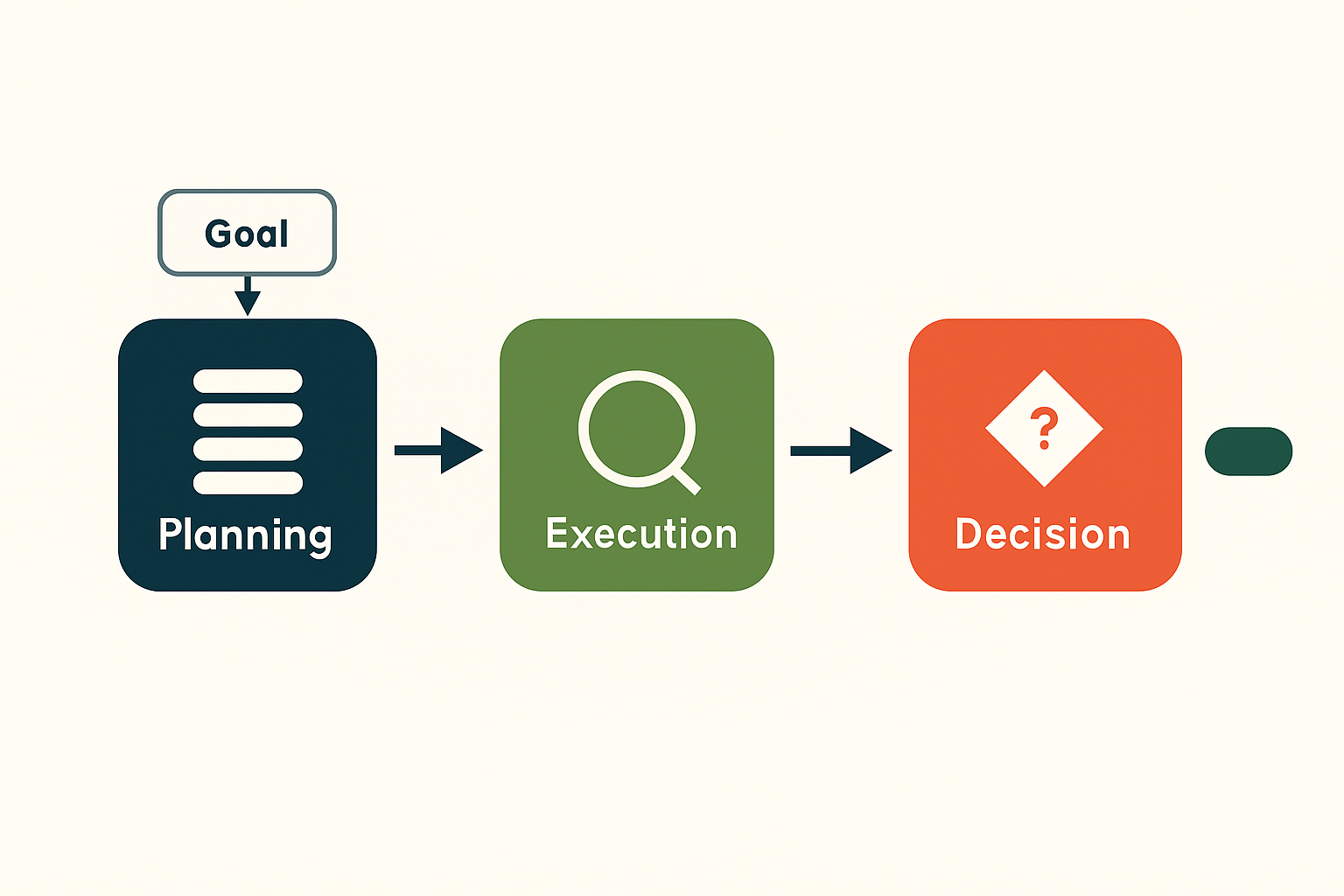
An AI agent is the combination of "LLM + execution capability"
An AI agent is a form that combines an LLM customized through RAG or fine-tuning with various tools and system-integration capabilities. Going beyond simply providing answers, it works like a person to autonomously assessing and handlingactual tasks.
In other words, rather than an AI that answers questions, it is closer to the concept of a task agent that automatically 'handles work on your behalf'—the repetitive things people do every day.
The core of an AI agent is 'full automation'
An AI agent doesn't merely respond; it directly executes the actions needed to achieve a work goal. Integrated with ERP, CRM, email, internal systems, and more, it combines various tools and decides for itself based on conditions to move on to the next task.
Beyond running 24/7 without interruption, from issuing work instructions to execution and reporting, it takes full charge of roles people used to perform.
Cases of work innovation created by AI agents
In manufacturingwhen sensor data detects a quality anomaly, the agent sends an alert to the relevant department and automatically registers an inspection schedule.
In retailthe agent analyzes inventory levels to identify items running low, generates purchase orders, and automatically sends them to suppliers.
In servicesthe agent collects customer feedback, analyzes sentiment, assigns staff according to issue priority, and automates the entire response process.
In this way, AI agents have evolved to a level where they can even replace the complex decision-making and execution people used to handle.
An era has become reality in which people no longer need to directly intervene in repetitive yet important tasks.
6. A checklist for choosing the right AI for your company
✅ Is a basic LLM enough?
Can our tasks be solved at the level of general question-and-answer (Q&A)?
Can we use it effectively without connecting internal documents?
Do we really not need a distinctive writing style or domain expertise?
Do you want to minimize costs and start by using ChatGPT-like features?
✅ Does our organization need fine-tuning?
Do we need to reflect our company's own terminology, tone, and document formats exactly?
Do we have many fixed tasks where similar questions and answers repeat each time?
Are fast responses and consistency important?
Does it require expert-level accuracy or specialized expertise?
Can you afford a budget in the tens of millions of won and a build period of several months or more?
Does it need to work even without an internet connection?
✅ Is RAG a good fit for our organization?
Do the latest documents and information change often, and do you need to reflect those changes?
Do you need to search and use information across multiple departments/documents in real time?
Do you need document-based responses, and must you clearly show the source of each answer?
Do you want to deploy quickly with a relatively limited budget?
Do you need to respond flexibly to a wide variety of questions?
✅ Does our organization need an AI agent?
Beyond simply giving answers, do you need to replace the actual work that people used to do?
Beyond document search or answers, do you also need execution (e.g., sending emails, integrating with systems)?
Does it need to integrate with multiple systems (ERP, CRM, etc.)?
Do you want to fully automate repetitive tasks?
Do you have needs like a labor shortage or 24-hour processing?
Does it need to make judgments based on conditions and automate context-appropriate actions?
6. The Outlook on AI Work Trends
The Spread of Multimodal AI
The ability to process not just text but also images, audio, and video in an integrated way is improving rapidly. In particular, each model's specialized strengths are expected to become even more distinct—like Gemini 2.0 Flash's OCR performance or Claude's coding ability. It will deliver even stronger performance on complex tasks where images and text are intertwined, such as generating descriptions from product photos or pulling insights from analyzing ad images.
The Rapid Growth of AI Agents
Beyond simple conversational AI, AI agents that handle real work will become central. The ability to automate complex business processes will become a key element of corporate competitiveness. It is expected to handle tasks as complex as project management—like analyzing customer complaints to write a report with improvement suggestions, or building a campaign based on the latest trends and even drawing up a deployment plan.
A Dramatic Improvement in Cost Efficiency
With the emergence of low-cost, high-performance models like DeepSeek, an environment is forming in which even small and medium-sized businesses can access advanced AI technology. As models with remarkable performance keep launching at low cost, the barrier to adopting AI is dropping rapidly.
Focus on the Business, Not the Technology, When Using AI
So far, we've explored LLMs, RAG, fine-tuning, and AI agents.
Do you now understand how each of these technologies relates to the others?
LLMs, RAG, fine-tuning, and AI agents are each different problem-solving tools with their own unique strengths and limitations.
What matters is not adopting the latest technology, but choosing the approach best suited to your business goals and realistic constraints.
If you're considering adopting AI, we recommend starting with a focus on real improvements to work efficiency rather than technical perfection.
✅ At Dalpha, through 1:1 consulting, we provide AI agents plan and build it for you.free consultation? Leave us an inquiry!
Dalpha Blog