The Essence of Marketing: What Dalpha Learned Through Trial and Error
Marketing? What's that?
I used to be someone who didn't really understand why marketing matters.
I thought marketing was a field that's not easy to take on for someone like me, who values logical structure as an important principle.
I currently work as Dalpha's BD/Sales Manager, and I'm the only person on the team in charge of marketing. Over my first six months handling marketing-related work, I came to fully realize just how important marketing is.
When I first joined, the road ahead felt incredibly daunting. I had taken two or three marketing courses in school, but I had a strong feeling that marketing was a field with no right answers, where it's hard to produce meaningful results. On top of that, I thought that even if you did succeed at marketing, the upside was so limitless that it was an area that only gets harder the deeper you dig.
In this post, I'd like to share the trial and errorI went through while handling marketing in a real-world role for the very first time, and how I overcameit.
Before I dive into the main content, I'd like you to read this knowing that I still don't consider myself great at marketing—so please take it as the thoughts of someone who's still learning on the job :)
What does Dalpha aim to achieve through marketing?
Marketing comes in many forms, but today I'd like to talk specifically about the case of SNS marketing, which was the first thing I took on after joining.
At first, since I had no knowledge whatsoever, I just made three or four pieces of content and vaguely started running ads.
The results were absolutely dismal.

The image above shows the very first SNS marketing campaign I ran after joining. The CTR came in around 0.1%, and actual conversions into potential customers numbered fewer than three.
I fell into self-reproach over having wasted the company's ad budget, and I started asking myself a fundamental question.
What is the goal Dalpha needs to achieve through marketing?
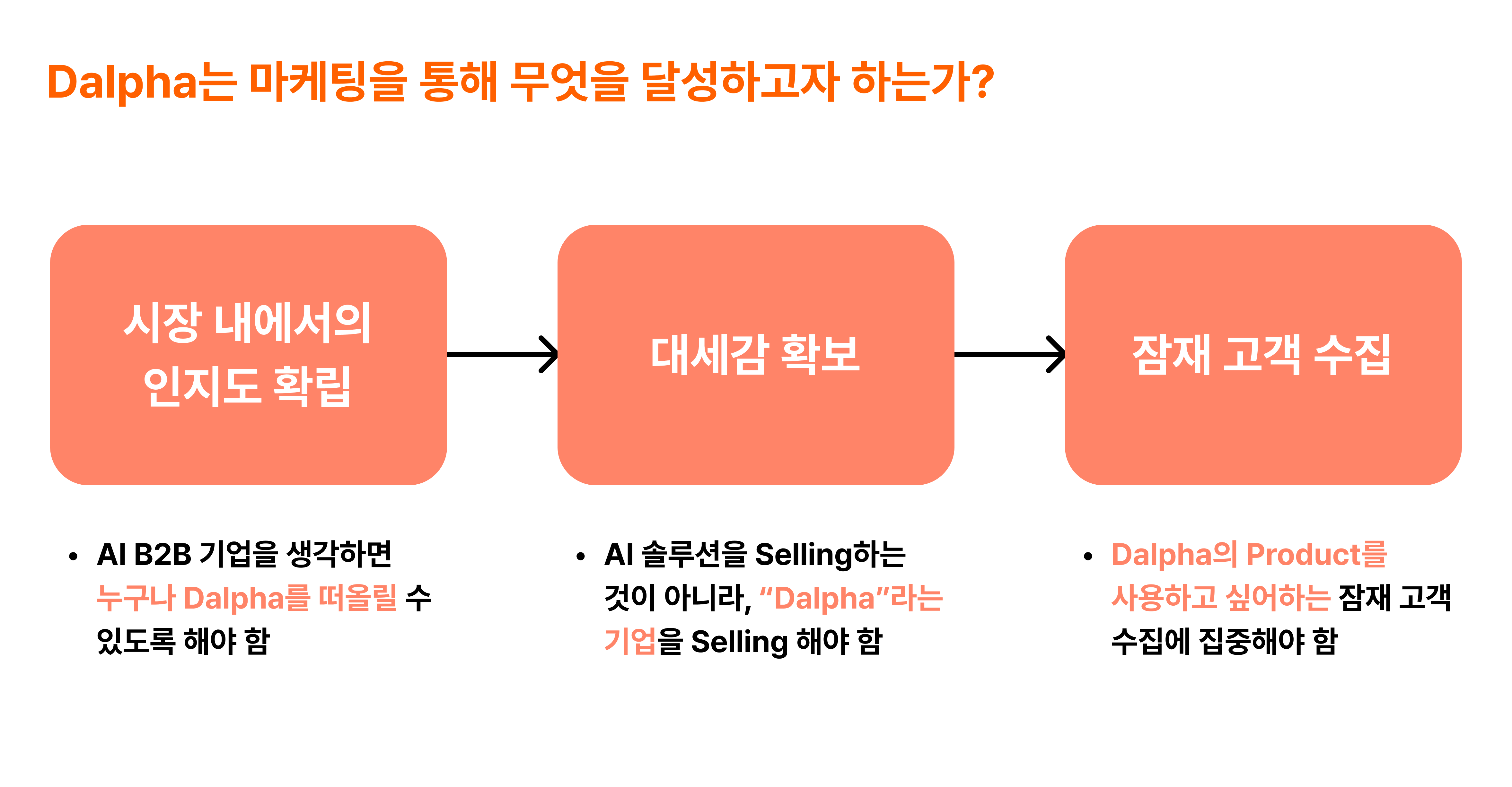
The image above is the conclusion I reached after spending an entire day thinking it through.
To begin with, since Dalpha is a B2B startup, I figured it would be very different in nature from typical B2C marketing, so I thought defining the goal was extremely important.
To give you the reason Dalpha needs marketing up front,
it's about capturing potential customers by establishing a sense of momentum in the AI market
—that was the conclusion I came to.
I'll explain in another post what "a sense of momentum" is and which values Dalpha considers important :)
Based on this ultimate goal, I began running marketing anew.
Everything in marketing must ultimately align with the "goal."
With Dalpha's marketing goal mentioned earlier firmly in mind, I considered what I should set up again first.
"1. To whom (targeting) and 2. what (content) will we market"—I concluded that these needed to be redefined, and that these two factors must align unconditionally with the goal.
After that, I ran AB tests endlessly to figure out who to target and what kind of content to come up with in order to capture potential customers by establishing momentum. I still haven't fully figured out what the right answer is, but since a degree of optimization has been achieved, I'll share the relevant conclusions.
1. Targeting
To capture potential customers, we targeted companies and individuals working at companies, and among those, to gather customers even faster, we targeted industries we expected would have a strong need for Dalpha's flagship solutions.
Dalpha has a number of solutions with high demand in e-commerce—similar-product recommendations, search engines, product-category automation, and more—so we targeted customers working in e-commerce.
2. Content
As for content, pieces that 1) make it easy to understand what the product is at a glance, or 2) clearly pinpoint the customer's pain point performed very well.
Let me give Dalpha's review analysis AI ad as an example.
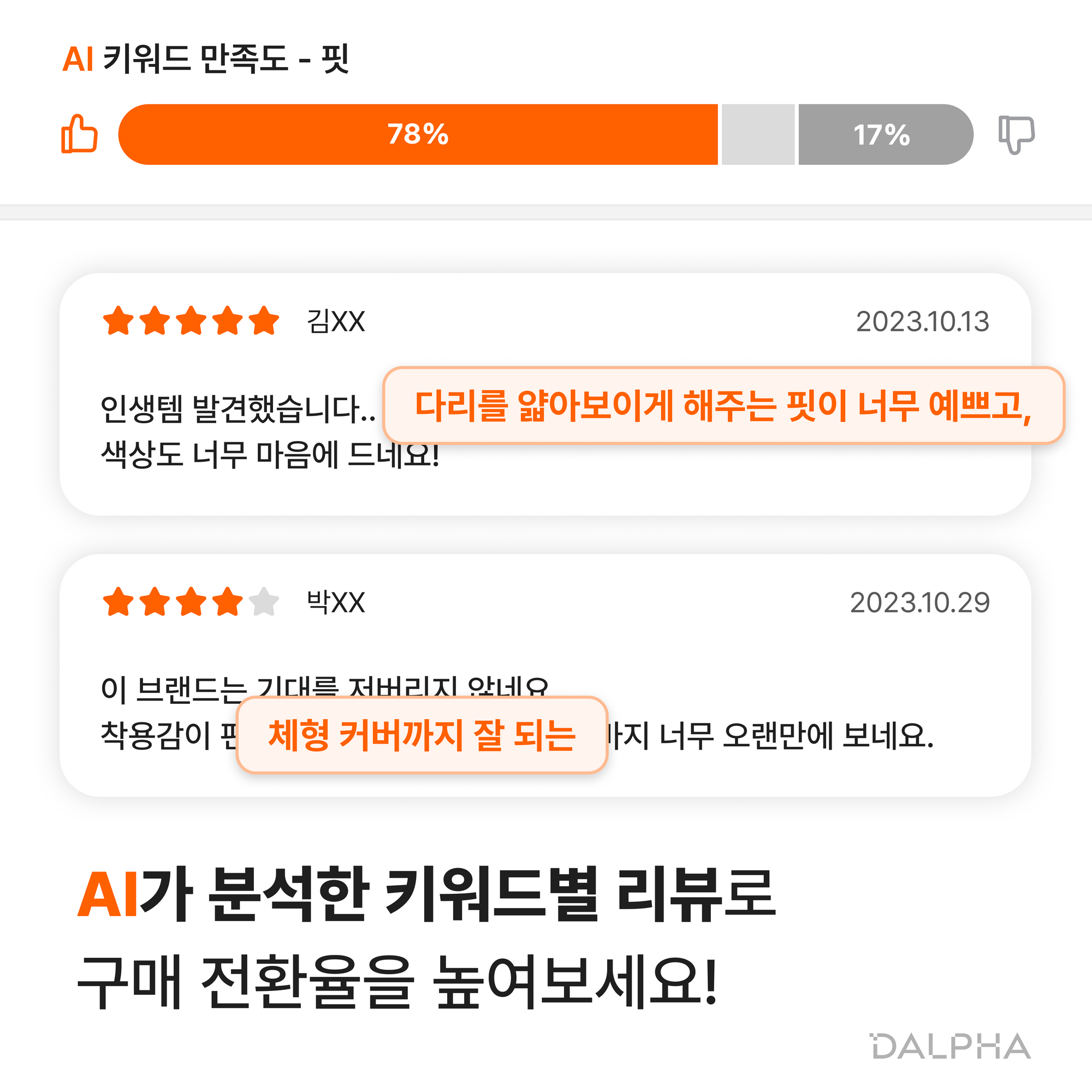
The image above is ad content created to make it easy to understand what the product is at a glance. From the image, you can instantly see that Dalpha AI classifies reviews by keyword, calculates positive/negative ratios, and highlights the original review text corresponding to each keyword. Without having to dig into exactly what kind of AI it is, viewers could immediately recognize that their company needs this AI, so the click-through rate came out very high.

The image above is content that clearly and catchily pinpoints the customer's pain point. Borrowing the UI of an app that recruits part-time temporary workers, we targeted companies that were hiring part-timers to analyze and manage reviews at the cost of labor. We actually checked whether such part-time job listings existed on the site, and by using this kind of content we effectively made the case that AI can help automate manual work. As a result, the inquiry conversion rate measured very high.
So, how did it turn out?
In conclusion, performance improved dramatically.
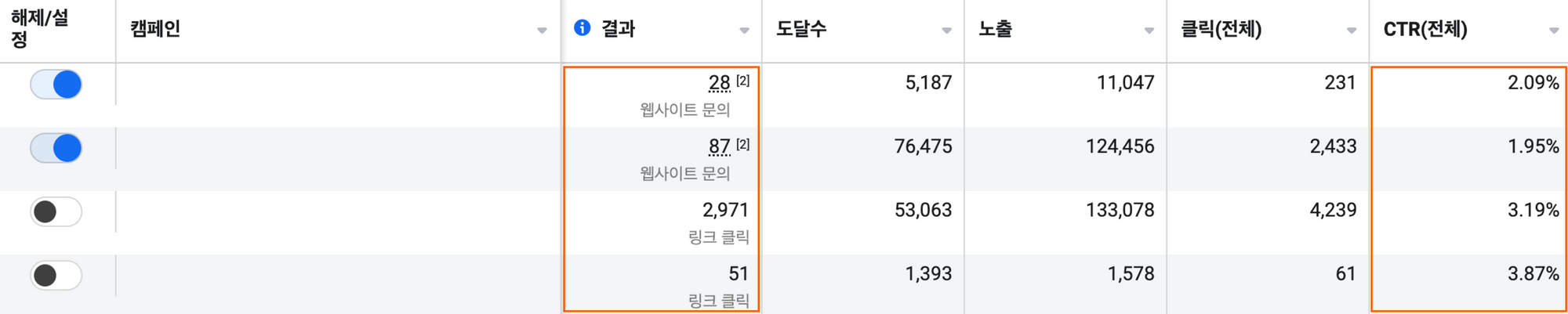
A CTR in the 3% rangeand a large number of inquiries (conversions into potential customers) came in, and we were able to provide AI to many client companies.
I still think the results fall far short, but compared to when I knew nothing at all, you can see we've made great strides :)
Marketing never ends.
Compared to when I first joined, I now think Dalpha has secured a certain degree of "momentum."
However, as an early-stage startup, we still need something to achieve our marketing goal, so we're constantly thinking about what marketing we should run to get there.
Compared to other outstanding marketers, my skills really do fall short, so going forward, rather than offering marketing tips, I'll keep sharing the lessons learned from the trial and error I've gone through.
In the next post, I'll cover topics like PR and content marketing.
As always, I hope you'll keep a close eye on Dalpha :)

Yongchan Park