How PMs Work with Developers — APIs
Recommended for
- PMs who want to communicate efficiently with developers
- Junior PMs unfamiliar with APIs
Estimated reading time: about 7–9 minutes
When a non-developer meets an API
API — a word no PM can afford not to know.
When a non-developer first runs into an API,
many of you can probably relate to that unfamiliarity and vague dread.
You might think, 'Does a PM really need to know this too?', but
because APIs are used throughout service development,
having a rough understanding in place lets you manage far more efficiently.
That said, deep technical understanding isn't a must.
It's enough to understand the rough principles of an API and which person to talk to in which situation —
that's all.
In particular, because Dalpha provides most of its AI services in API form,
understanding APIs was essential,
so let me share how I, from a non-developer's perspective, got comfortable with APIs.
An API is a restaurant server
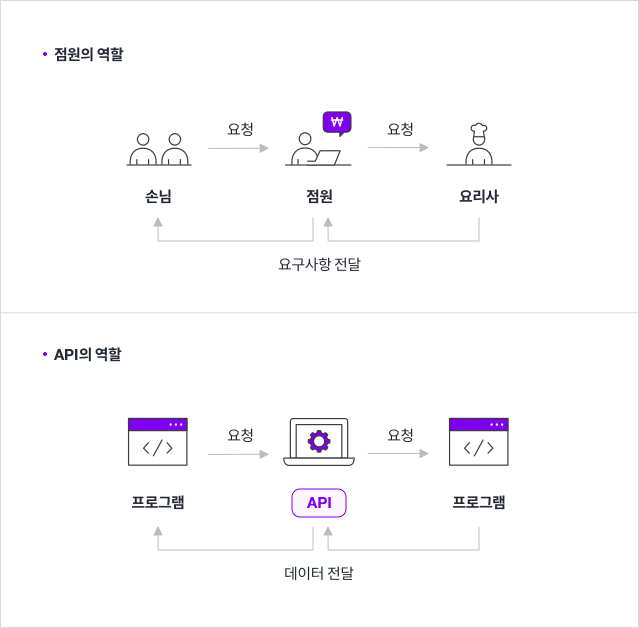
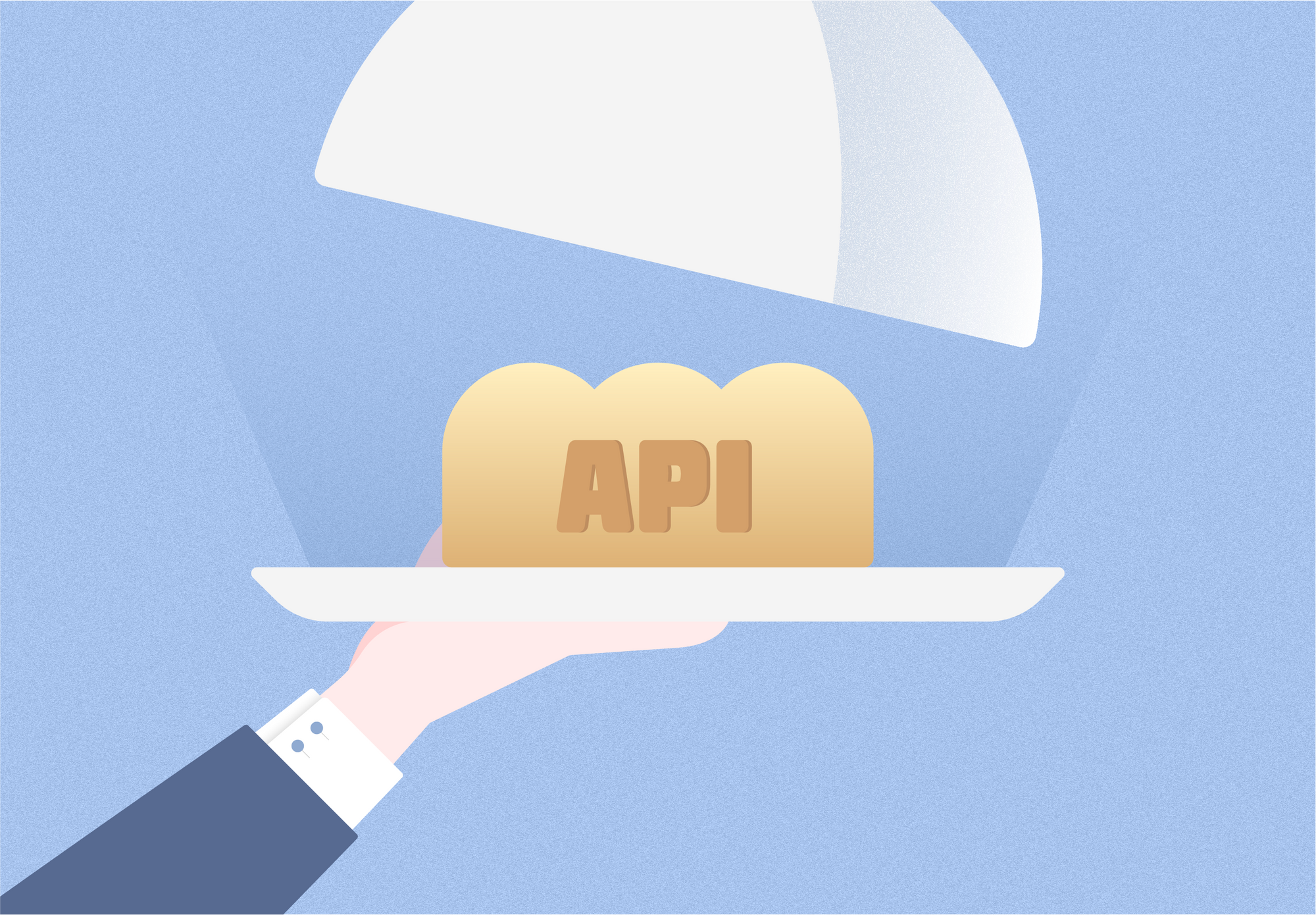
An API is a restaurant server — this analogy is intuitive.
Think about ordering food at a restaurant.
The server takes the customer's order and passes it to the chef,
then takes the food from the chef and brings it to the customer.
An API works the same way.
It receives a request from a program (Client), passes it to a program that can handle the request,
and delivers the processed result back to the program (Client).
In short, an API is a tool that helps programs communicate with each other.
Understanding APIs
The key things we need to know are mainly these two:
What does this API do?
What kind of problem just occurred at the API layer?
API documentation
The most helpful thing for grasping #1 is the API documentation.
Think of API docs like a user manual for an electronic device.
You don't need to read everything — just check certain parts and
you can roughly grasp what role the API plays.
What I mainly check are the request (input) examples and response (output) examples.
Coupang's API docs — let's take a look.
In the Request/Response Example, data is exchanged in JSON format.
JSON is a syntax made up of keys and values.
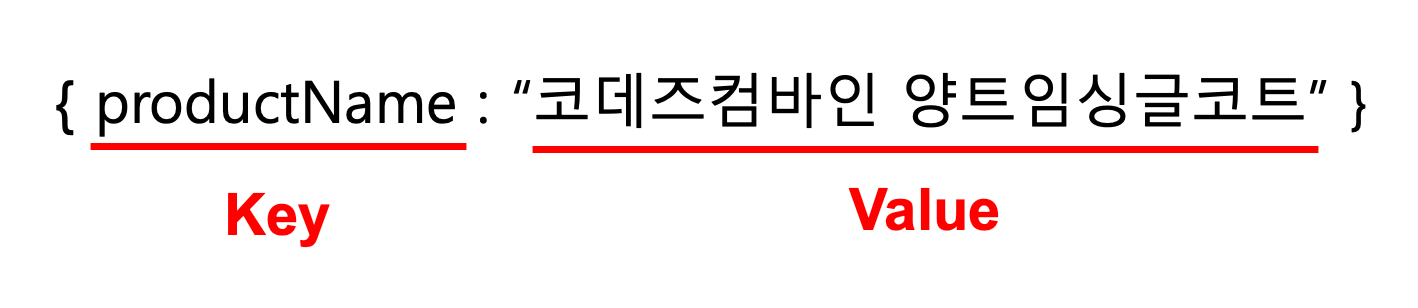
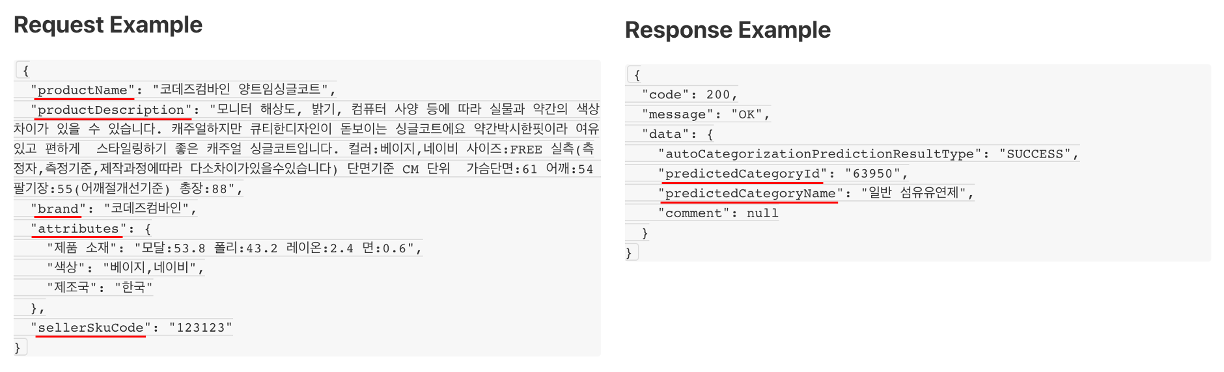
If you send a request containing the product name and various details,
you can see that the response returns the predicted category id and name.
In other words, this API recommends a category based on the product's name — you can easily confirm that.
404 not found

Next, let's understand error situations in APIs.
Error codes like '404 not found' contain
information about what kind of error it is,
and being able to distinguish error types helps you guess the cause of the problem.
Accurate communication — that is, it's very useful for quickly grasping the problem and
judging who to ask for what.
[Error codes]
4XX (client error): the request value is wrong
5XX (server error): the request value is fine; the server failed to process the request
If the error code starts with 4, the problem is usually on the front end that sends the request;
if it starts with 5, you can guess the problem is usually on the back end that
processes the request.
Open API
When building a service, you don't need to implement every feature in-house.
The Open API you've often heard of is, literally, open —
an API designed to be freely used and shared.
'There's an Open API for that, so just use it' can be taken to mean
you can implement that feature very easily.
Representatively, YouTube, Twitter, Naver, Kakao, and others
provide Open APIs for a variety of features.
[Open API provider sites]
APIs for using AI
Recently, using AI has likewise become easy through APIs.
Even AI models that need large-scale servers, like ChatGPT and Whisper,
are now something individuals can easily use.
Using AI through APIs has many advantages.
Flexible use with usage-based billing
Fast prototyping and testing
Continuous performance improvements
Many of Dalpha's AIs are also served in API form.
Because they're custom-provided in a way that fits each client's service exactly,
they're highly usable and require only minimal development resources.
In closing
Since APIs are used across so many areas of service development,
understanding them is essential as a PM.
At the planning stage, where APIs can be used, and
in which situations and with whom you should communicate —
I hope this article helps you grasp that, even a little 🙂

Hyoyeon Park