
The Top 3 Product Search Problems Every Online Store Manager Must Know — and How to Solve Them with AI
68% of customers who fail at search never return.
Left unaddressed, this leads to declining store revenue and customer churn.
In this article, we share the top 3 product search problems every online store manager must know and how to solve them with AI.
Search Problem #1 — Typos return no results

The problem
Korean typos
liggings, leddings, leggingz
baag, baga, bagg
Typos that frequently happen on mobile
wusanbk, dresss, cheongyang chilli
English typos
fprladtm → leggings, tpxld → shirt
Why it happens
Traditional store product search is based on exact word matching. If even a single word doesn't match, no results appear. So even when a shopper searches with the same meaning, a typo means they can't find anything.
The traditional workaround
You have to enter every conceivable typo into the search tags.
Product name: Leggings
Search tags: #leggings #liggings #leddings #legins #leggings #fprladtm...
The practical challenge
1. About 2,000 typo tags need to be entered per 100 products
2. No matter how thorough you are, you can never perfectly predict every search term a customer might use
3. Typo-tagging work has to be repeated every time new products arrive
How to solve it with AI
Apply a deep-learning-based typo-correction model
- Learns typo patterns by analyzing Korean/English consonant-vowel similarity
- Learns frequently occurring typos based on user search logs
- Corrects typos in real time with context awareness
Search Problem #2 — I searched 'baji' but 'pants' don't come up
The problem
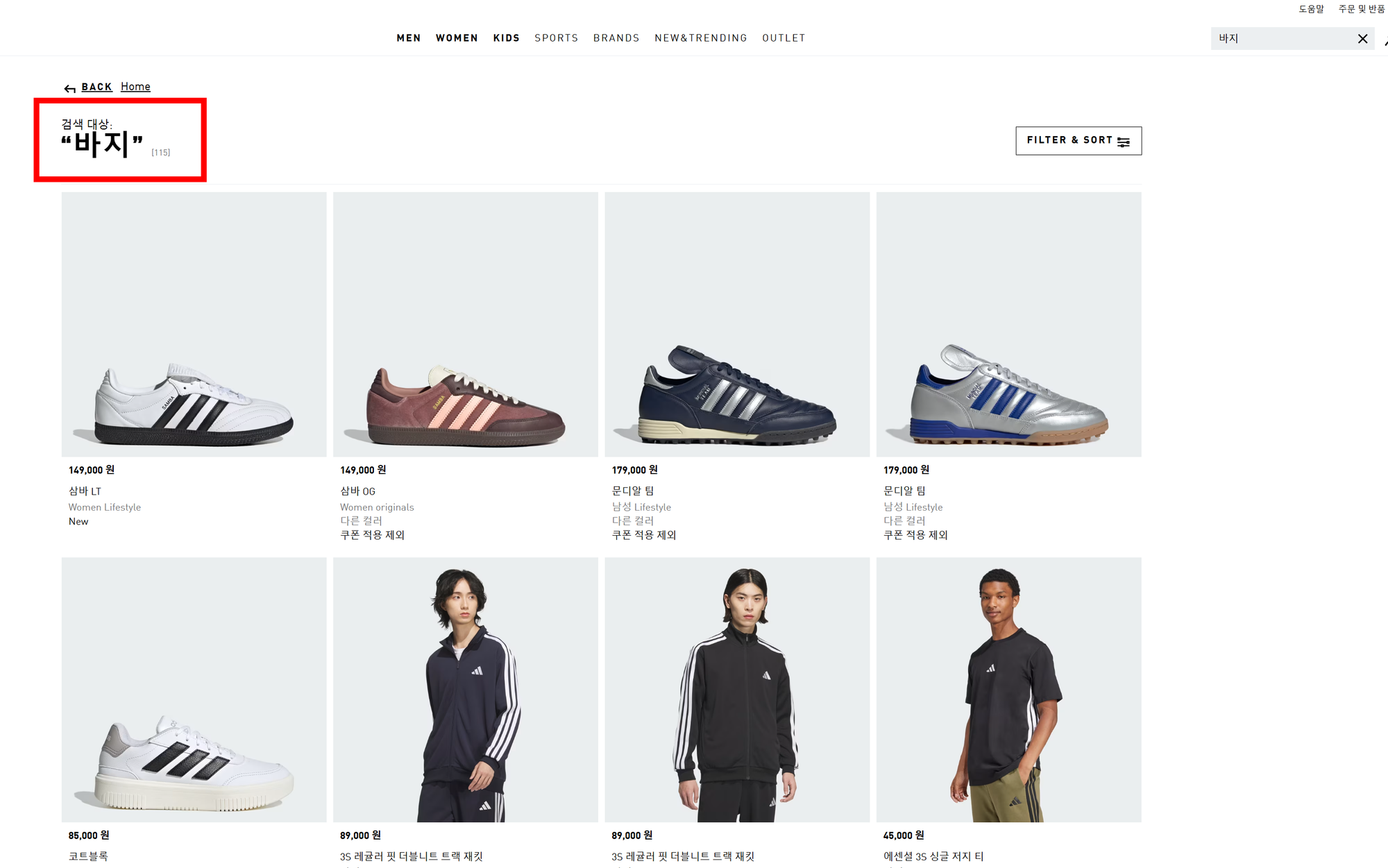
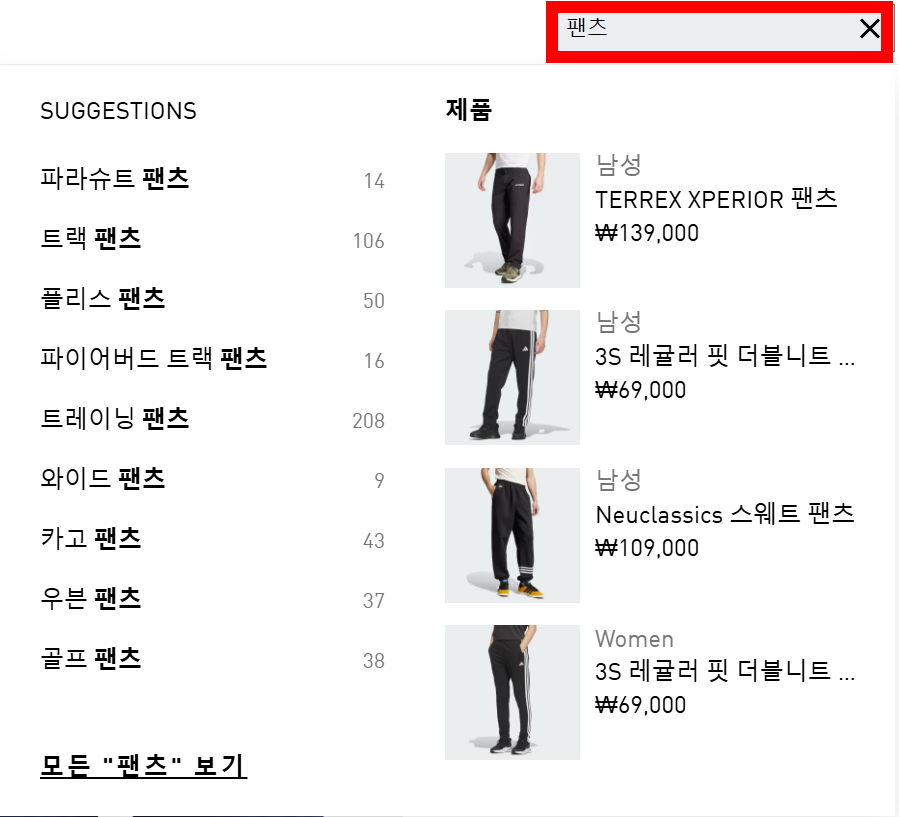
You search for 'baji' (pants) and it shows you shoes and jackets.
But when you search 'pants', the right results appear.
You're clearly looking for the same products, yet you get different search results.
Why it happens
We recognize 'baji' and 'pants' as the same word, but a basic search engine has no idea the two mean the same thing.
That's because a search engine doesn't search by understanding context the way a human does.
So you have to separately tell it that 'baji' = 'pants'.
The traditional workaround
You have to manually enter every synonym into the search tags.
Product name: Wide Pants
Search tags: #widepants #widebaji #tongbaji #tongpants #wideleggants #widefitbaji #widefitpants #loosefitbaji #loosefitpants #dailypants #dailybaji #slacks #everydaypants #dailywear...
The practical challenge
1. At least 15 synonyms need to be entered per product
2. You have to account for different terms across generations and brands
3. You have to consider both English and Korean synonyms (on average 4 variations per word)
How to solve it with AI
1. Use a store-specialized language model
- Apply a Korean-specialized model trained on store search data
- Automatically extract synonyms based on real-time search logs
- Analyze related words using product descriptions and review data
2. Build a product Ontology
- Automatically generate a hierarchical structure for each product category
- Automatically map seasonal trend terms
- Connect multilingual synonyms across global brands
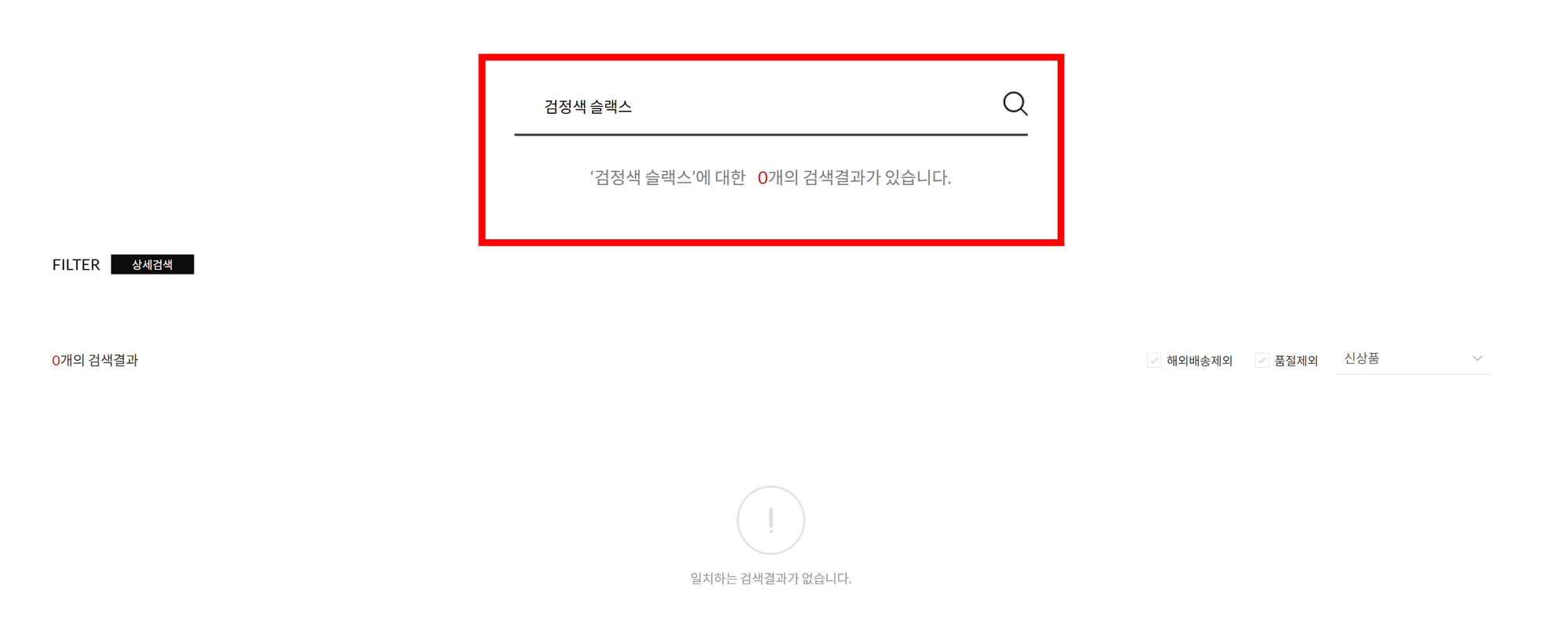
Search Problem #3 — I searched "black slacks" but not a single pair of black pants shows up
The problem
When option information (color, size, detailed descriptions, etc.) is added to the search term — as in "black slacks," "size 55 blouse," or "waterproof hiking pants" — search accuracy drops dramatically.
Why it happens
The more detailed attributes and options you consider, the lower the search accuracy gets.
For example, even if you put the color tag into the search field,
between 'black' and
'slacks',
it doesn't know which one matters more, so there are cases where it decides 'black' is the important one.
You search for black pants and might get a black padded jacket or a black T-shirt instead.
The traditional workaround
Right now you have to manually enter all attribute information into the search tags.
Product name: Daily Slacks
Options: Color (black, beige, khaki), Size (S, M, L)
Example search-tag entry: #dailyslacks #blackslacks #blackslacks #beigeslacks #khakislacks #Sslacks #Mslacks #Lslacks #blackpants #beigepants #khakipants #Ssize #Msize #Lsize
The practical challenge
1. Just the basic color×size combinations require at least 20 tags per product (e.g., 4 colors × 5 sizes)
2. Additional attributes arise depending on product characteristics (e.g., material, length, fit)
3. Attribute information is scattered across the product name, options, and detailed description, making integrated management difficult
How to solve it with AI
1. Apply a product-attribute extraction AI model
- Automatically extracts attributes from product names, descriptions, and images
- Recognizes multidimensional attributes like color, size, and material
2. Use a search-intent analysis model
- Automatically identifies the key attributes and their weights from the search term
- "black slacks" → {color: black, category: slacks, weight: category > color}
3. Build a multimodal search engine
- Analyzes text and image information together
- Matches visual attributes with text attributes
3 Features Only AI Search Can Deliver
Here are 3 features only AI search can deliver that traditional product search can't.
1) Boost purchase conversion by surfacing products a customer is more likely to buy
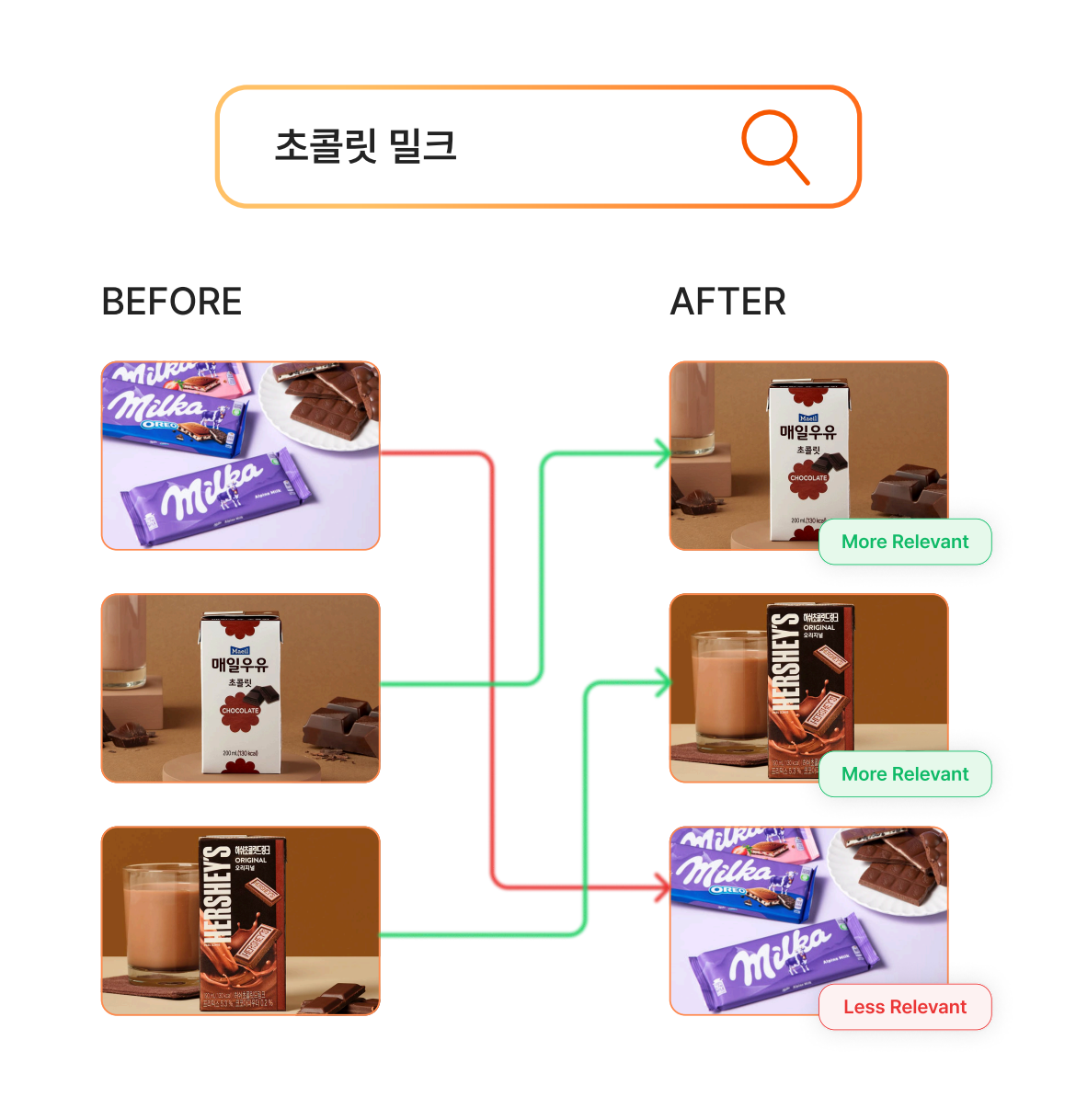
2) Dramatically reduce search failures and improve the customer experience
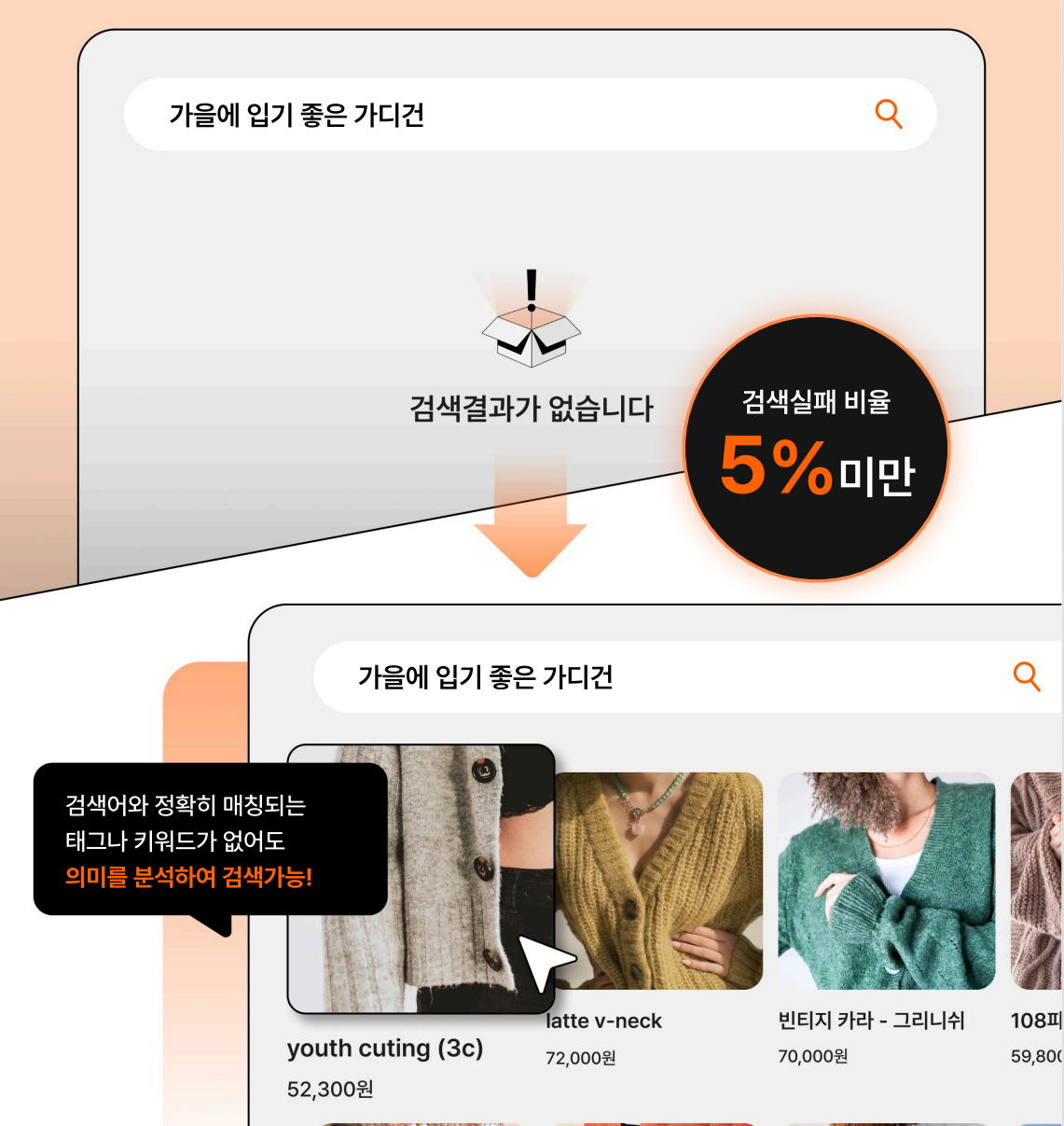
3) Reduce manual work with automated search tagging
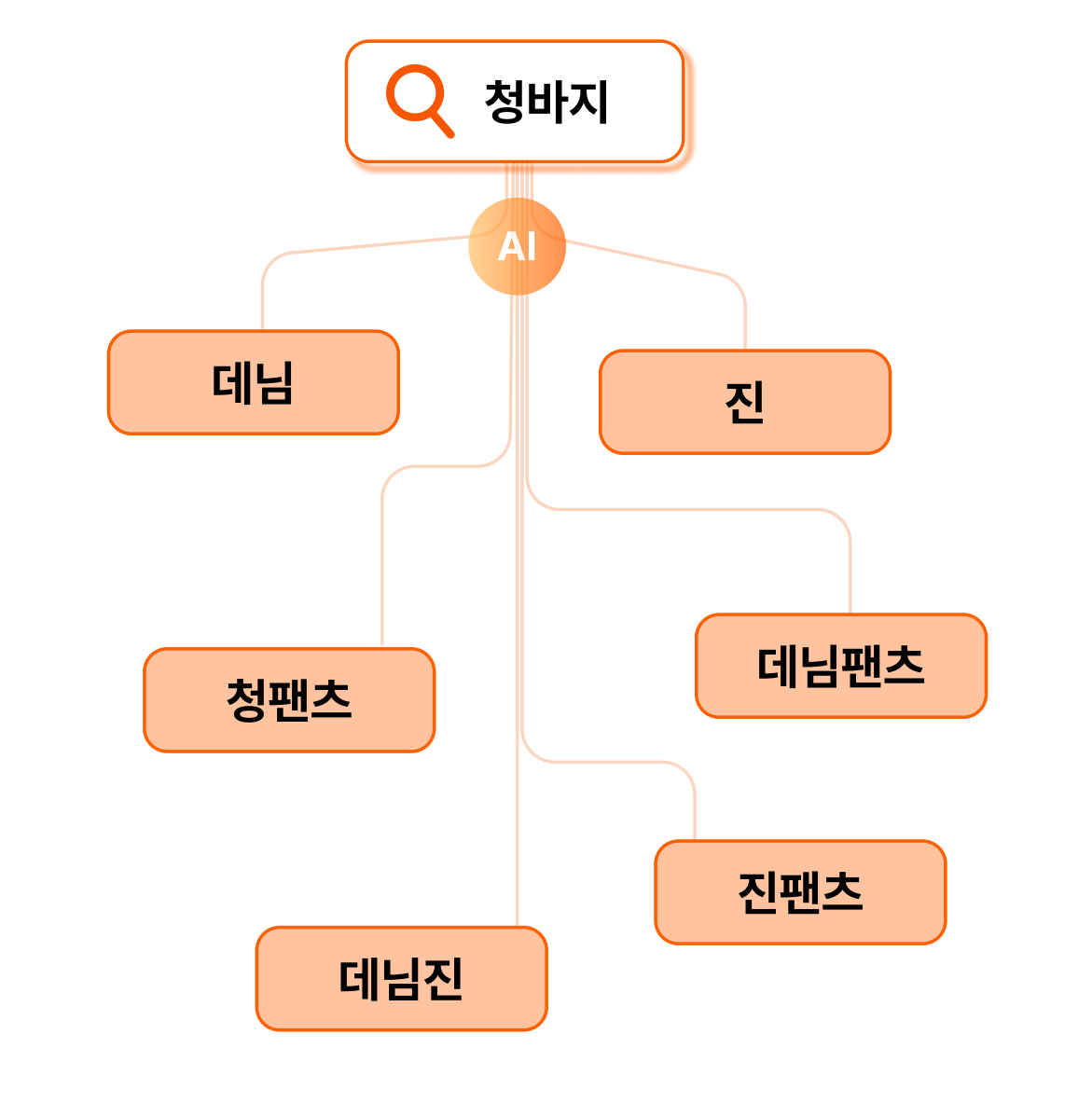
Product search used to mean endless manual work — now solve it with AI
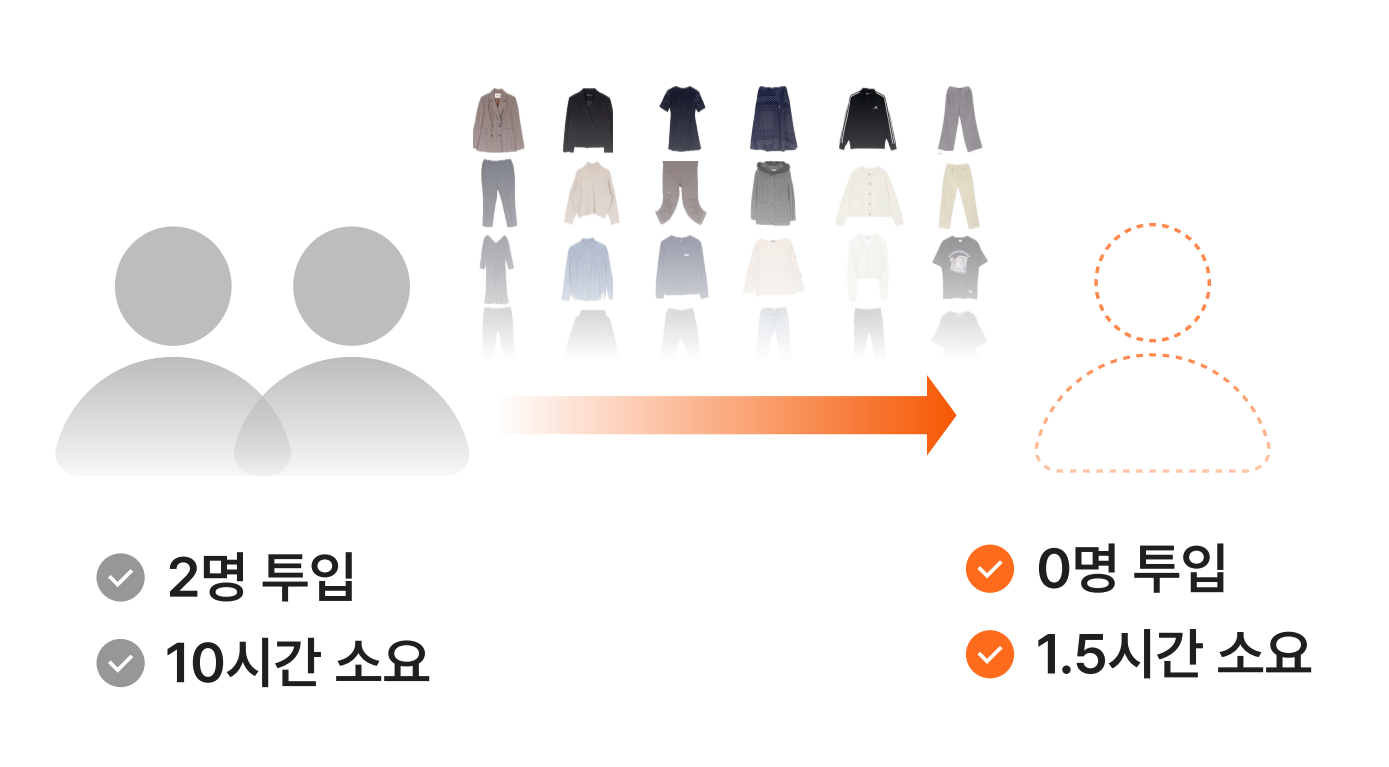
Automatically handles typo, synonym, and attribute searches
Dramatically lowers the search failure rate
Raises the purchase conversion rate
Reduces the workload on operations staff
So you can compare the impact of adopting AI search, we'll audit your store's search functionality.
Get a free search performance test through the button below.
Advancing your store's product search — once too overwhelming to handle manually — can now be solved in one step by adopting AI search.
Dalpha Blog