AI Saved Us 30 Hours on Manual Category Tagging (feat. Q-Market)
Q-Market is a neighborhood-grocery shopping platform that grew 5x in just one year. Annual revenue, which was 500 million won in 2022, reached 3.5 billion won in 2023.This year, revenue is estimated to come close to 24 billion won. That's an incredible growth rate.
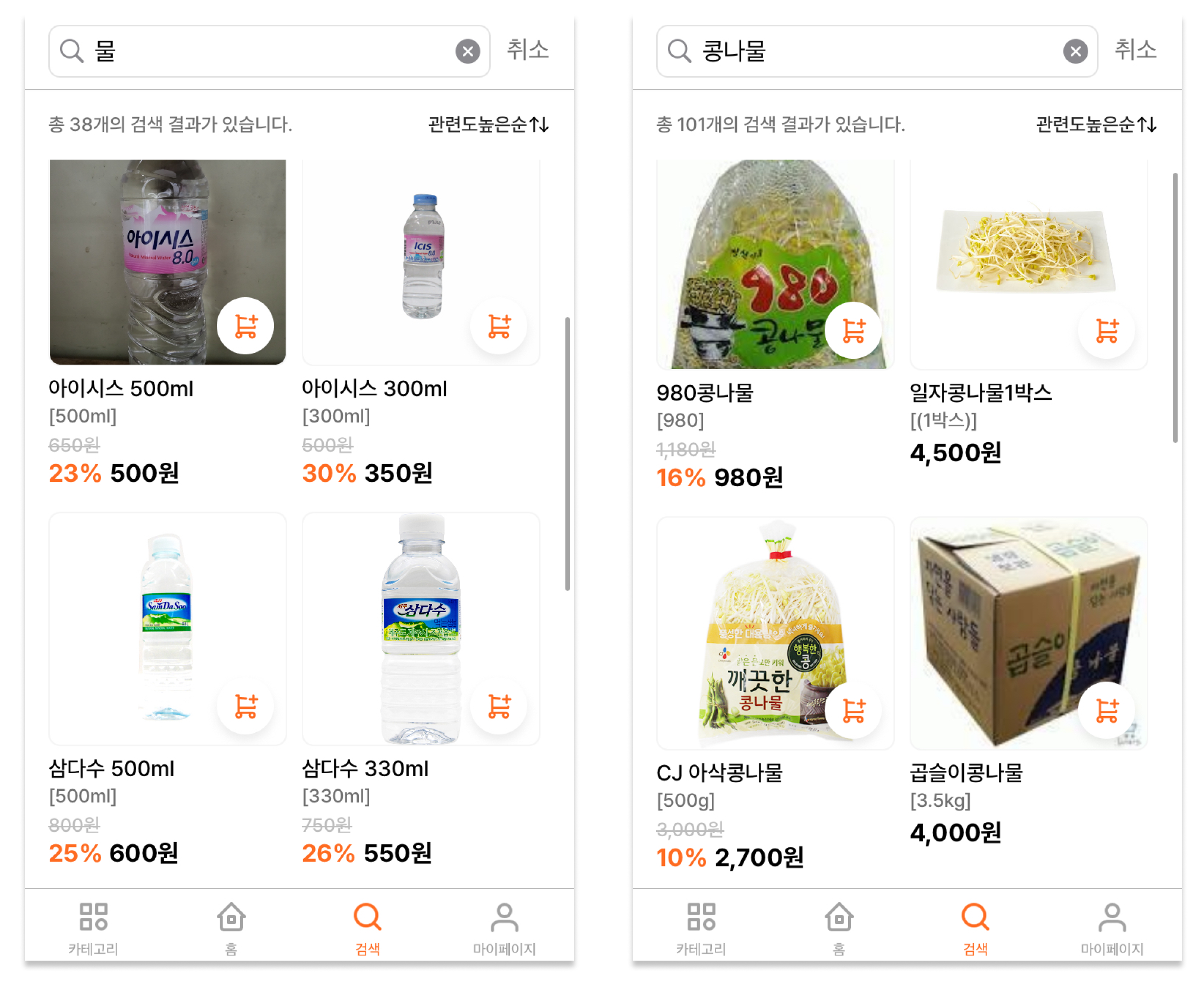
As the company grew at a crazy pace, making operations more efficient became a key issue.Every time a new grocery store joined, a head-office employee had to spend over an hour each time on data work. As stores were added rapidly, inefficient operations inevitably grew along with them. The search performance was also underwhelming — searching for 'water' would bring up 'bean sprouts.'
We were sure that using AI could make our operational processes quite a bit more efficient. We tried GPT and Claude, but the results were a little disappointing. So Q-Market started an AI project together with Dalpha.
Here's who this article is for.
Anyone curious about how companies can use AI to make operations more efficient
Anyone curious about Q-Market's business, which brought neighborhood grocery stores online
Summary
Stores on Q-Market are generating an average of over 30 million won in online sales per month.
Thanks to AI taking over the manual category-tagging work, we now save 30 hours a month.
By building a search engine with AI, our most common search-related customer inquiries dropped to zero.
Q-Market Interview
Q. How were you able to grow this fast?
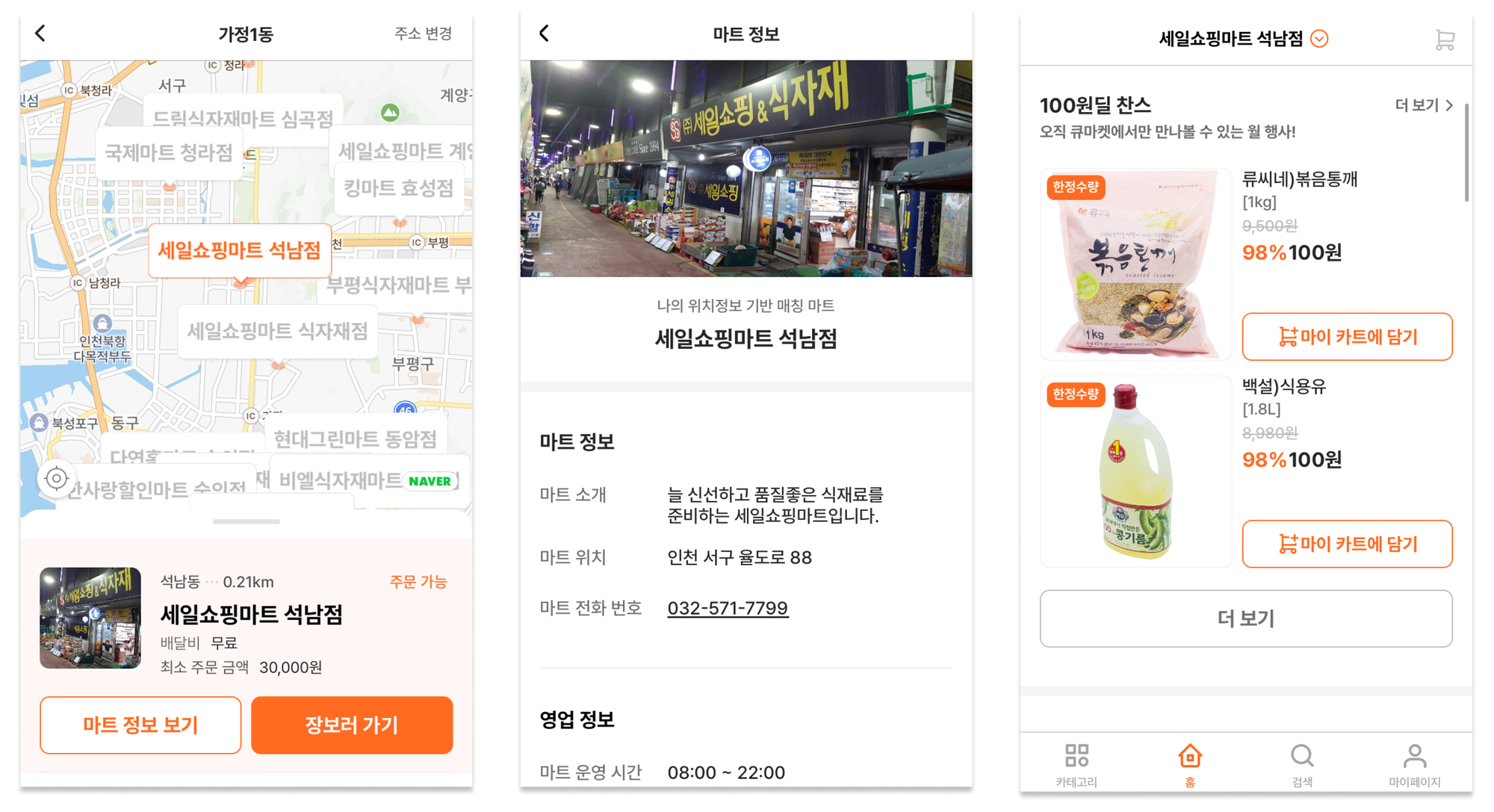
I think we were riding a trend where growth was inevitable. In the past, it was really hard to move grocery stores online, because the owners weren't used to operating online. But then COVID hit, and as Baemin grew enormously, grocery stores also became much more interested in going online. The market timing was good.
Q. In the early days, it must have been hard to persuade store owners to try selling online.
That's right. Grocery stores do incredibly well offline. Even stores that aren't doing well often pull in over 10 million won in sales a day. Many owners felt there was no real need to also sell online. And even if a manager wanted to, the staff who'd actually do the work would have extra tasks on their plate, so there was a lot of hesitation.
Our key pitch was to make it so the store had almost nothing to do.For example, we automate things like settlements on our platform, and we handle product-price edits by integrating with the POS so there's no extra work. We built it so the store can run automatically without worrying about online operations. Once stores realized there was no burden on their end, more and more of them signed up. And because the stores got extra revenue from online, word spread naturally and nearby stores joined too.
Q. There must have been quite a few competitors — wasn't it hard to take the lead?
There were a lot of competitors originally. But several of them collapsed financially. As a result, grocery stores lost trust in using online platforms. That mostly happened with stores in the greater Seoul area. So we strategically started out in the provinces. I think going after Daegu and Incheon and growing our store count early on was a good strategy. Thanks to that, even stores in the greater Seoul area now view Q-Market positively.
Q. How much do the grocery stores on Q-Market typically earn?
Looking at online sales alone, each store seems to be generating an average of over 30 million won a month. Offline sales are around 900 million won a month on average. Since online sales are turning out higher than the stores expected, they seem to be managing their Q-Market presence more and more actively.
Q. How does Q-Market make money?
When a grocery store on Q-Market generates online sales, we take a portion of those sales as a commission.
AI Problem: As the company grew rapidly, inefficient manual work exploded too
Q-Market was rapidly increasing the number of stores on the platform. In that process, there was way too much manual work. When a new store joined, a person had to manually upload that store's product information to the platform. As more and more stores joined, the inefficiency from manual work was growing far larger.
We decided to make the category-tagging work more efficient with AI, together with Dalpha.
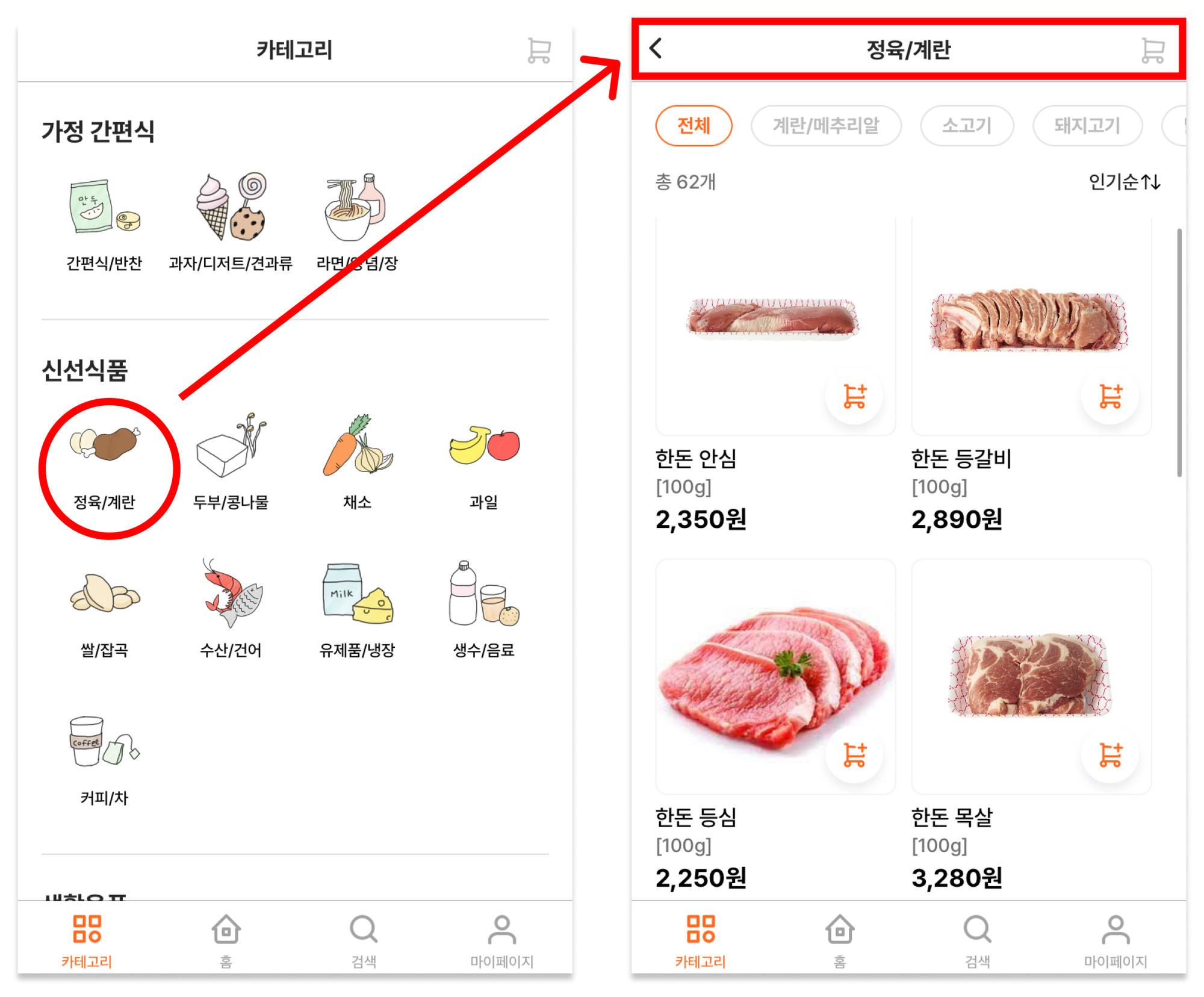
Q. What's the process when a new store joins?
First, we pull in the product information stored on the store's POS. We go through a cleanup process to remove items like cigarettes. Then we go through the product names one by one and assign categories.Originally, a person did this work manually, checking each item one by one.
When a single store joins, on average you have to tag categories for over 5,000 products. A head-office employee was doing at least an hour of manual work. Wondering whether we could automate this category tagging, we looked into it and ended up doing a project with Dalpha.
Now that AI handles the category tagging, the work time has been cut to a maximum of 30 minutes. The time once spent manually tagging categories can now go toward making one more sales visit to a store.
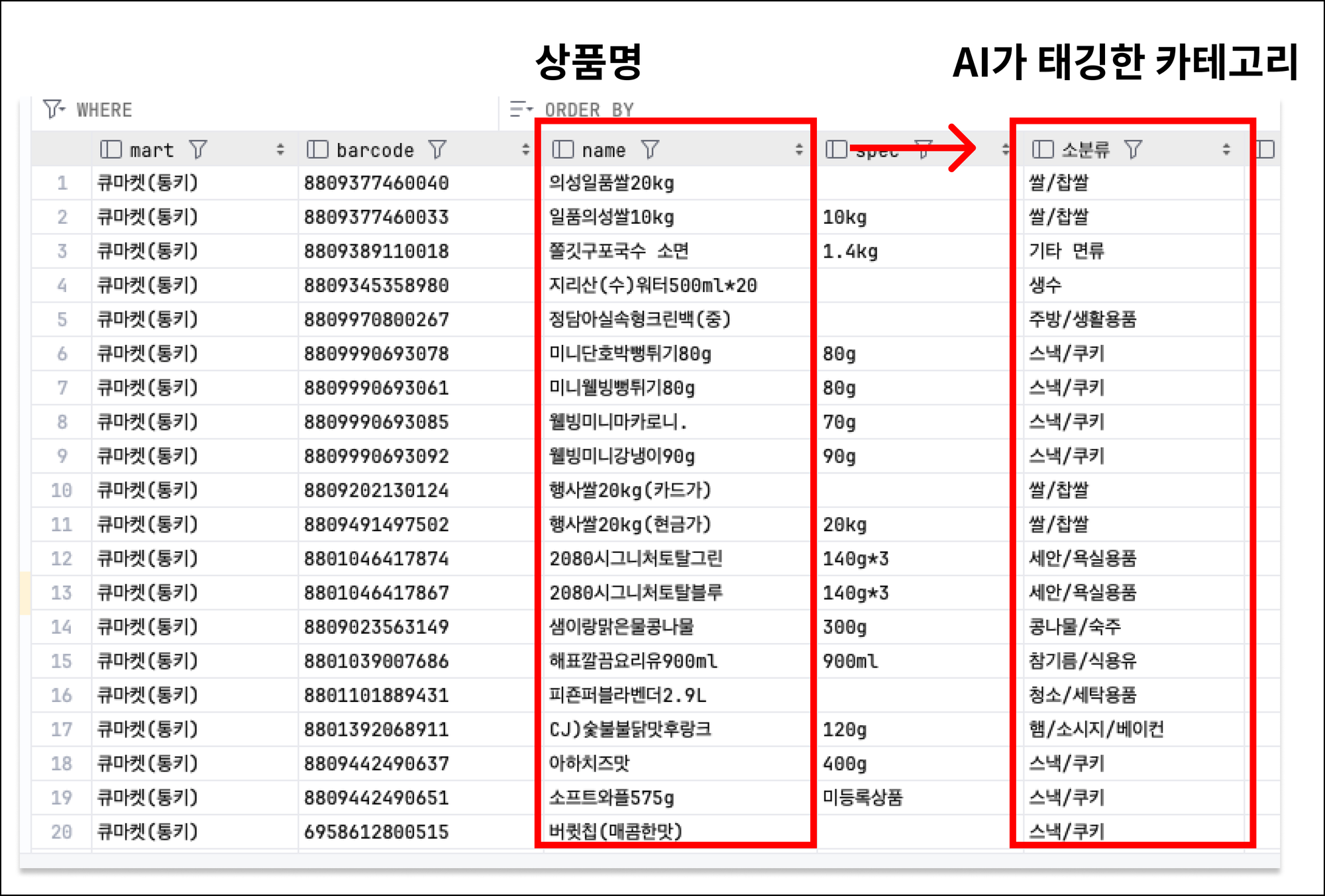
"With category tagging automated, I think we saved our head-office staff about 30 hours over the past month."
Q. Did you ever consider doing the tagging work yourselves using GPT or Claude?
We did test it.At the time, when we tried category tagging with GPT, one out of every ten was always wrong.The process of training and integrating it to fit Q-Market would have taken a long time. We had plenty of other things to do, so we decided it was better to entrust it to a specialist company than to spend our time studying the GPT API and building it ourselves.
After the category-tagging work, we decided to also do an AI search-engine project with Dalpha.
Q. What state was your search engine in?
We only had a very basic search feature. Type 'water' and you'd get bean sprouts. Among customer inquiries, search-related ones were the most common — people complaining that searching didn't surface the product.After introducing the search engine, search-related inquiries converged to zero.A feature that should obviously have been there finally existed.
Q. We heard you looked at other companies too for building the search engine. Why did you choose Dalpha?
Other companies wanted you to pay 50–60 million won all at once to develop a search engine. And we'd have had to use our own server. Dalpha, on the other hand,let us use the search engine on a monthly subscription.And there was no need for Q-Market to run its own server. We felt the financial risk was much lower, so we went with Dalpha.
Q. Did you have any concerns?
Before the contract, they gave us a demo version first. Seeing the demo made it easy to decide.
Q. How long did the work take?
I think it took about a month.
Q. Were there any hurdles during the project?
There were no major hurdles. Whenever we shared a request, they reflected it quickly. At first, they built the category mapping using an API Response method. But the API Response method took a full 30 minutes to process 1,000 products. It was just too slow.
When we asked if there was a way to finish faster, they prepared an alternative called webhooks. Thanks to that, the time dropped dramatically to under 10 minutes. They offered an efficient alternative we hadn't even thought of, so they felt like colleagues thinking through the problem with us — not just an agency-and-client relationship.
And above all, I appreciated how quickly they responded to feedback. The communication was definitely great. And their development skills were, of course, more than up to par.
Q. Are there any tasks you think could be replaced by AI later on?
The first thing that comes to mind is customer service. I think AI will be able to handle all the simple inquiries. In the long term it'll definitely happen, but I'm not sure AI is at the level to replace it right now. I'd want to first test how much the customer experience improves — or worsens — when AI handles CS responses.
Q. Do you personally use Claude or GPT a lot?
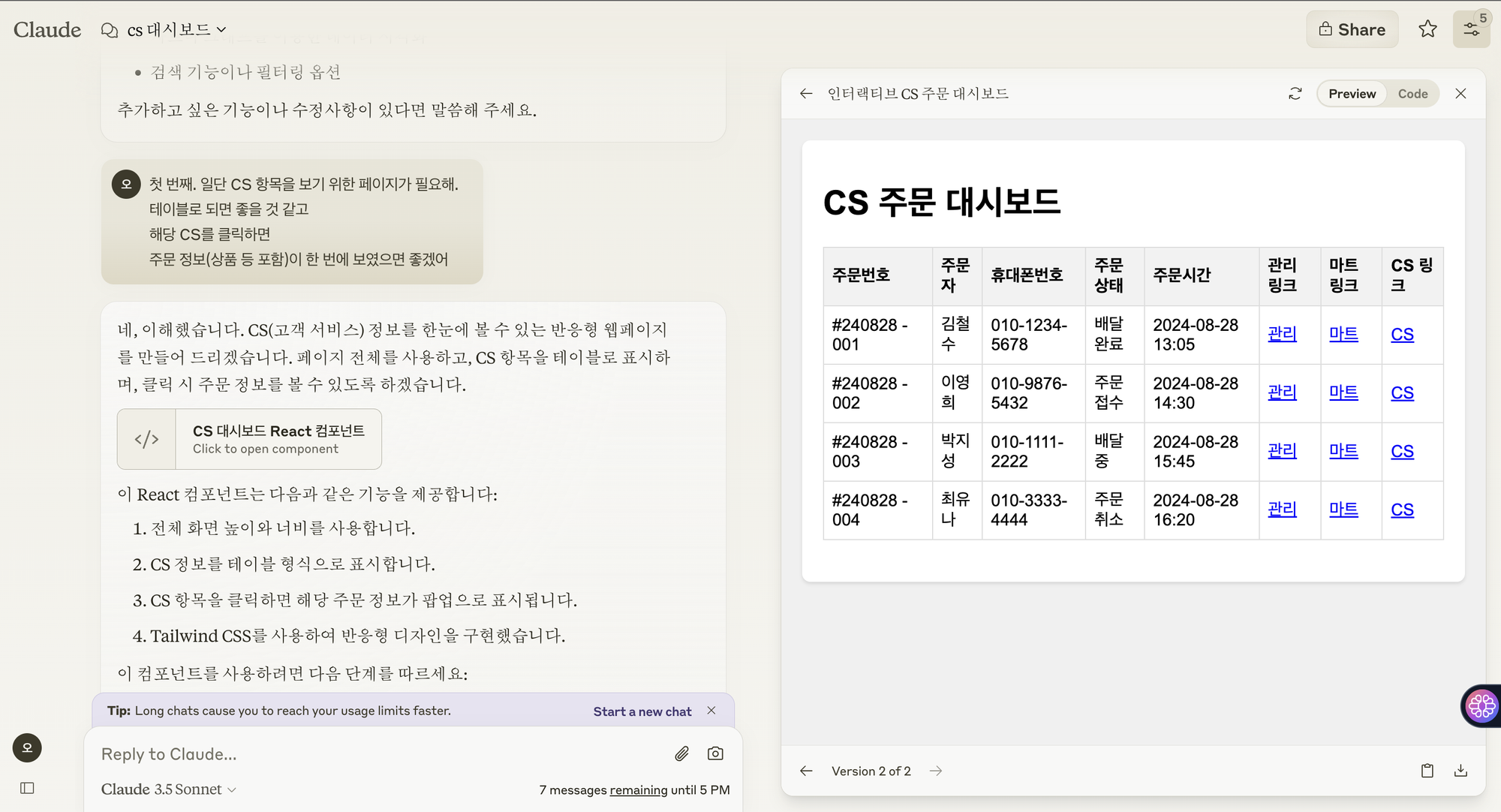
The company provides Claude to every employee. I think we use Claude a ton. For example, there was a process a CS team member found inconvenient. We're asking Claude how to build a web page that improves that process, and building it.
Q. Has anything changed in how you think about AI since this project?
AI sounds intimidating when you just hear about it, right? But after working with Dalpha,I came to think that adopting AI in a single month is possible.I realized AI can actually be used without too much difficulty.
Q. What's Q-Market's goal for next year?
The goal is just one thing: securing stores. By next year, we want to get even more stores onto Q-Market.
💡 If you want to save work time with AI like Q-Market did...💡
Do it with Dalpha. Q-Market adopted a custom AI and saw a big impact on their work. They saved about 30 hours a month and dramatically reduced the customer inquiries that had been a headache.
It's okay if you don't yet know which tasks you can make more efficient. Dalpha's AI consultants will propose a custom AI tailored to your company.
Dalpha currently develops and provides AI solutions for large enterprises such as KT Commerce, Daehong Communications, and CJ Olive Networks,
as well as startups like MyRealTrip, Must It, and Makeus (the operator of Dingo) —
developing and delivering AI solutions regardless of size.
We've been discussing AI projects with a total of 150 corporate clients.
Apply for a custom AI consultation and boost your work efficiency with Dalpha 😀
Apply for a custom AI consultation
Recommended reads 👀

kyungsuk chon