5 AI Use Cases from Global Commerce Companies: Shopify, P&G, Unilever, Lacoste, and Estée Lauder
The AI Adoption Gap Between Global and Domestic Commerce Companies
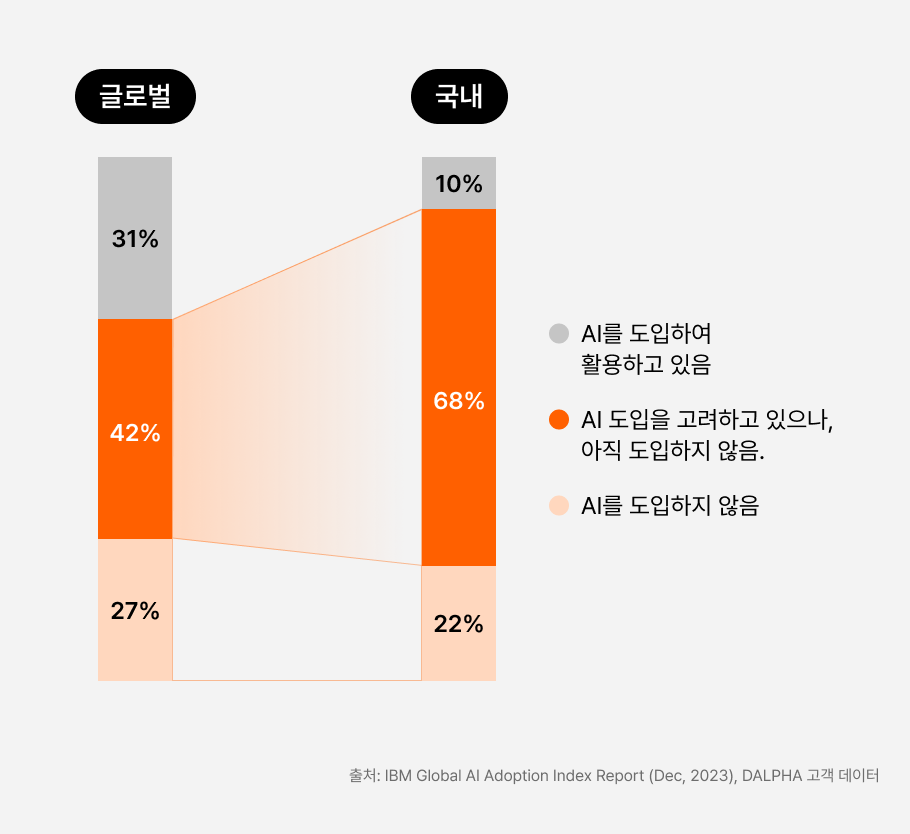
Seven out of ten domestic commerce companies want to adopt AI, but the actual adoption rate is just one-third that of global companies.
Global commerce companies, on the other hand, are already using AI very effectively—an in-house AI chatbot used by 30,000 employees, product search that boosted revenue by 150%, 240 custom in-house AI apps built in partnership with OpenAI, and more.
So in this article, we introduce AI use cases from five global commerce companies (Shopify, P&G, Unilever, Under Armour, and Estée Lauder).
Take a look at how global commerce companies succeed with AI, and get some hints on what kind of AI your own company could put to use.
At the end of the article, we've summarized some insights on using AI in commerce.
✅ Highlights
Global commerce companies adopt AI in three stages. (Work automation → revenue growth → demand forecasting)
Unilever used the GPT API to build and deploy AI services that handle customer support and create content.
P&G's in-house AI chatbot 'ChatPG' is used by 30,000 employees and performs more than 35 tasks, including work automation, customer research, and new-product development.
To help sellers reduce repetitive work and focus more on growing their business, Shopify launched Shopify Magic—a suite of AI productivity tools.
After adopting AI search, Lacoste saw a 150% increase in revenue from search and an 88% drop in bounce rate.
Estée Lauder partnered with OpenAI to develop 240 custom AI apps.
The 3 Stages of AI Adoption in Global Commerce Companies and Where Things Stand Today
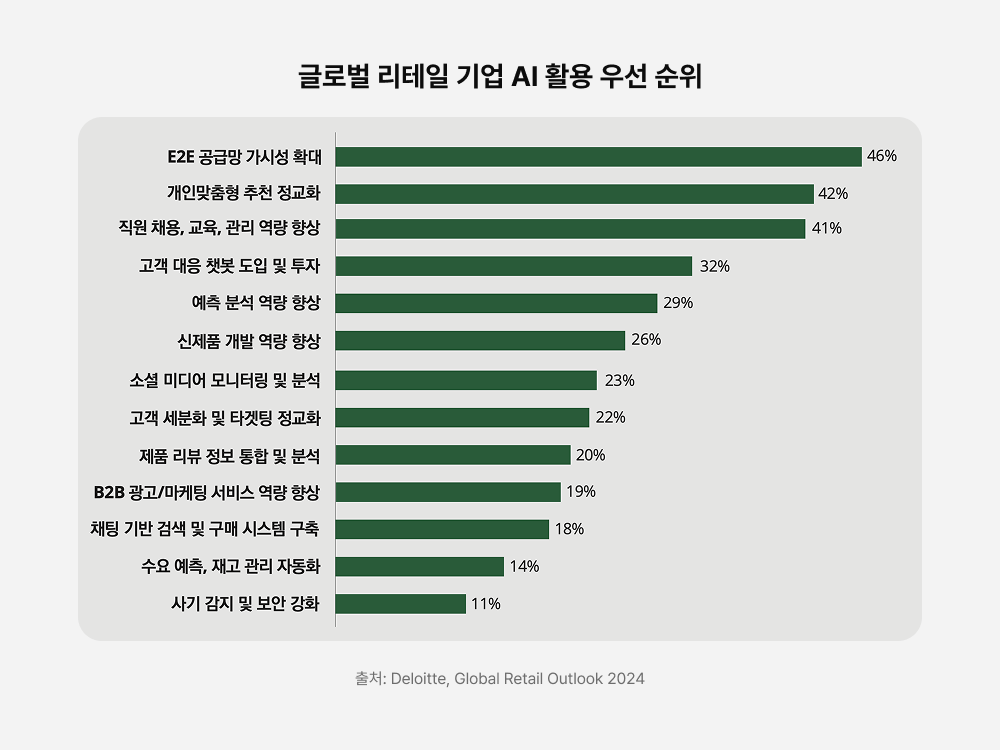
Global commerce companies are eager to apply AI actively across a wide range of areas—expanding end-to-end supply-chain visibility, delivering personalized recommendations, and improving how they recruit, train, and manage staff. It looks quite complex. But in fact, it can be simply organized into three stages.
The 3 Stages of AI Adoption in Commerce Companies
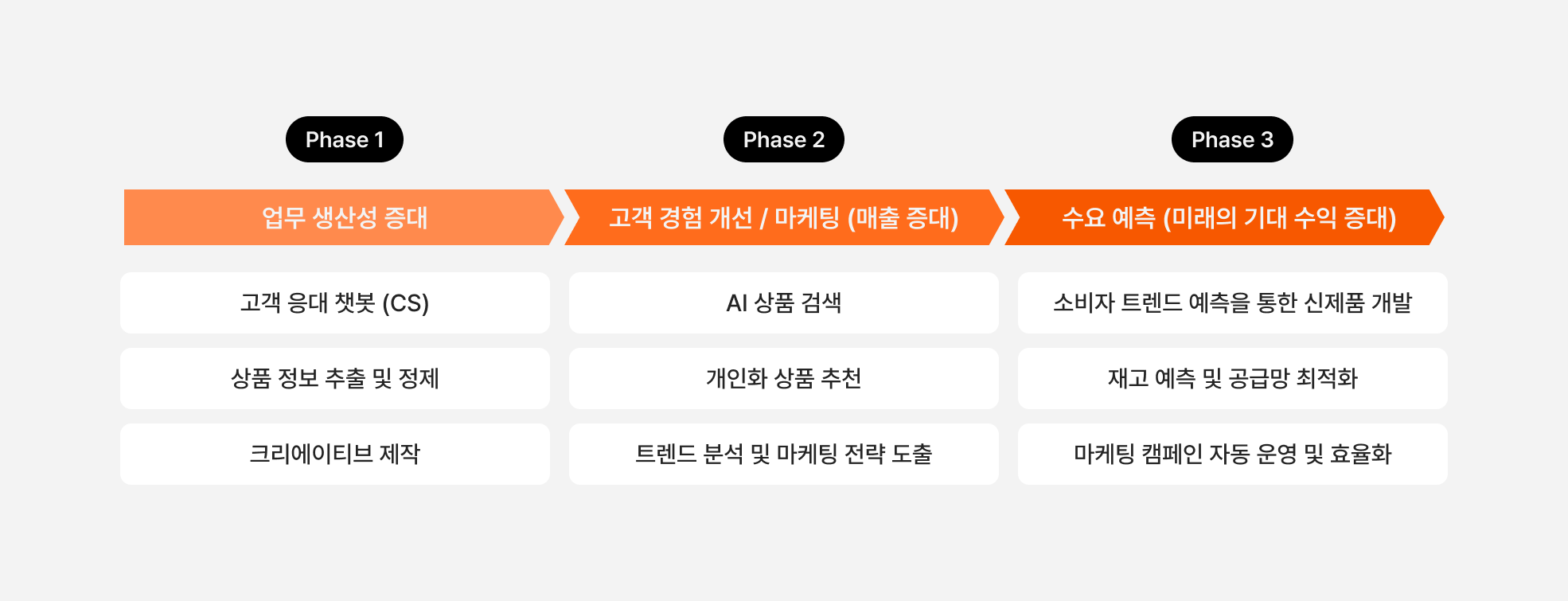
Stage 1 – Boosting work productivity
This is the most common stage of AI adoption. The goal is to increase productivity and cut costs. Companies use AI to automate various simple, repetitive tasks within the organization. Representative examples include customer-support chatbots, extracting and refining product information, and automating the creation of simple, repetitive marketing/design assets.
Stage 2 – Growing revenue
This is the stage where many companies are now trying to drive even greater productivity with AI. The goal is to grow revenue. Companies use AI to improve the customer experience and optimize marketing. Representative AI use cases include AI product search, personalized product recommendations, and trend analysis to inform marketing strategy.
Stage 3 – Growing expected future revenue
This is the stage many companies are challenging themselves to reach. The goal is to grow expected future revenue by understanding the market and trends. Companies use AI to forecast trends and demand. Representative AI use cases include developing new products based on trend forecasting, inventory forecasting and supply-chain optimization, and marketing efficiency improvements.
Where Things Stand
Today, most companies are focused on Stage 1, 'boosting work productivity.'
Companies that have become proficient with AI are gradually expanding their goals toward Stage 2, 'growing revenue.'
Stage 3, demand forecasting, is still limited. It requires sufficient data and few variables.
However, as AI technology advances rapidly, we expect to see more use in the Stage 3 domain over time.
5 AI Use Cases from Global Commerce Companies
Case 1. Unilever
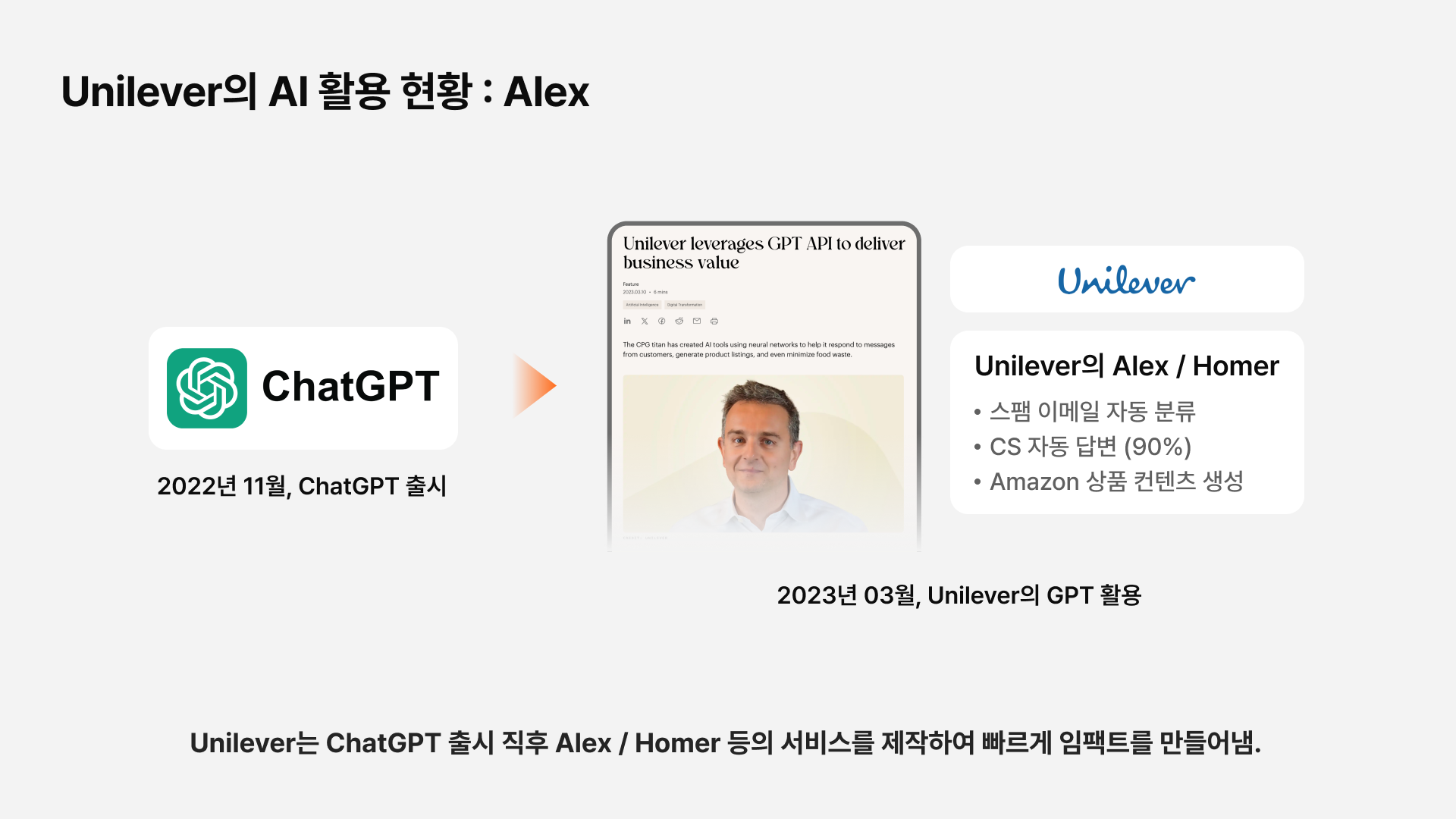
Right after ChatGPT launched in November 2022, Unilever quickly used the GPT API to build two services called ALEX and Homer. Alex is an AI service that handles customer support, and Homer is an AI service that generates the content needed to register products on Amazon.
Alex
filters emails to distinguish spam from genuine customer inquiries. When it's a genuine inquiry, the AI identifies the intent and suggests an appropriate draft response. If the answer is good, the agent uses it as is; if it's wrong or needs a bit of refinement, they can edit it before use. As a result, the time needed to write customer response messages was reduced by more than 90%, greatly improving the efficiency of customer-support work.
Homer
takes a product's basic information (e.g., ingredients, uses) and has the AI generate the content needed to register the product on Amazon. Reflecting each brand's tone and style, it maintains a consistent brand image and writes everything from summarized introductions to long descriptions. The generated content is then reviewed by the local marketing team before final publication.
Case 2. P&G
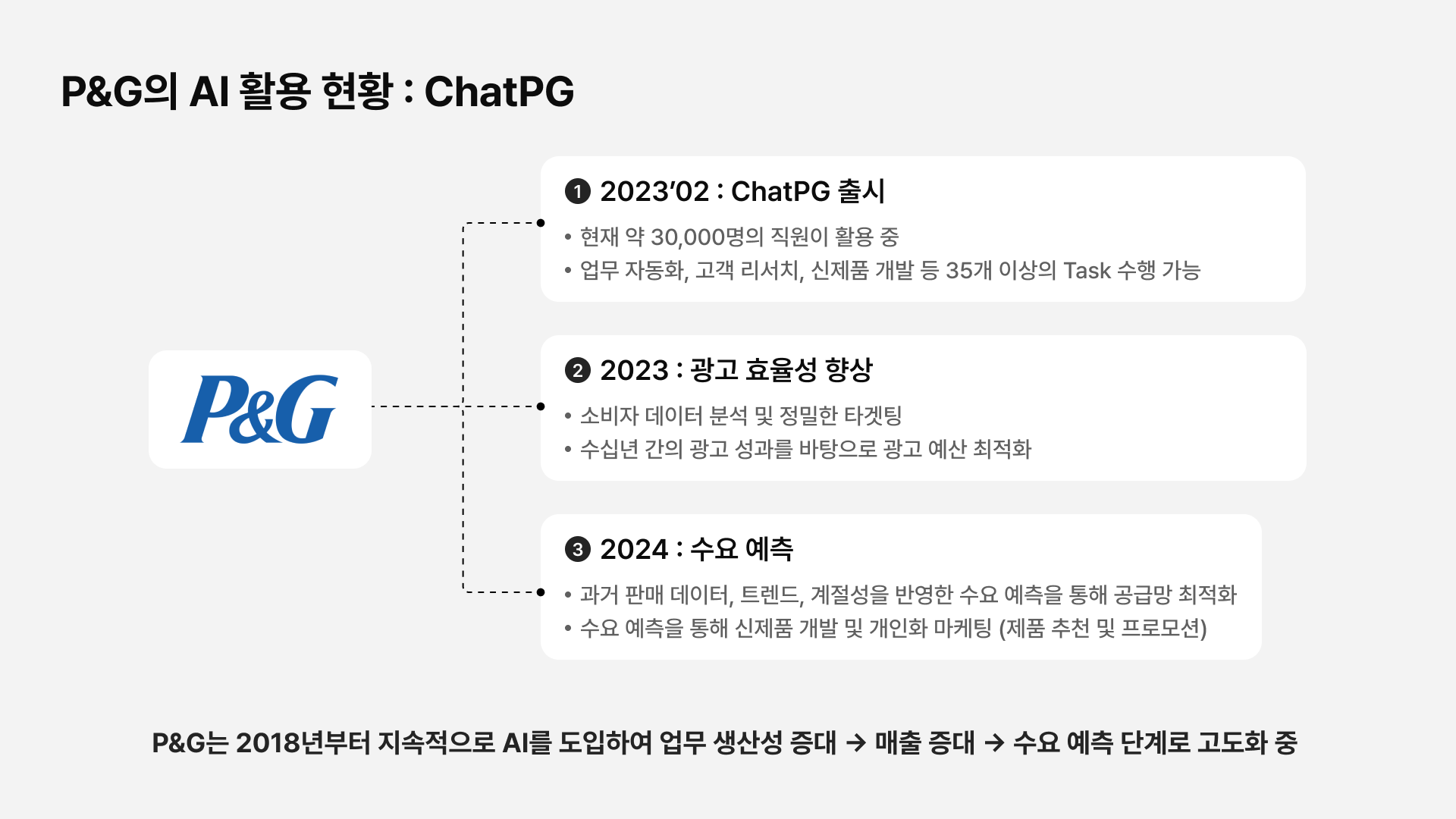
In February 2023, P&G launched an in-house AI chatbot called ChatPG. It is currently used by 30,000 employees and can perform more than 35 tasks, including work automation, customer research, and new-product development.
P&G also used AI to improve advertising efficiency. By analyzing consumer data for precise targeting, it improved ad efficiency, and it optimized ad budgets based on decades of advertising performance.
P&G went further and used AI for demand forecasting in 2024. It attempted AI-driven demand forecasting by factoring in past sales data, trends, and seasonality. This optimized its supply chain, and the data was also used for new-product development and personalized marketing.
Having continuously adopted and advanced AI since 2018, P&G has used it effectively in line with the three stages of AI adoption. It first applied AI to improving inefficient work processes, then gradually expanded into revenue growth and demand forecasting.
Case 3. Shopify
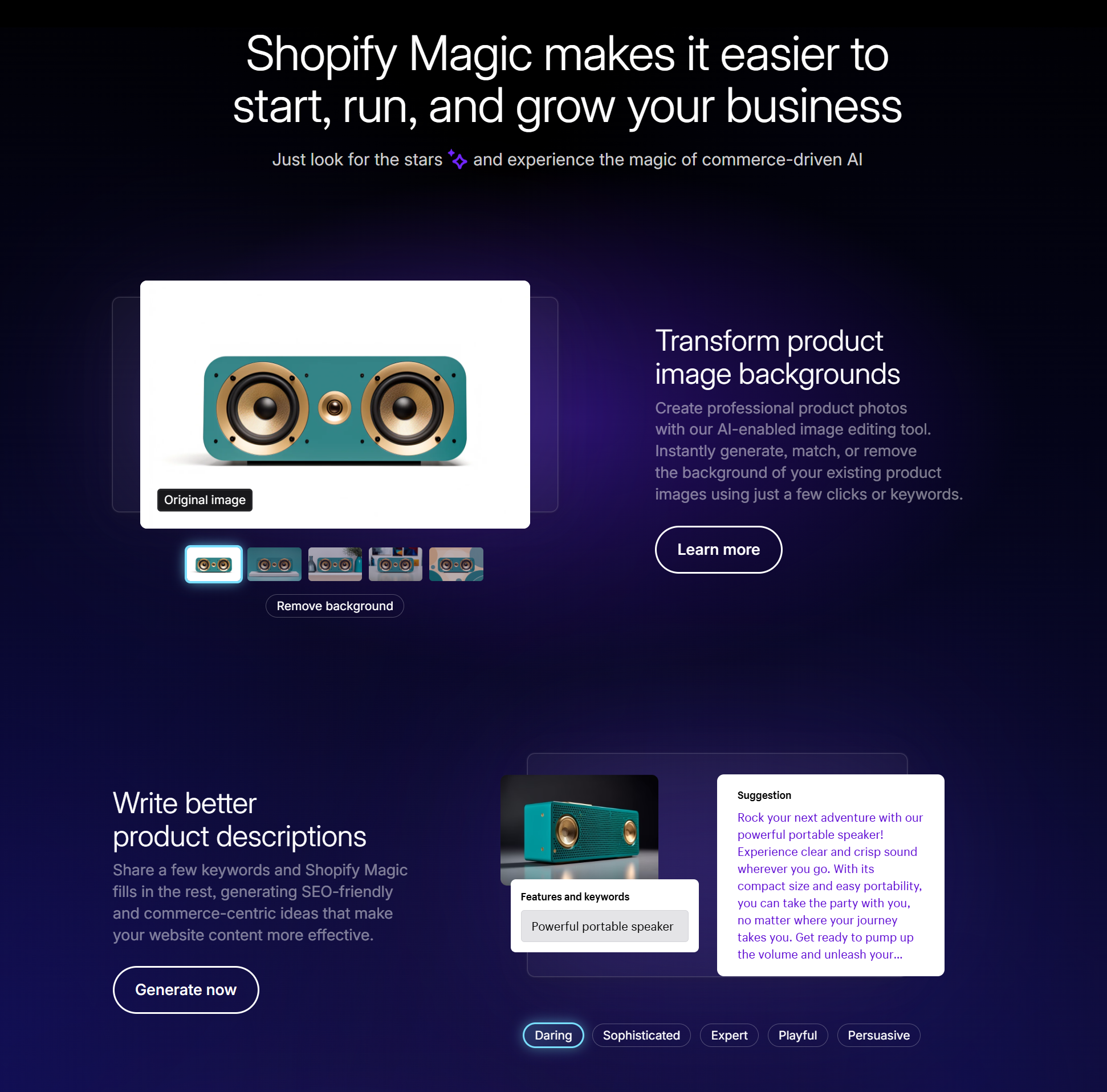
To help sellers reduce repetitive work and focus more on growing their business, Shopify launched Shopify Magic—a suite of AI productivity tools. It provides tailored support across a variety of tasks, including store building, marketing, customer support, and back-office management.
It has automated a range of repetitive tasks in areas such as text generation, customer communication, media generation, customer-experience improvement, and marketing. It continues to roll out new features even now.
Case 4. Lacoste
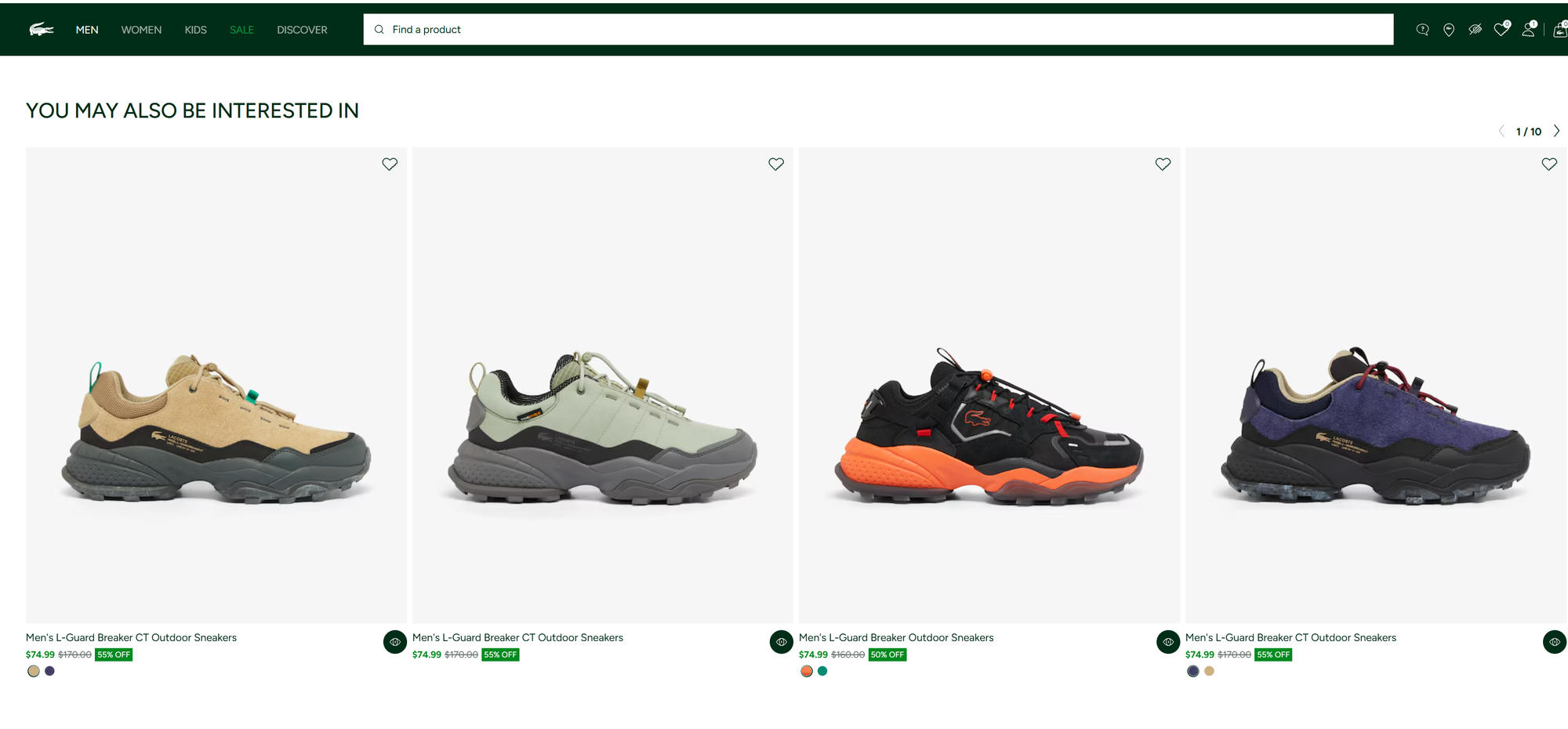
Lacoste set out to improve the customer experience by using AI in product search. By providing an AI search feature that accommodates typos, synonyms, and word segmentation, it reduced its bounce rate by 88%. It also applied custom rankings to recommend products suited to each individual, as well as to surface recommendations for inventory items it actively wanted to sell. As a result, it was able to increase revenue from search by 150%.
Want more cases? You can find them in 6 Success Cases of Adopting AI in Online Store Search.

Case 5. Estée Lauder
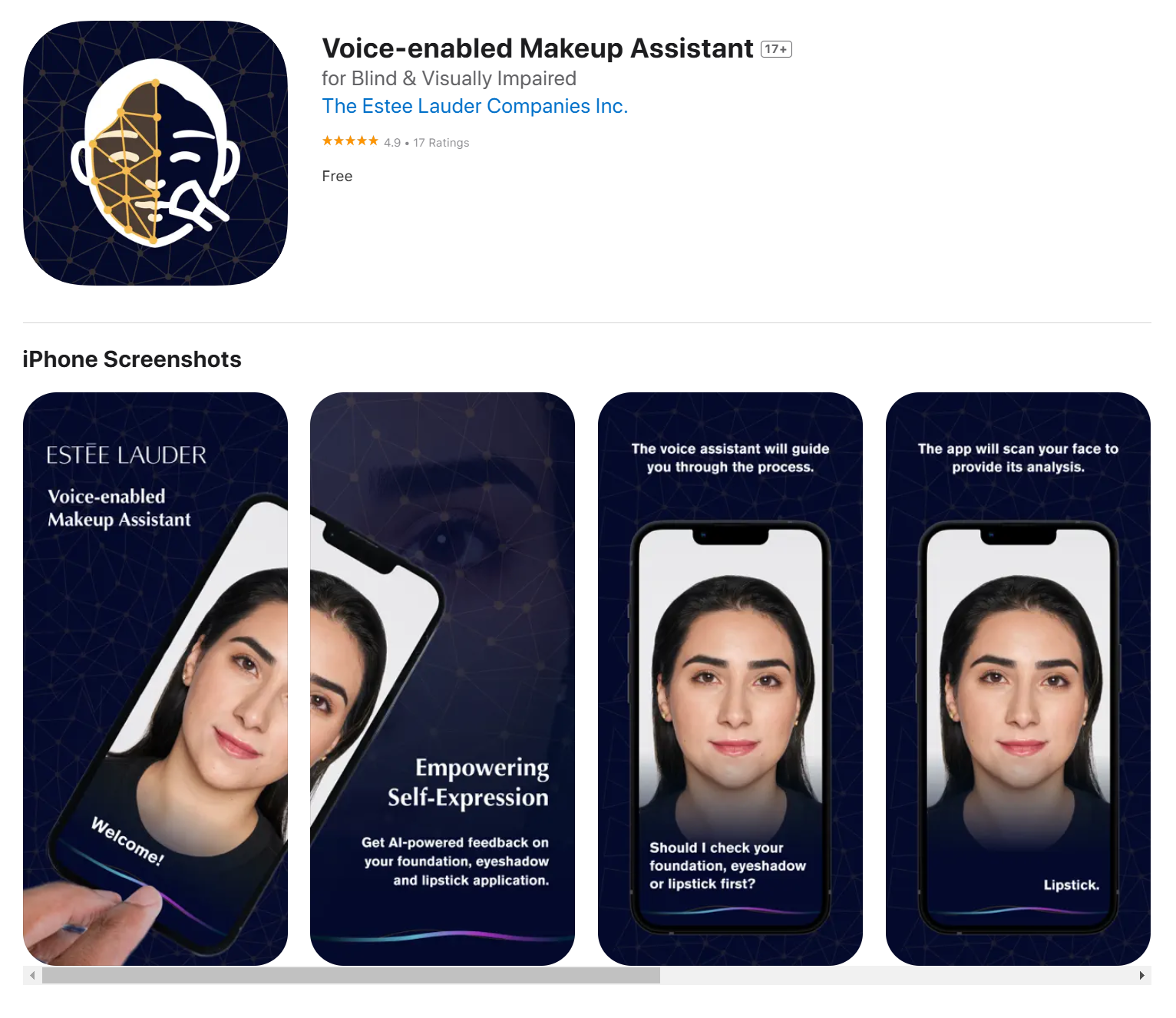
Estée Lauder has been using AI through a strategic partnership with Microsoft since 2017. Since then, it has partnered with OpenAI and is expanding AI use company-wide.
First, in 2023, it used AI to launch Voice-Enabled Makeup Assistant, a mobile app that helps users with visual impairments apply makeup. The app recorded many downloads worldwide and continuously expanded its service scope. After launch, it was also recognized for its technical achievement, winning at CIO's 2023 CIO 100 Awards.
Later, in April 2024, it developed an in-house AI chatbot to boost the impact of its global marketing. This chatbot draws and applies insights by training the AI on 75 years of accumulated internal consumer data. With it, employees could make effective use of the product database and communicate more quickly. As a result, they could roll out locally tailored campaigns faster.
In November, it partnered with OpenAI to develop 240 custom AI apps. These include 'Fragrance Insight GPT,' which analyzes consumer survey data for use in fragrance development; 'Clinical Trial Data GPT,' which instantly analyzes product efficacy from thousands of clinical trial reports; and GPTs for creating marketing content and analyzing supplier data. By reflecting the needs of each department, the company continues to expand AI use across the entire organization.
Insights on AI Use in Global Commerce
We've drawn out three key insights from these five AI use cases at global commerce companies.
1. Automate the most repetitive manual tasks first
When using AI, start by automating the most repetitive manual tasks. Global commerce companies used AI to automate their simplest, most repetitive work first. They leveraged various open-source models, including GPT, and optimized them by fine-tuning to their in-house data.
2. Continuous feature additions and performance improvements are essential
AI requires continuous feature additions and performance improvements. Global commerce companies didn't limit themselves to implementing a single feature; they kept adding new features. As a result, they could perform multiple, complex tasks and deliver a more effective business impact. The performance of internal AI models needs to be continuously advanced to keep pace with the rapid progress of AI technology.
3. Gradually advancing toward revenue growth and demand forecasting
Every company's AI adoption started with Stage 1, 'work automation,' and now, as AI technology advances, they are also attempting to use AI for revenue growth and demand-forecasting challenges. As the P&G and Estée Lauder cases show, you can deliver a greater business impact by expanding the scope of AI use.
In Closing…
So far, we've looked at how global e-commerce companies use AI.
You're probably curious about more ways to put AI to work at your own company.
Have a no-pressure 15-minute phone consultation with an AI consultant.
Based on similar success cases, we'll propose a concrete AI adoption plan for you.
Click the 'Contact Us' button below and leave your inquiry, and we'll review it and get back to you quickly.
Dalpha Blog