An AI New-Product Planning Strategy That Boosts Success Rates by 25%
[1] AI is at the heart of brand competitiveness—so how can you put it to use?
The competitiveness of consumer brands can no longer be secured by 'fast execution' or a 'sense of trends' alone. Customer expectations have grown more sophisticated, the market changes faster, and product life cycles keep getting shorter.
To survive in this environment, brands need an innovation in their AI-powered planning and operations systemsis what they need.
However, as we covered in a previous postmany brands talk about adopting AI, yet in practice they often stop at fragmentary automation or making a specific task more efficient. For example, summarizing market research, generating trend reports, or assisting with copywriting.
The problem is that this kind of 'piecemeal' AI use makes it hard to raise the competitiveness of the brand as a whole. A brand has its own unique value chain spanning planning → manufacturing → distribution → marketing → salesits own unique Value Chain.
And because each stage of this Value Chain is tightly connected, when one stage falters, every stage after it is affected. If you analyze each Value Chain stage in detail, you find the following complexity.
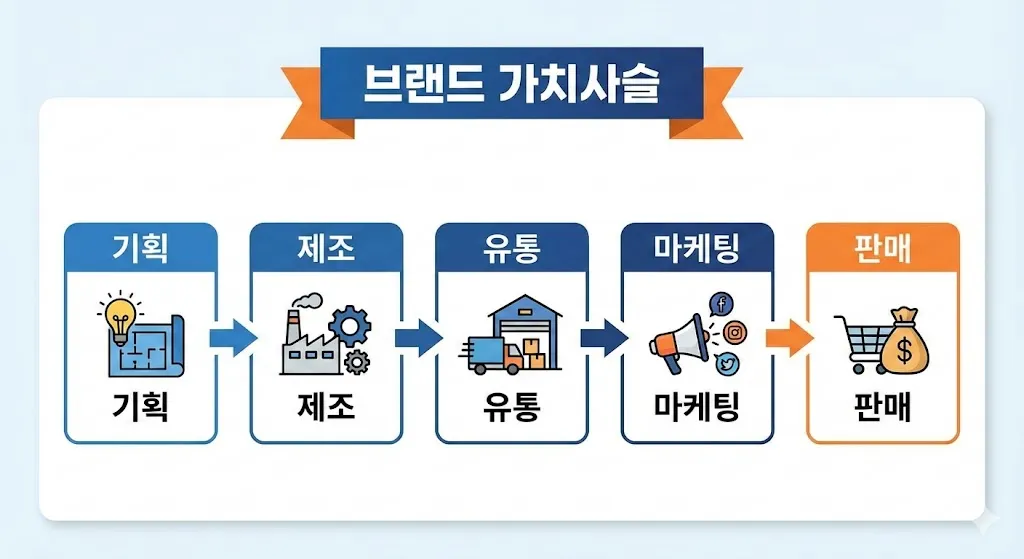
1. Product Planning
High-difficulty tasks centered on 'building hypotheses'—trend analysis, idea discovery, market-data validation, consumer-persona analysis, sales forecasting—mix qualitative and quantitative work.
2. Production
A highly volatile, communication-centered process follows: selecting fabrics and sub-materials, MOQ negotiations, confirming lead times, reviewing samples, agreeing on quality standards.
3. Logistics
Data-driven decision-making is essential—inbound planning, inventory allocation, demand forecasting, setting safety stock.
4. Marketing
Content creation, message strategy, customer targeting, and creative production demand both creativity and data analysis at the same time.
5. Sales
Real-time, repeated decision-making is required—analyzing sales by channel, validating promotion effectiveness, review analysis, and deciding the Next Action.
Because the entire Value Chain is organically connected like this, using AI at the level of 'single-task automation' has clear limitsthis is the limit.
To truly use AI as a productivity tool, you need to interpret the entire Value Chain at the Workflow leveland design support that covers one person's work unit from A to Z.
In this post, we will focus on Product Planning, the first stage of the Value Chainand take a concrete look at the AI-based Workflow that brands can actually use, and its effects.
[2] New-product planning: where every brand begins
Every brand activity begins with new-product planningstarts here.
From the moment a single product is planned, a brand's resources—production, marketing, and sales strategy—are fully committed, and performance hinges on that.
So how do brands actually plan new products?
Generally, new-product planning follows this flow.
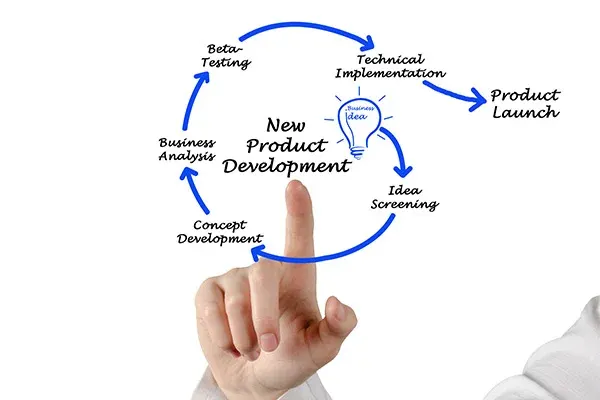
1. Trend and market research
Macro-level category trend analysis
Analyzing competitors' product launches
Identifying growth/contraction trends by category
Analyzing customer reviews and feedback
Tracking popular search terms and search volume by platform
Most of the data generated here is fragmented, and the collection methods are often not standardizedis often the case.
2. Deriving hypotheses
"This kind of product seems like it would work in the market"
"Adding this feature seems like it would set us apart"
"This message seems like it would land with this target"
This is so-called 'hypothesis-driven planning,' and it mostly relies on the person in charge's experience or intuitionrelies on.
3. Internal validation and planning
Internal discussion on whether the hypothesis holds up
Reviewing cost, margin, and feasibility of production
Establishing product positioning strategy
Identifying differentiation points versus competitors
This stage is especially labor-intensive and prone to frequent debate.
The state of "we have a hypothesis, but for some reason we're not confident" keeps repeatingbecause it keeps repeating.
4. Final decision
"Should we make this product?"
"When should we launch?"
"What message should we communicate with?"
The most uncertainty exists in this process, and that uncertainty affects the next stages—inventory, production, marketing, and so on.
In other words, even though new-product planning is the core process that determines a brand's success or failureand yet,
this very process relies heavily on unstructured information, intuitive judgment, and repetitive manual work.
[3] The fundamental reasons new-product planning is vague and hard
As mentioned above, new-product planning is a highly complex stage where various elements intertwine. Let's look a little more concretely at why new-product planning is vague and difficult.
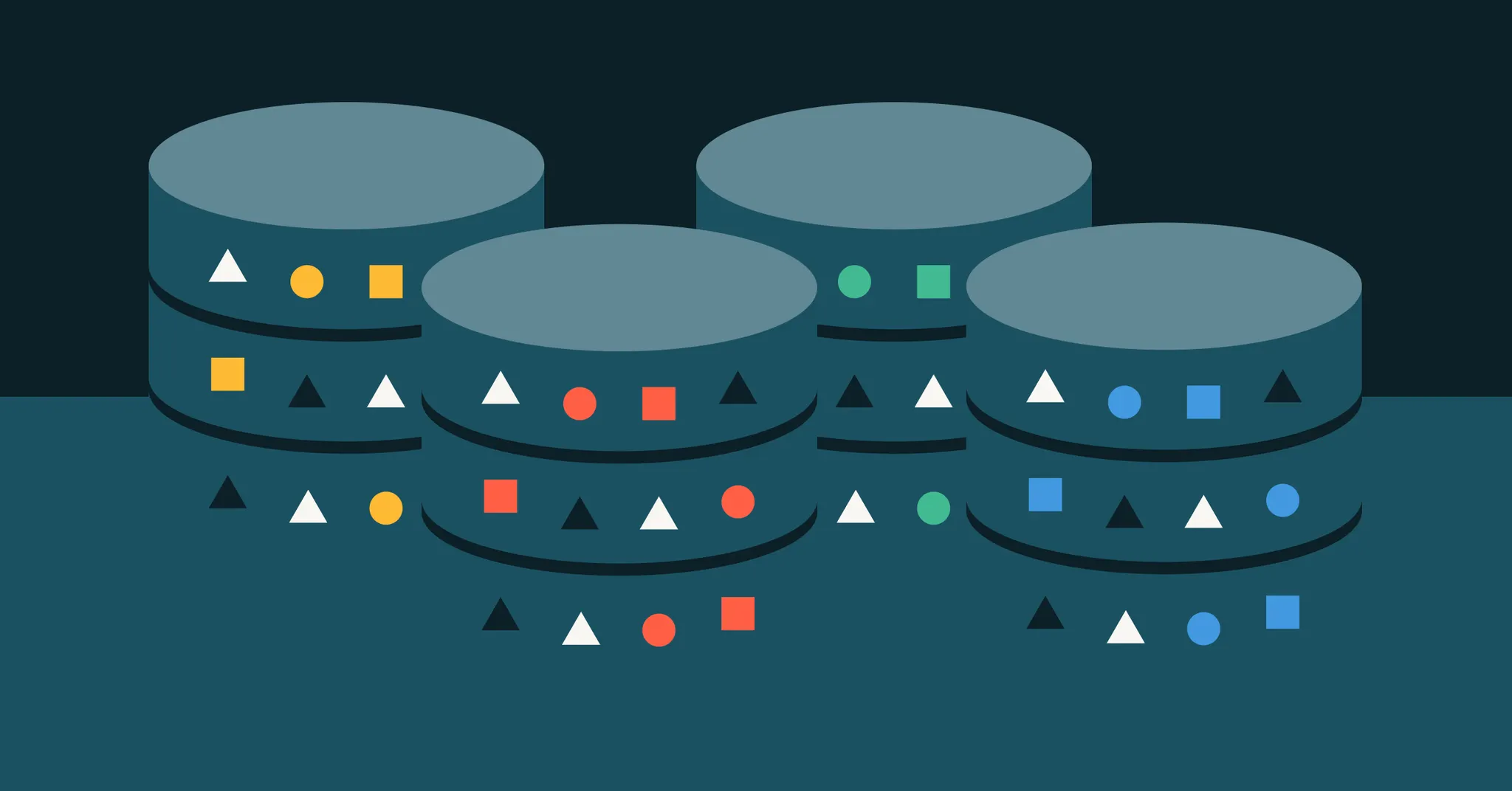
Trend data is on Naver, competitor data is on platforms like Coupang and Musinsa, and cost information is in the internal ERP —the data needed for planning is stored scattered across different locations.
Because the systems aren't connected to each other, it's hard to draw meaningful conclusions by looking at each one separately—and even if you do look at all the data, a huge amount of manual workarises.
1. Quantitative ↔ qualitative data aren't connected into a single flow
Market data is quantitative analysis
Customer reviews are qualitative analysis
The planner's insight is experience-based
These three need to be tied together into a single 'logical hypothesis' but most brands run this process on gut feel.
2. The absence of a validation method
You can build hypotheses, but there aren't many ways to actually validate them.
"Is there market viability?"
"Will it fit existing customers?"
"How will people react to the message?"
There's no data-driven tool that can give clear answers to these questions. For these reasons, the planner ends up making decisions 'without confidence'makes.
When uncertainty accumulates, new-product planning repeats 'vague gut feel' and 'anxious predictions,' making good planning hard.
The way to solve the pain points above is to use AI to automate and improve this processis exactly that.
[4] An AI-based approach to building and validating new-product hypotheses
In the new-product planning process, there's plenty of data but it goes unused, hypotheses get generated but aren't validated, and decisions are repeated but aren't structured. With AI, you can fully implement this process as a Workflow in the form of data collection/refinement → hypothesis building → validationform.
In particular, the biggest differentiator is that you can rebuild the areas that used to rely on a planner's gut and experience into a data-driven, repeatable processcan be rebuilt.
From here, we'll explain the AI solutions that Dalpha has actually developed—and that clients are using to real effect—to show how all of this is possible.
1. Collecting internal/external data
At this very first stage, the most important thing is collecting diverse internal/external data so that the AI can generate good hypotheses.
For data collection, you can automated methods such as APIs and RPAdo the work reliably.
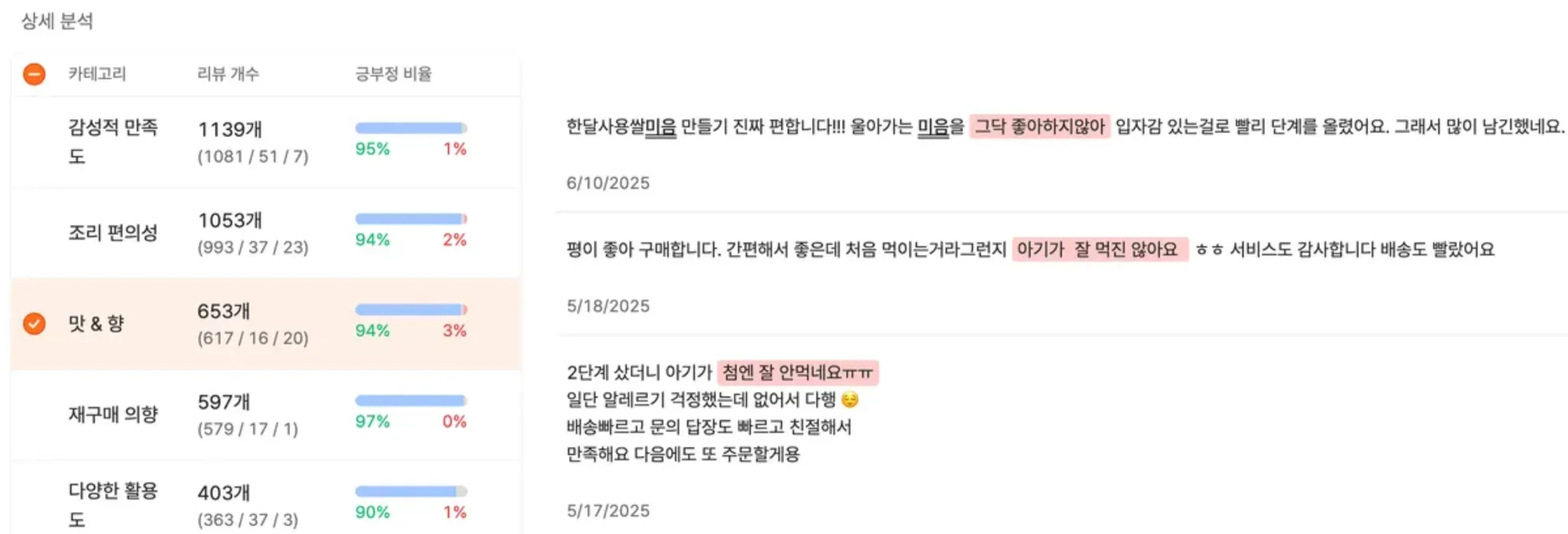
API integrationReal-time internal/external data collection through API integration—we design things so that data accumulates automatically by integrating various publicly available Open APIs such as past sales data, search trends, and SNS reactions.
RPAUnstructured data collection using RPA—when there is no API, as with competitors' product pages and reviews, RPA collects data as if a person were scraping it by hand.
2. Ontology-based data integration
From a previous postthe concept of Ontologywe use, integrating the data into a form that's easy for AI to understandintegrate the data.
Defining the meaning of the data needed for AI training and inference
Defining the semantic relationships among multiple data sources
Codifying the brand's unique judgment criteria as rules and injecting them into the data
If needed in this process, you can use an LLM-based data integration AI to make the integration more accurate.
For example, when a brand's product names differ across every platform—making it hard to define the semantic relationships among the various data—a catalog-matching AI lets you unify them under the same product SKU and manage sales datathat way.
3. Generating new-product hypotheses based on the integrated data
Based on the data integrated in the previous step, we use an LLM-based model to generate hypotheses about new products.
Providing summaries and insights on the integrated data
Generating multidimensional hypotheses that combine multiple variables
Discovering and reflecting Blind Spots that are hard for people to consider
Because you can generate hypotheses based on integrated data rather than simply using an Open LLM like ChatGPT, you can gain a clear comparative advantage in the reliability and expertise of the hypothesesgain.
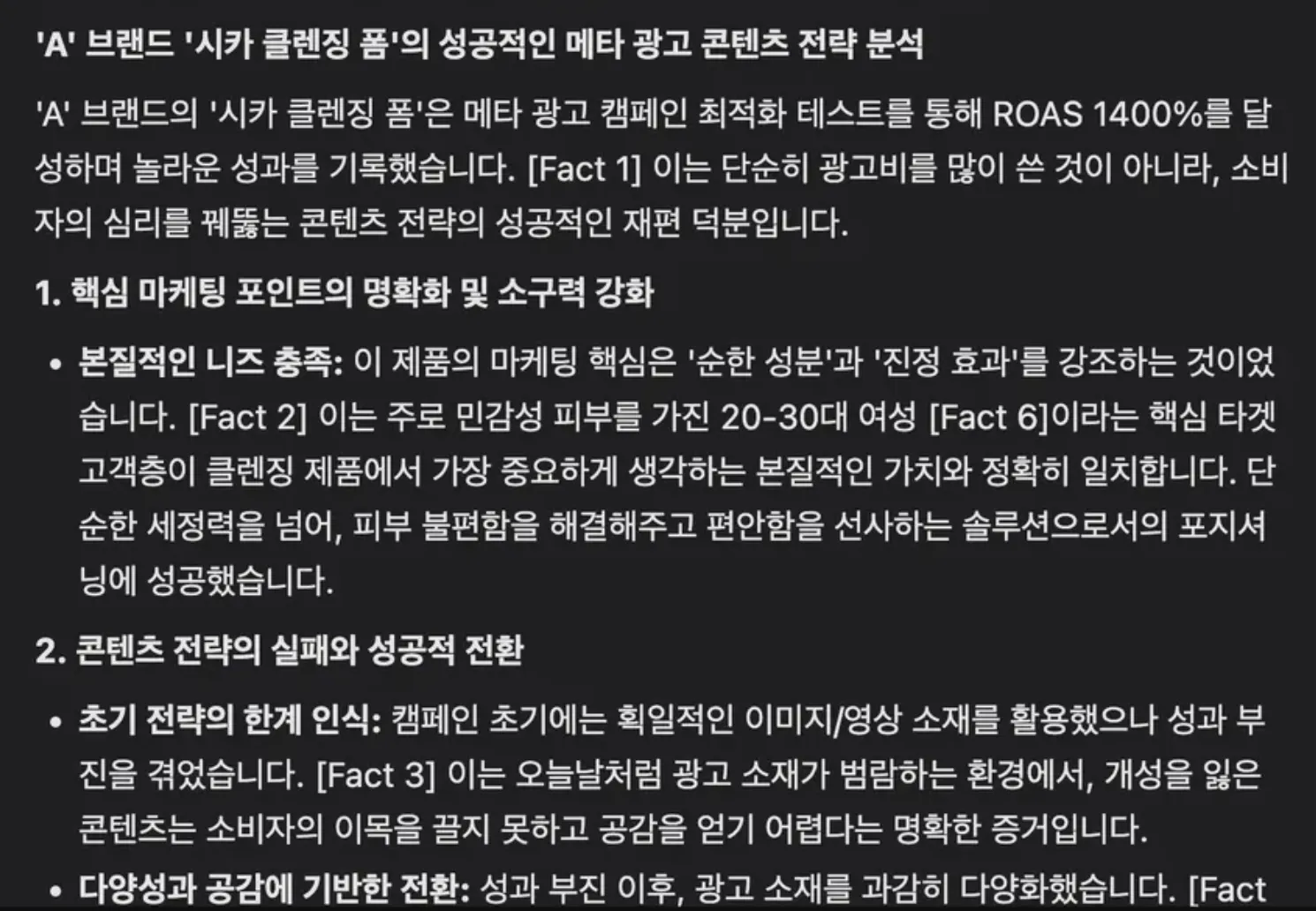
Rather than a hypothesis like "Ingredient A is trending lately, so make a product that contains it," "Naver search volume for ingredient A is up N% lately, and analyzing competitors' product pages shows they're launching lots of products combining ingredient A and ingredient B, so reference this and proceed with the new-product plan"is a better hypothesis—one that supports the planner even more.
4. Validating the hypothesis's expected performance
Once a hypothesis is generated, instead of executing it right away, you can predict actual performance to a certain extent through simulation.
Running a simulation by learning the performance metrics of past products with similar metadata
Applying algorithms that predict quantitative metrics such as expected sales volume and inventory turnover
LLM simulation based on target-customer personas
There are countless other ways to validate the actual expected performance, but because this is a simulation, rather than blindly trusting the results it's important to reflect the predicted expected performance in your initial ordering/marketing/sales strategyis important.
In summary:
The AI-based new-product planning Workflow can help in practice through the following modules connected organically:
Stable data collection
Ontology-based integration and normalization
Reliable, LLM-based hypothesis generation
Prediction/simulation-based upfront performance validation
[5] Closing: a new standard for brand planning, starting with AI
New-product planning is no longer something you do on gut feel. Nor is it a problem solved by simple automation.
The true value a brand gains from AI is not the 'speed of repetitive work' but a structured Workflow that lets you design better decisionsis.
AI is not a tool that does all the thinking a planner should do—it's a tool that helps planners think betteris.
What the brand reading this right now needs is not an extremely complex AI rollout. You can start by simply trying to validate one small hypothesis with AI.
If, internally right now,
interpreting data is difficult,
validating hypotheses feels burdensome,
decision-making is slow,
or the share of failed products is rising,
then an AI-based new-product planning Workflow is well worth considering.
Dalpha is already converting the planning processes of various brands into AI-based Workflows.
If you need internal help with anything related, please reach out via the inquiry below.

Yongchan Park